Why games about real Beijing?
At Beijing Duck Chinese we teach adults. But many of you have children, and the question we hear most often is simple: how do I get my kids to practise Chinese between lessons without a fight? Our sister school for children and teenagers, Marina Chinese, has an answer that works surprisingly well: games.
Not just any games, though. Every Play & Learn game is built on a situation that our teachers and students really ran into in China, most of them in Beijing. The subway announcement you did not quite catch. The rental bike that talks to you through a tiny speaker. The order number called out in Chinese while you sit there with your receipt. The station names are real, the places are real, and the Chinese is what people actually say.
That makes a difference. When a child has scanned a Panda bike at Tiananmen in a game, the real thing in Beijing suddenly feels familiar. And the teachers notice it too: children play a game together with their teacher in the lesson, then keep playing on their own afterwards, trying to beat their best time on the leaderboard.
The Beijing games, one by one
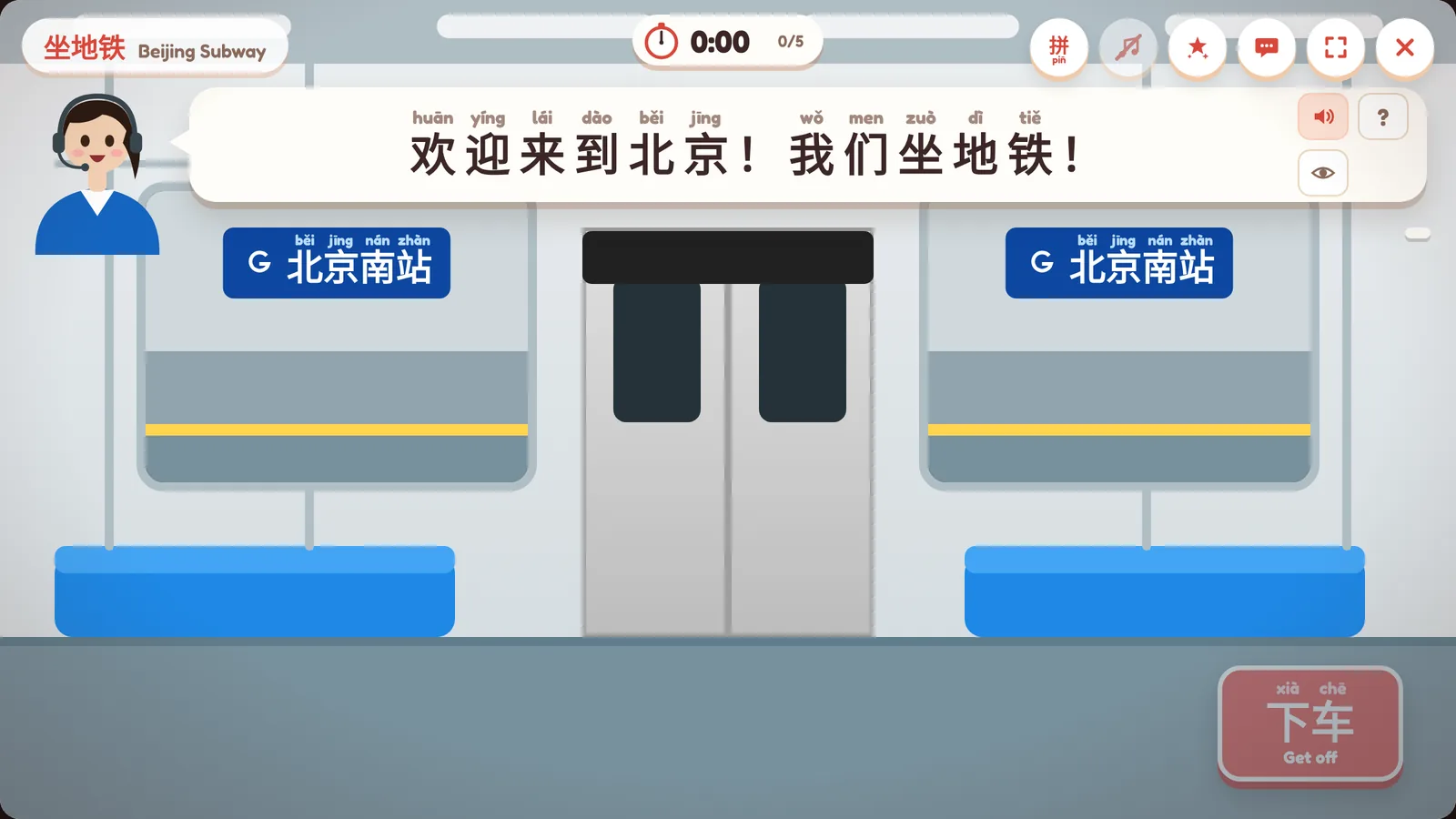
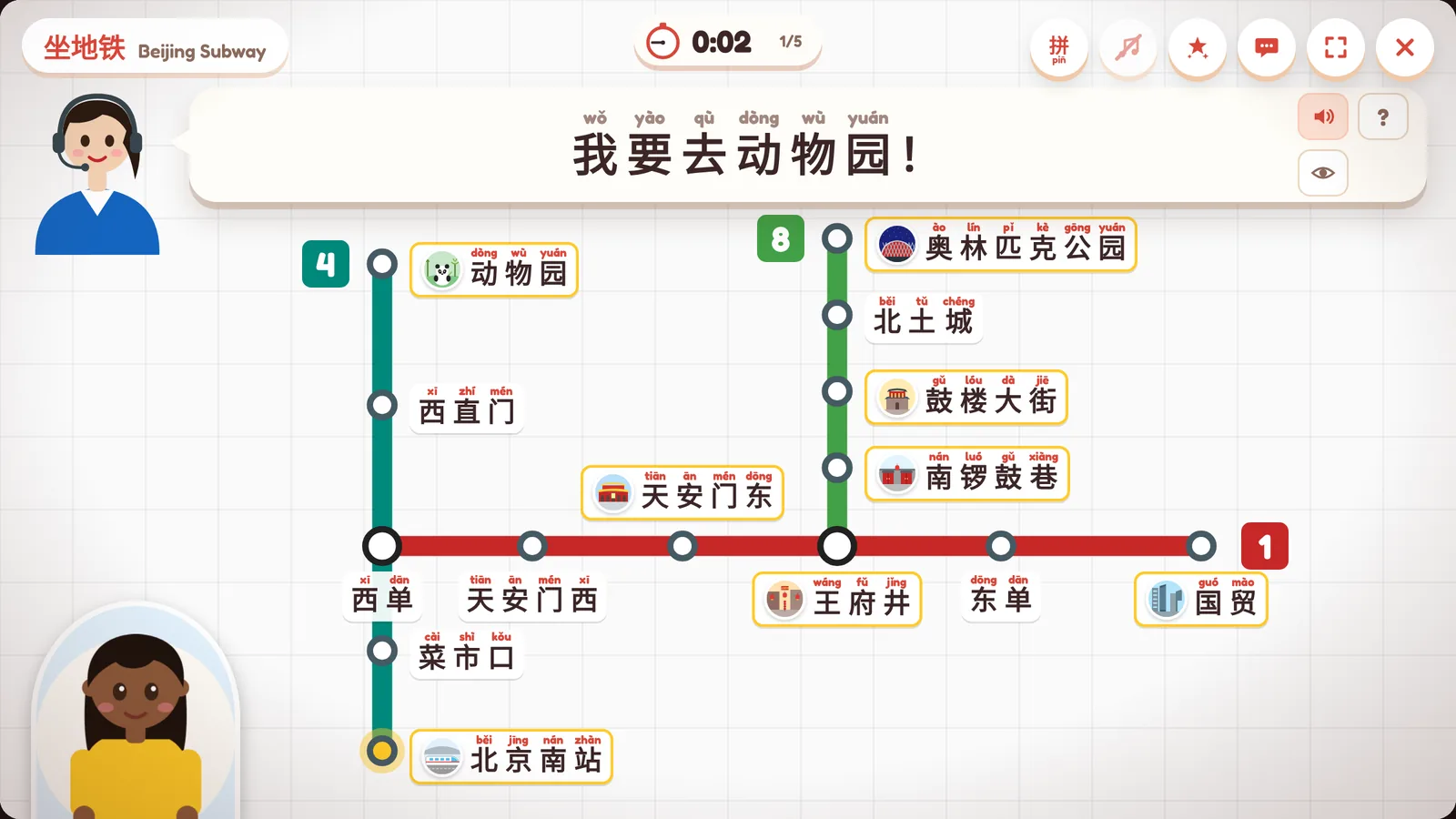
The Beijing subway is one of the busiest in the world. In this game children find their station on the map, listen to the announcements in the train and get off at the right stop, sometimes changing lines on the way. Every station is a real one: Tiananmen East, Wangfujing, Guomao, Beijing Zoo with the pandas, Beijing South Railway Station and the Olympic Park.
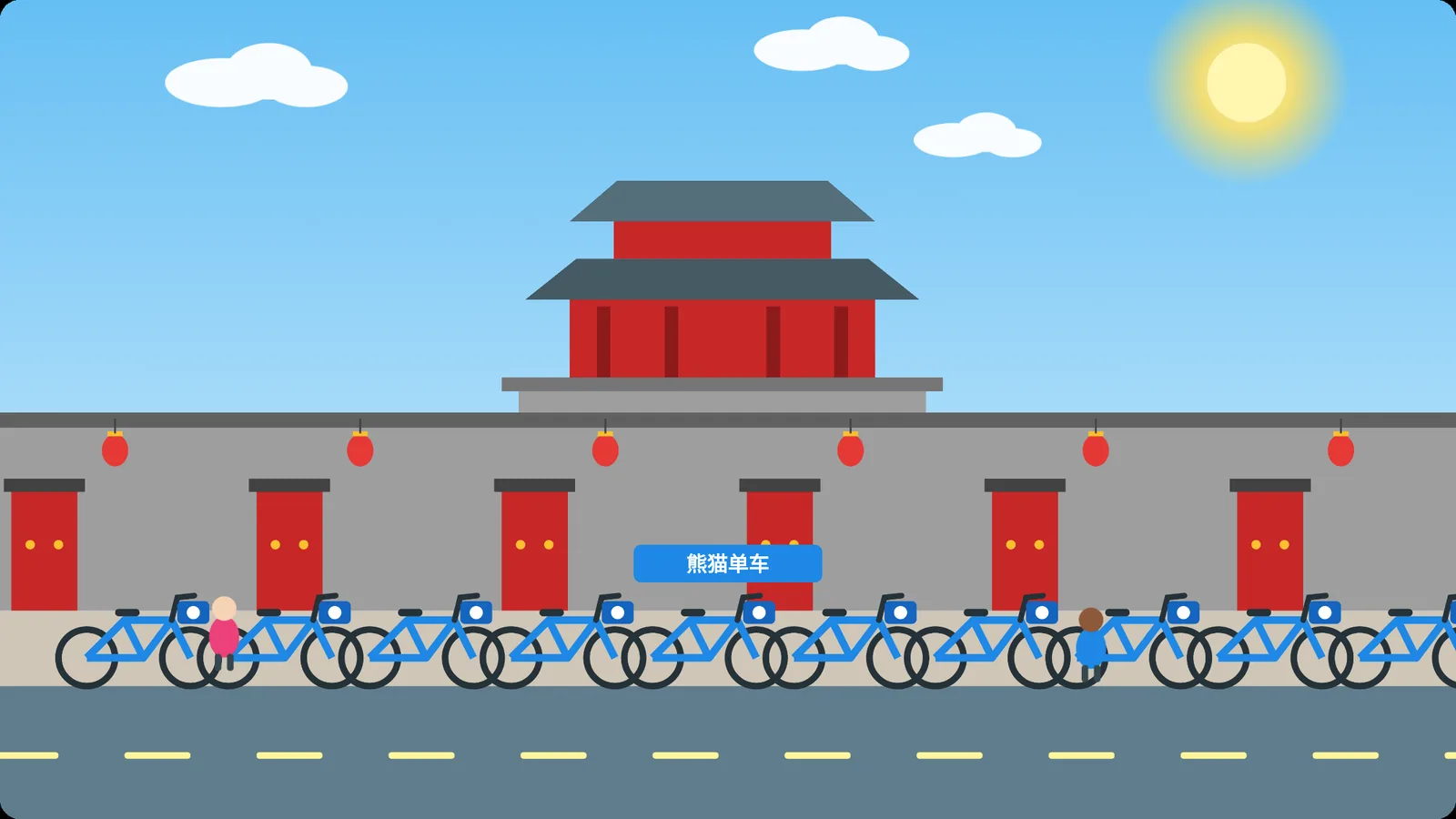
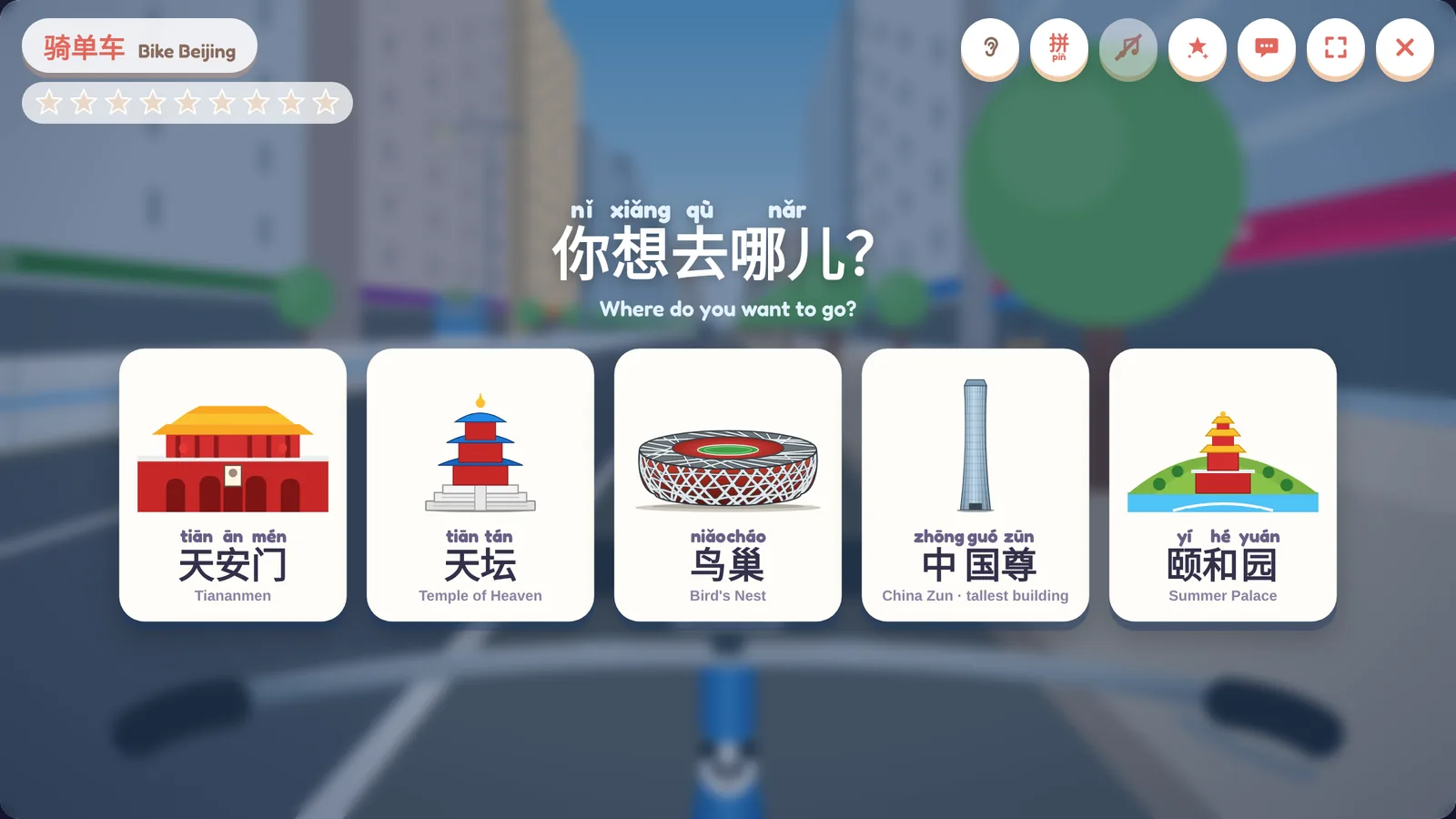
Rental bikes are everywhere in Beijing, and renting one is easy: you scan the code with an app. Understanding what the bike says is another matter. It talks to you through a little speaker. Did the payment work? Is the bike locked, or is the meter still running? In the game, children pick a famous sight, scan a Panda bike and ride there while the bike tells them in Chinese to go left, right, straight on, uphill, downhill, or stop at a red light. At the end they hear the price and lock the bike.
Mornings at the Temple of Heaven
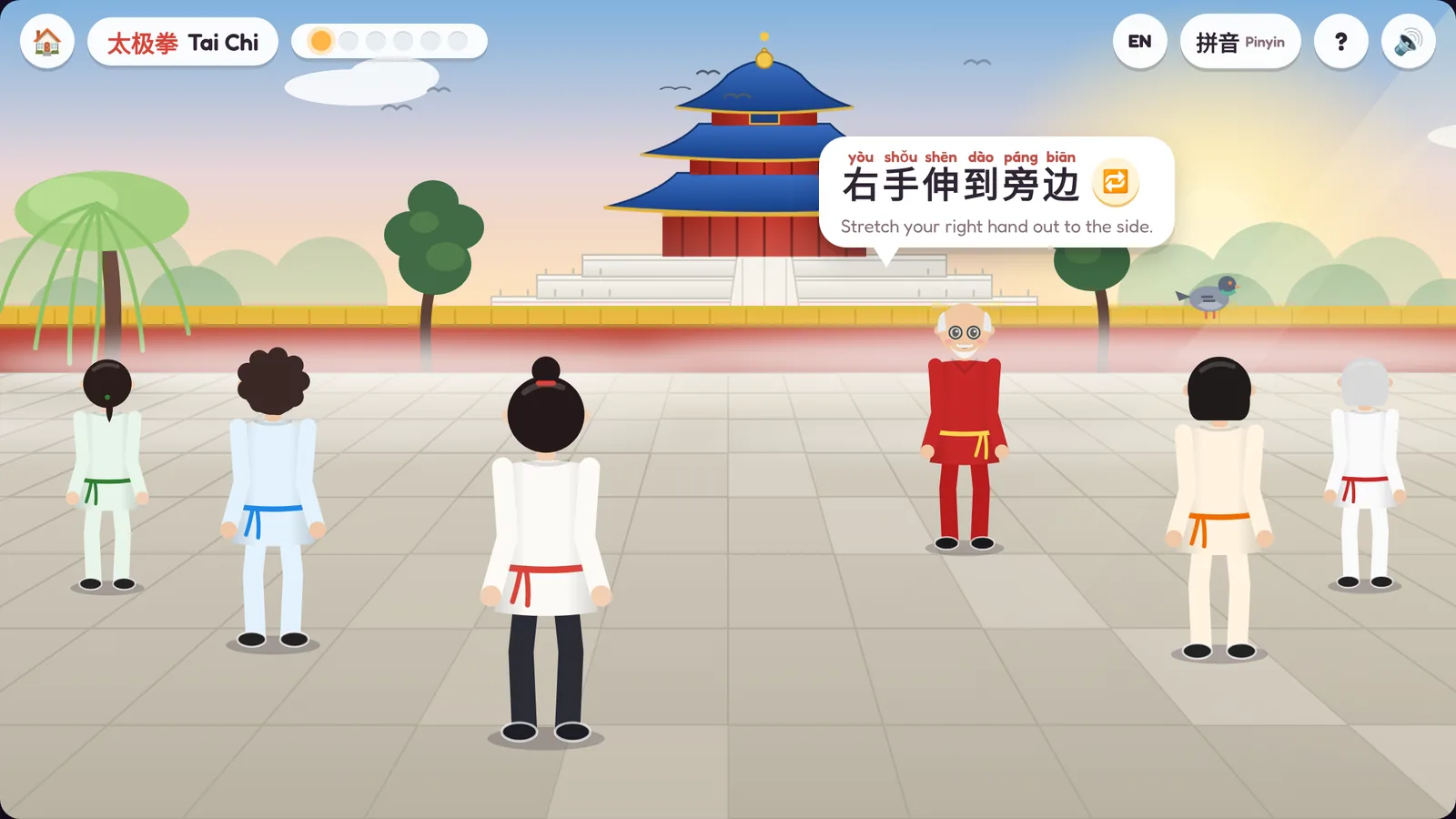
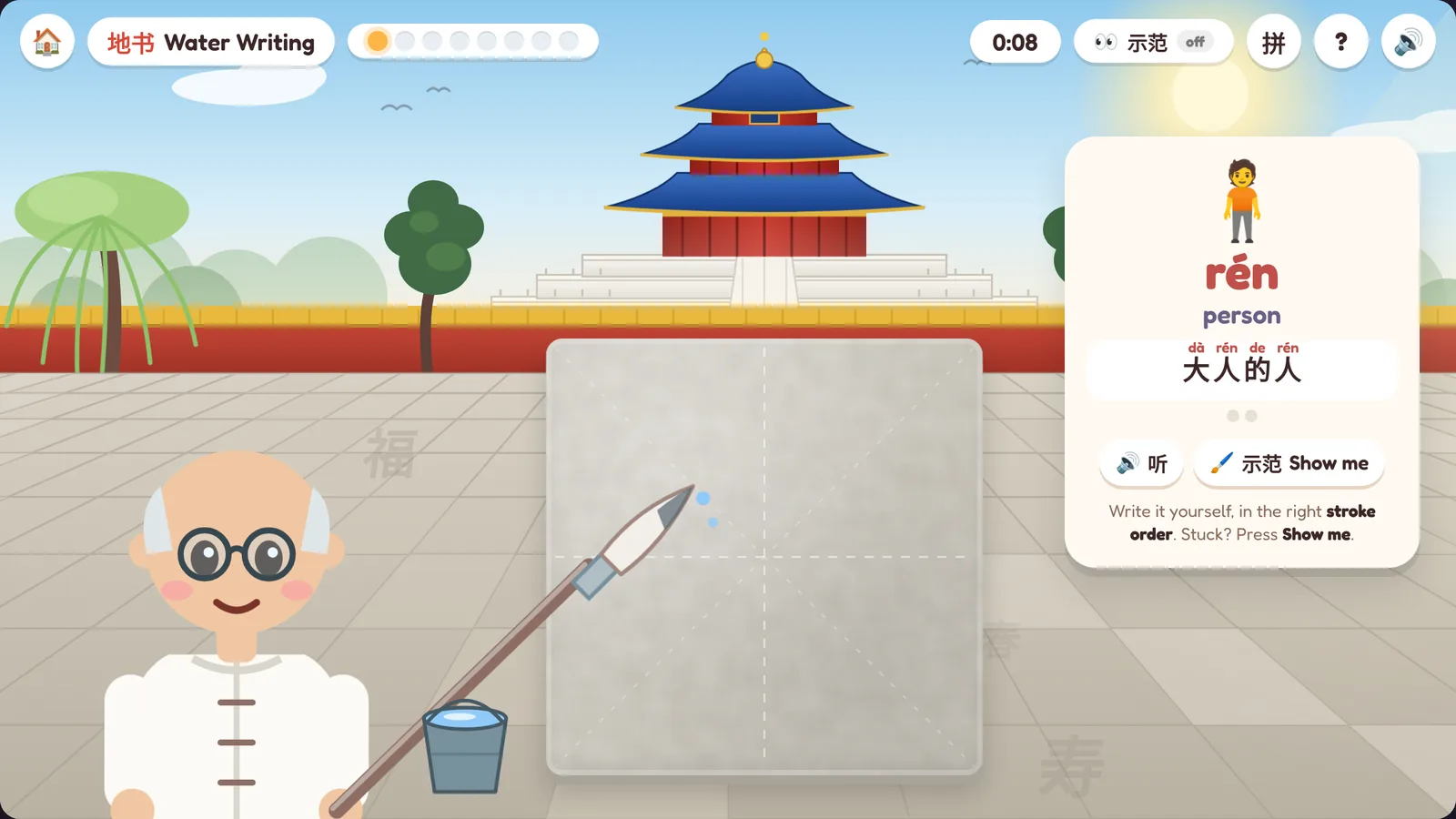
Walk into the Temple of Heaven park early in the morning and you will see two things everywhere: people moving slowly through tai chi, and grandpas writing beautiful characters on the stone paving with a long brush dipped in water. Both became games.
In the morning the master calls out tai chi moves like 举起左手 (raise your left hand) and children move their figure. In the evening the city gets loud: on a plaza in front of a mall, the aunties start their 广场舞 square dance with a big speaker on wheels, and children tap the moves on the beat: 左!右!拍手!转圈!
This is called 地书, “ground writing”. The characters shine for a moment, then slowly dry up and vanish, and anyone can join in. In the game, grandpa says a character and children write it on the stone in the right stroke order, before it dries. The last level ends with 我爱北京, I love Beijing.
Old Beijing: hutongs and herbal pharmacies
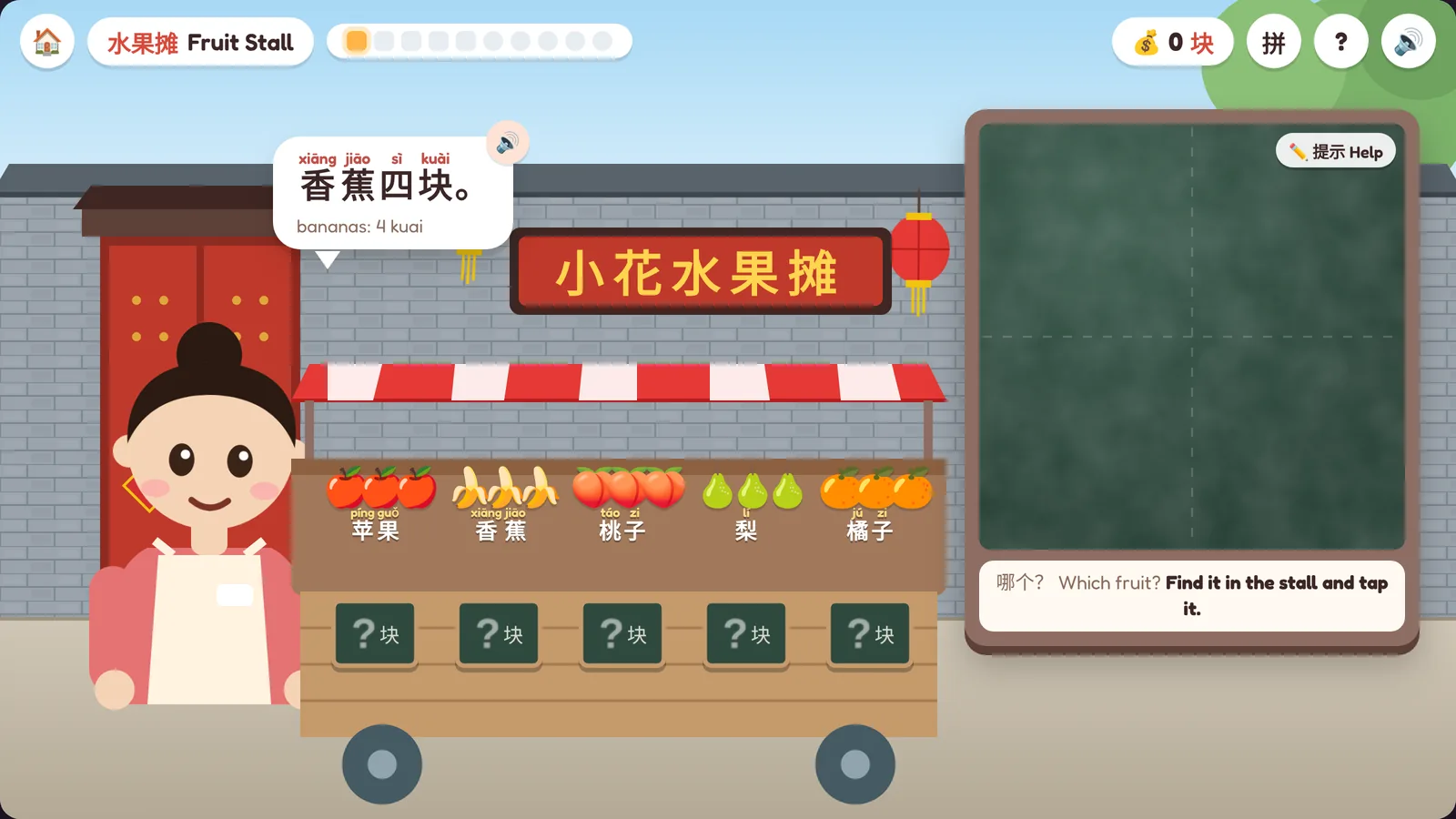
In the hutongs, the old alleys of Beijing, there is a little fruit stall on almost every corner. Here children help Mum: she tells them the prices, they write them on the blackboard with chalk, and then the customers come. Listen to what they want, count, and write how much they pay. Along the way they pick up something every visitor to China needs: people say 块 (kuài) for yuan, and 两块 when they mean two.
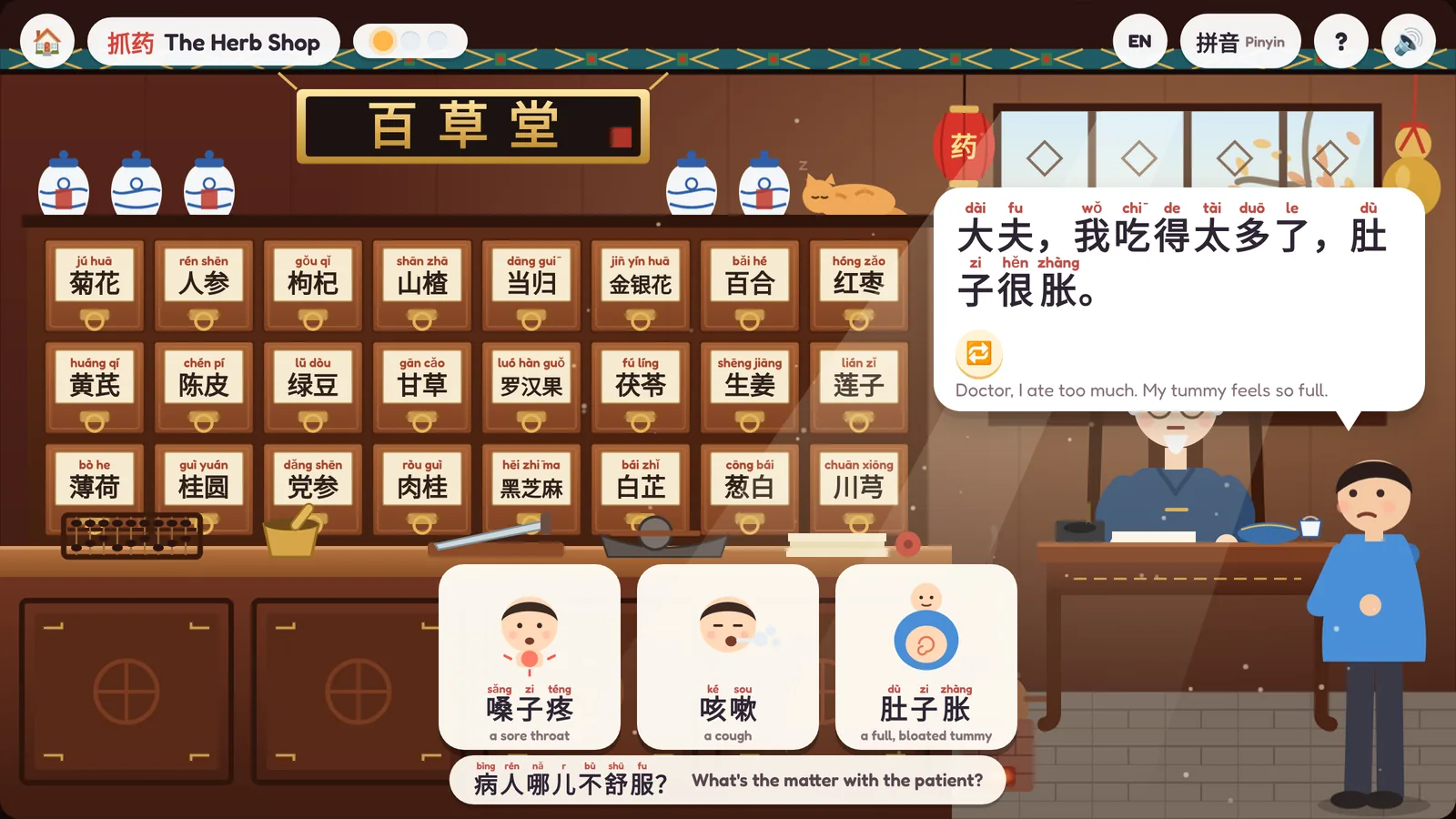
Around Dashilan near Qianmen you still find herbal pharmacies more than a hundred years old, with a wall of hundreds of small wooden drawers behind the counter. In this advanced game children help Doctor Wang: listen to the patient, read the prescription, find each herb in the drawers, weigh it on the old hand scale and wrap the packet. The herbs are everyday ingredients people in China put in teas and soups, like ginger, red dates and goji berries.
Lakes, stadiums and airports
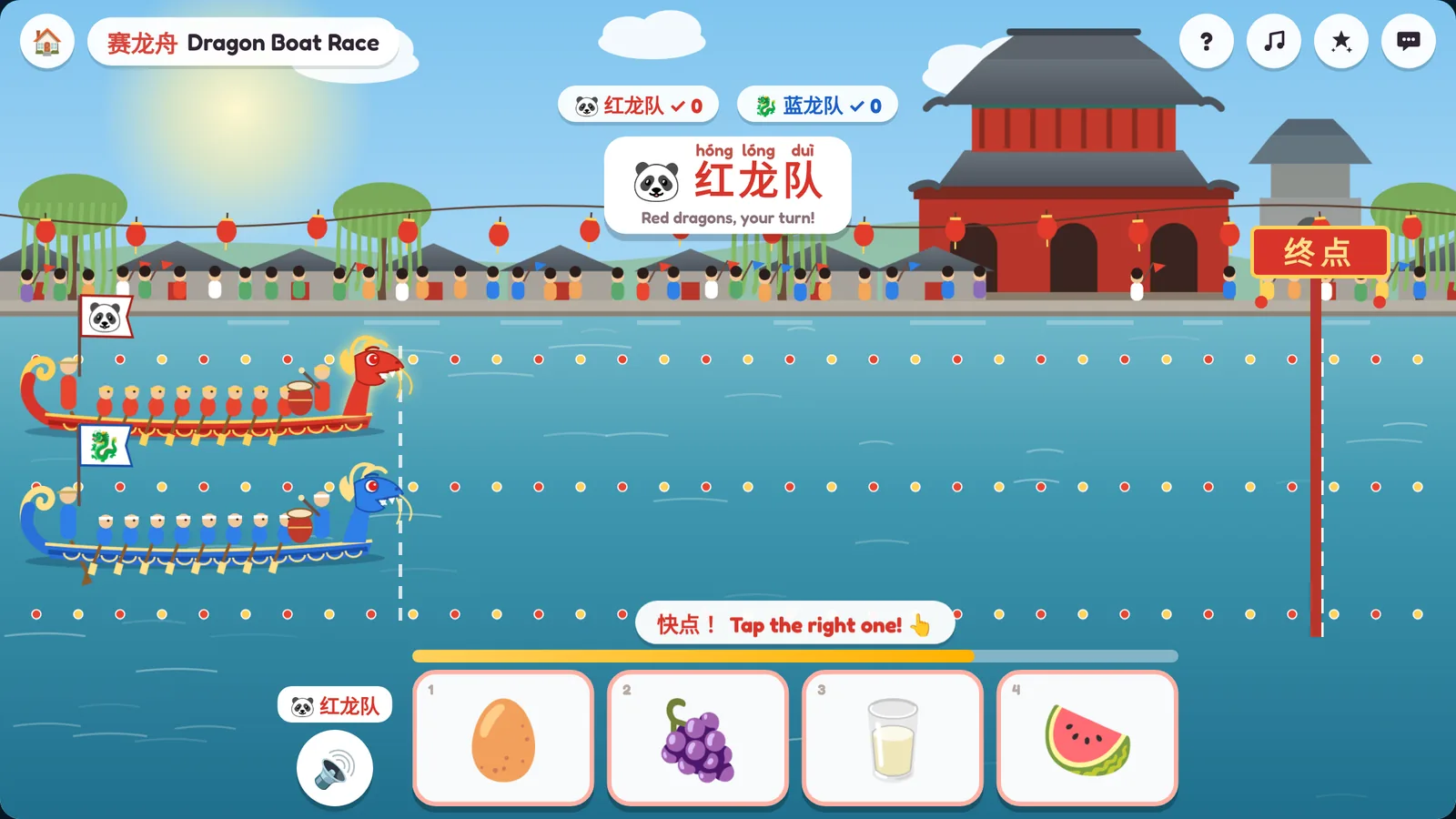
On Houhai, the lake near the old Drum Tower, you can watch dragon boats. In this game for two players, siblings or classmates take turns on one screen: hear a Chinese word, tap the right picture as fast as you can, and paddle your dragon forward. Each player picks their own level, so an older and a younger child can race fairly.
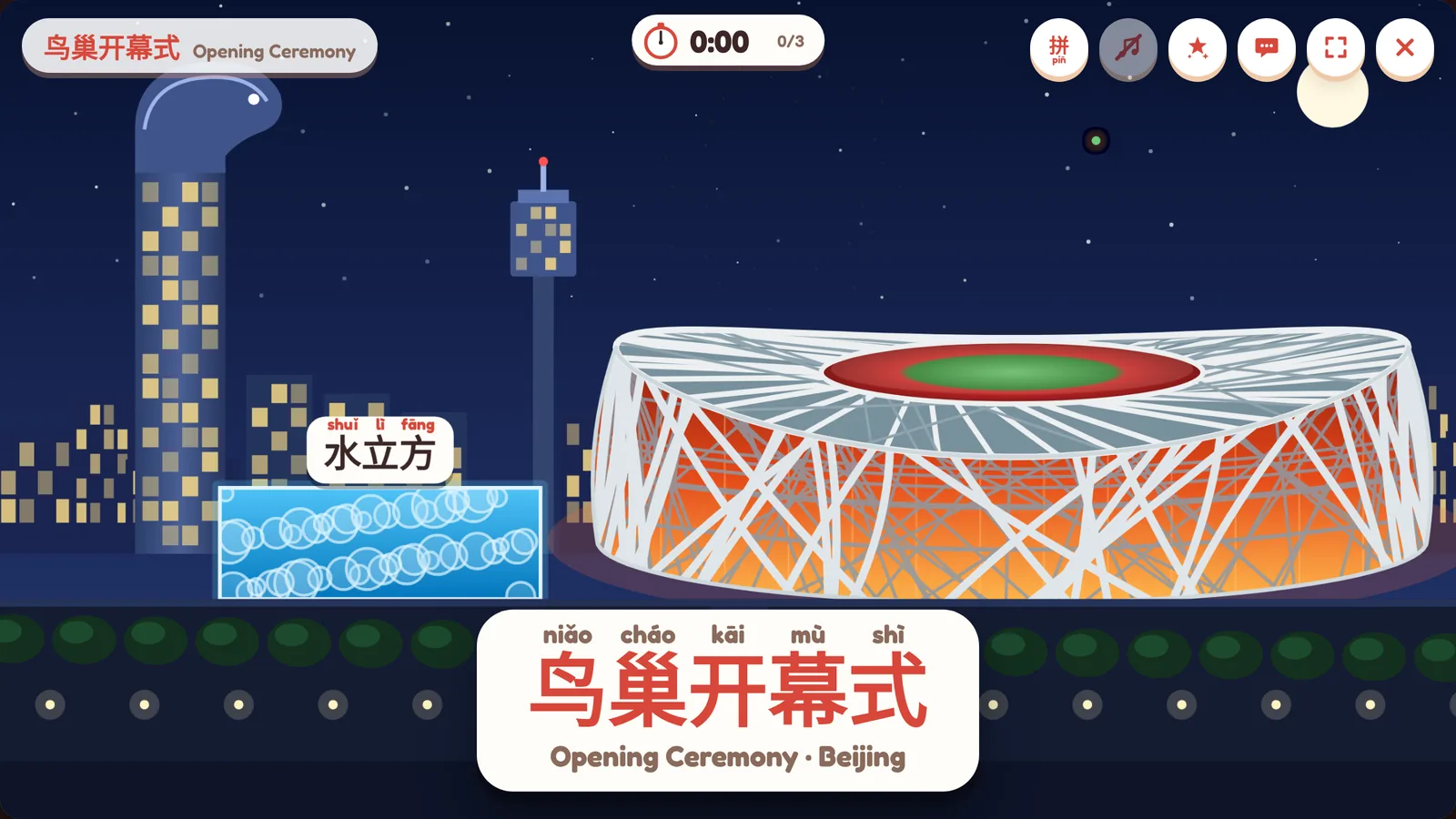
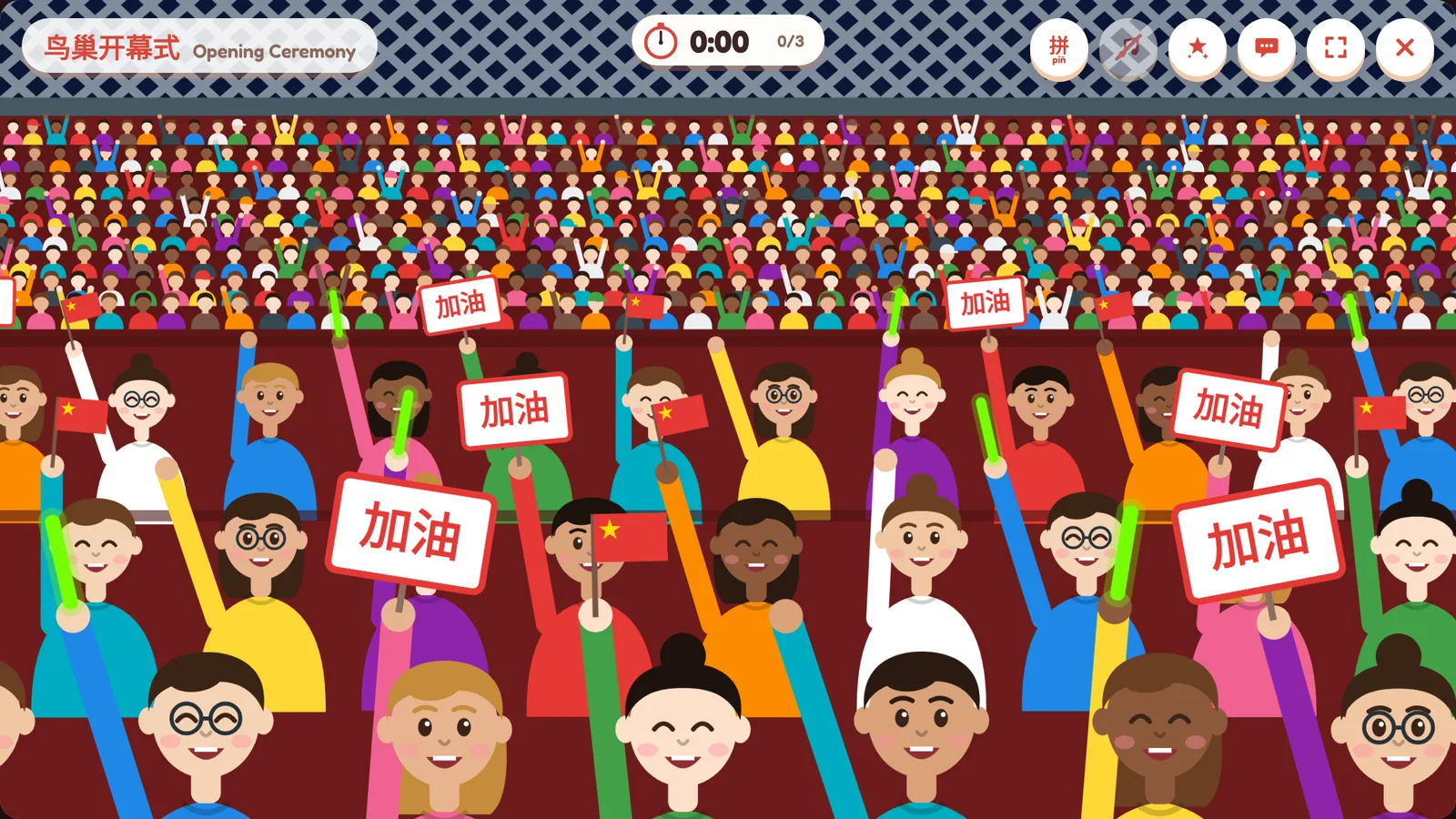
Students who visit Beijing often go to see the Bird's Nest, the national stadium, and many of them watch part of the 2008 Olympic opening ceremony afterwards. In the game the teams march into the stadium, the announcer calls out each country in Chinese, and children hand every athlete the right flag.
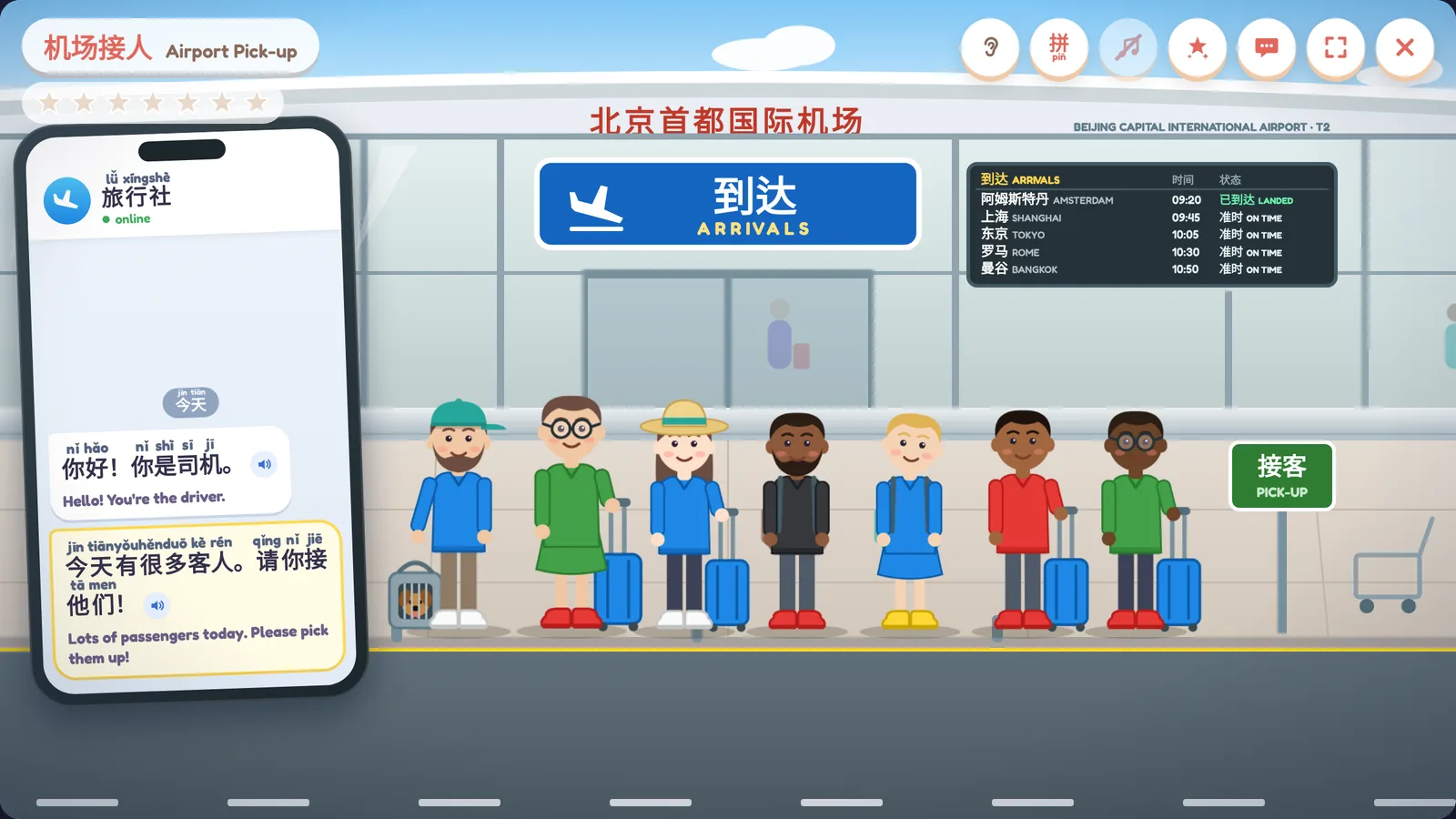
Picking someone up at the airport is a real everyday task. Your phone shows a few clues in Chinese: a man or a woman, long or short hair, glasses, a red hat, a big suitcase. Read the clues, scan the crowd of travellers and find your guest before they walk past.
And beyond Beijing
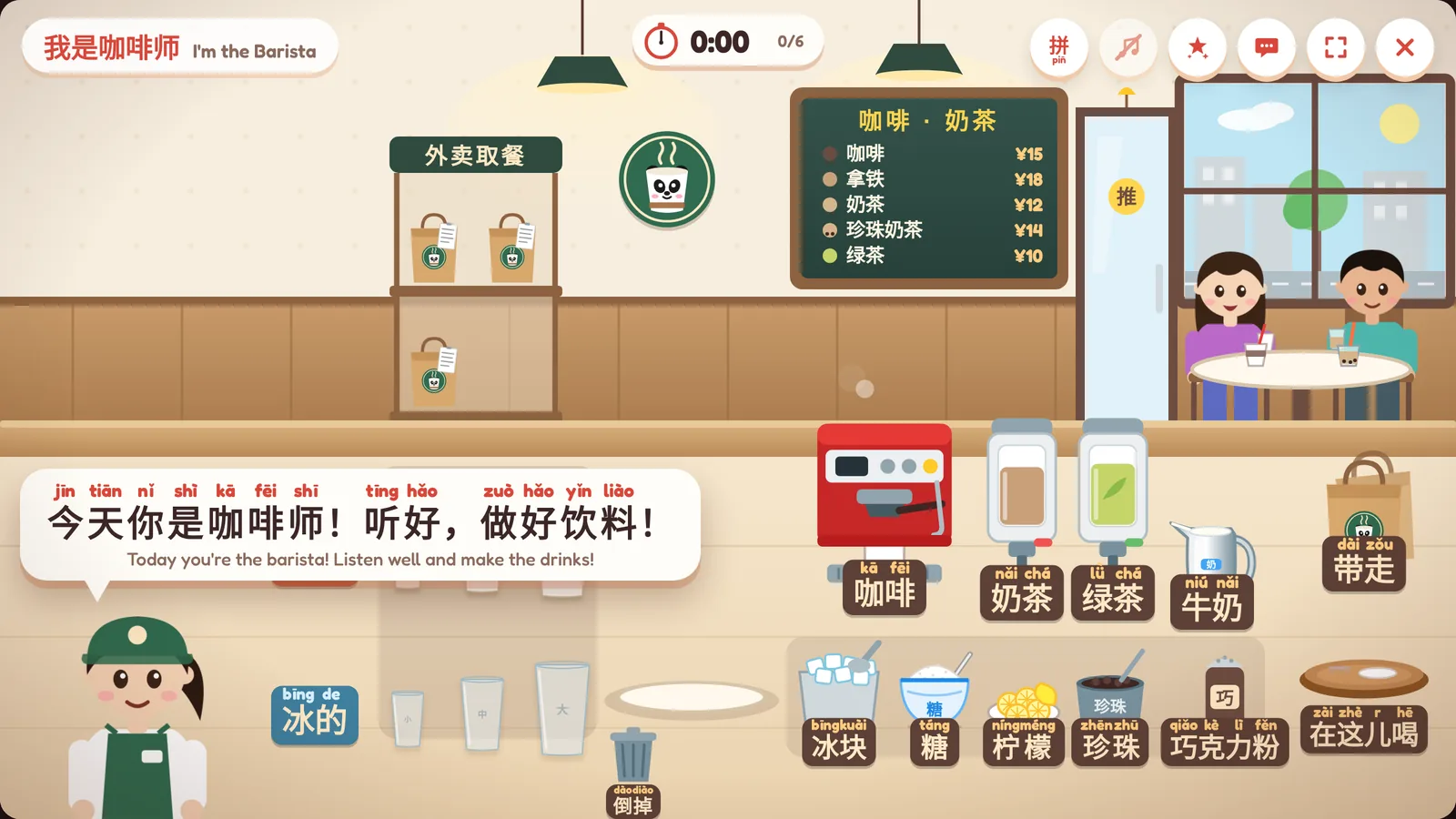
Not every game stays in the capital. One of the Marina Chinese students went to Luckin Coffee (瑞幸咖啡) for the first time and found out that ordering is a lot of choices in Chinese: cup size, hot or iced, how much ice, how much sugar. That became I'm the Barista, complete with a delivery rider who walks in, grabs an order and is gone again, just like in real life. Other games take children to a chuanchuan hotpot restaurant and onto the cable car across the Yangtze in Chongqing, or on the high-speed train with Tuantuan the panda vlogger.
How the games work
Every game is free and plays in the browser on a computer, tablet or phone, with no account and no download. There are three levels per game, and children choose how to play: with pinyin, with characters only, or listening only. A practice mode goes through the words first. At the end, children can put their time on the leaderboard with just a first name, age and country. That last part sounds small, but it is often what makes a child play a game five times in a row.
See all 31 games
From the Beijing subway to a dragon boat race on Houhai: every Play & Learn game on one page, sorted by level.
Free Chinese games for kids →