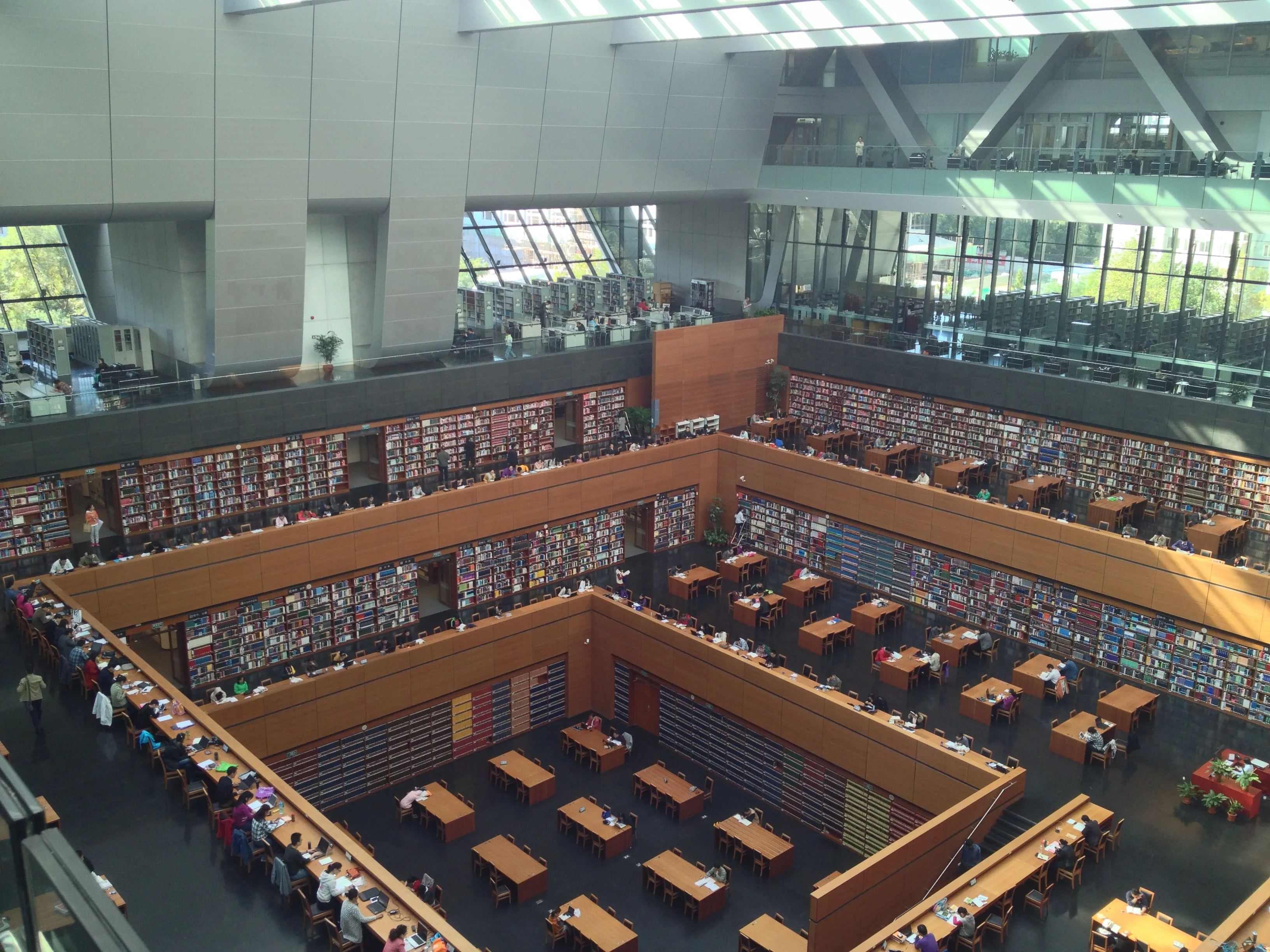
Beijing National Library
Study Materials · Grammar

Chinese Sentence
Particles 了 吧 呢 吗

These small characters at the end of a sentence carry tone, mood and nuance. No direct English translation. But once you understand them, your Chinese sounds completely natural. Particles feature heavily from HSK 3 upwards; mastering them makes a real difference to your exam score and your natural speech.

6 particles Examples for each Common mistakes All levels

Chinese sentence-final particles are small syllables added to the end of a sentence. They do not change the core meaning, they change the attitude, mood and social signal of what you say. In English we achieve this with intonation. In Mandarin, particles do this work. You cannot translate them directly; you have to understand what feeling each one conveys.

The six essential particles

One by one,
with examples

le · neutral tone
Change of state / completion

了 is the most versatile and most misunderstood particle. At the end of a sentence it signals that something has changed or that a new situation now exists. It is not simply a past tense marker, Chinese has no tenses, but it does often appear with completed actions.

New situation / change
天黑了。
Tiān hēi le.
It has got dark. (It was light; now it is dark.)
Completed action
我吃饭了。
Wǒ chī fàn le.
I have eaten. (The eating is done.)
Polite suggestion to stop
好了,别说了。
Hǎo le, bié shuō le.
OK, that's enough, stop talking.
Common mistake: Adding 了 to every past-tense sentence. 了 marks change or completion, not past time. "Yesterday I went to Beijing" is 昨天我去了北京, the 了 is attached to the verb, not a sentence particle here. Overusing sentence-final 了 makes sentences sound unnatural.
ma · neutral tone
Yes/no question marker

The simplest particle. Add 吗 to the end of any statement and it becomes a yes/no question. No word order change required, unlike English. The tone of your voice does not need to rise; the character does the work.

Turning a statement into a question
你是学生吗?
Nǐ shì xuésheng ma?
Are you a student?
Checking in
你吃饭了吗?
Nǐ chī fàn le ma?
Have you eaten yet? (A common greeting in Chinese.)
Note: Do not use 吗 with question words like 什么, 谁, 哪里. Those sentences are already questions. "你去哪里吗?" is wrong. "你去哪里?" is correct.
ne · neutral tone
"And you?" / Where is…? / Softening

呢 has three distinct uses. It can bounce a question back ("and you?"), ask where something is, or soften a statement to make it sound less abrupt. The meaning depends entirely on context.

Returning a question
我很好,你呢?
Wǒ hěn hǎo, nǐ ne?
I am fine, and you?
Asking where something is
我的手机呢?
Wǒ de shǒujī ne?
Where is my phone?
Softening / trailing off
这件事很难呢。
Zhè jiàn shì hěn nán ne.
This matter is quite difficult, you know...
ba · neutral tone
Assumption / suggestion / seeking agreement

吧 signals that you are making an assumption and inviting confirmation, or making a soft suggestion. It is roughly like "right?", "I suppose", or "let's" in English. It makes statements more tentative and collaborative.

Assumption seeking confirmation
你是英国人吧?
Nǐ shì Yīngguó rén ba?
You are British, right? (I think so, please confirm.)
Soft suggestion
我们走吧。
Wǒmen zǒu ba.
Let's go.
Reluctant acceptance
好吧。
Hǎo ba.
Fine, alright then. (Mild resignation.)
ma · neutral tone (different character from 吗)
Stating the obvious

嘛 is used when you are saying something you consider self-evident, often with a mild implication that the listener should already know this. It can come across as slightly impatient if overused, use it carefully in formal contexts.

This should be obvious
他是老师嘛,当然知道。
Tā shì lǎoshī ma, dāngrán zhīdào.
He is a teacher, of course he knows.
Explaining patiently
学语言嘛,就是要多练习。
Xué yǔyán ma, jiùshì yào duō liànxí.
Learning a language, you just need to practice more, that's all.
Note: 嘛 (ma, tone neutral) and 吗 (ma, tone neutral) look very different in writing but sound identical. Context tells them apart: 嘛 is for obvious statements, 吗 is for yes/no questions.
a · neutral tone (also written 哦, 哇, 呀 depending on context)
Exclamation / softening / warmth

啊 adds warmth, enthusiasm or mild exclamation to a sentence. It softens commands so they sound less abrupt, and adds emotional color to statements. It is extremely common in natural spoken Mandarin.

Softening a command
快来啊!
Kuài lái a!
Come quickly! (Warmer than without 啊.)
Expressing admiration
真好看啊!
Zhēn hǎokàn a!
It looks really great!
Gentle reminder
你要注意啊。
Nǐ yào zhùyì a.
You should pay attention, you know.
Side by side

Quick comparison

Particle Core function English feel Watch out for
leChange of state, completion"It's done", "things have changed"Not a past tense marker, overuse is the #1 mistake
maYes/no question"...right?", "...yes?"Never combine with question words like 什么, 谁
ne"And you?", where is…, softening"And you?", "...though"Three different uses, context is everything
baAssumption, suggestion"...right?", "let's", "I suppose"Sounds tentative; avoid in formal statements of fact
maStating the obvious"Obviously", "of course"Can sound impatient, use sparingly with strangers
aExclamation, warmth"...you know!", "wow!"Sound changes to 呀/哇/哦 depending on preceding vowel