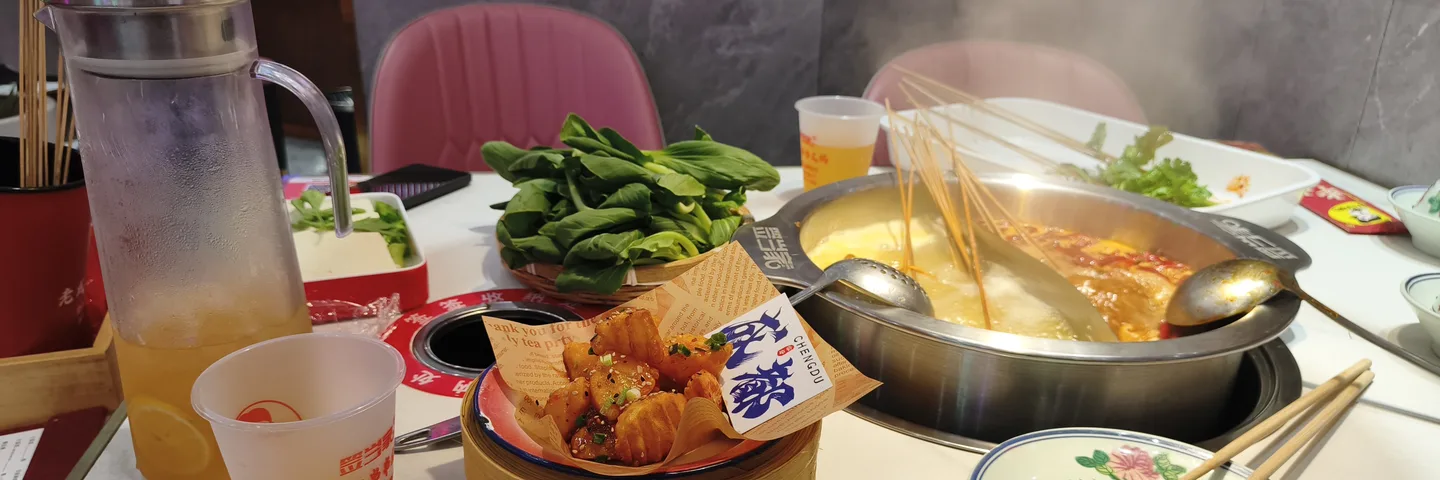
The waiter will not come to you
Ordering food in China is one of the most immediately rewarding things you can do with even a small amount of Mandarin. The vocabulary is manageable, the situations are predictable, and getting it right produces results you can literally taste.
It is also one of the few situations where you will not be let off the hook by English menus and multilingual staff. Outside of tourist-focused restaurants in major cities, most places operate entirely in Chinese. This article gives you the language to handle that confidently.
When you arrive: getting a table
Chinese restaurants do not always follow the "wait to be seated" convention common elsewhere. In a busy local restaurant, you often just walk in and sit at an empty table. If there is a hostess or you are unsure, these phrases cover you:
The word 位 (wèi) is a polite measure word for people in a service context. You could also say 两个人 (liǎng gè rén) for "two people," which is more informal but perfectly understood.
Reading the menu
This is where most visitors feel lost. Menus in Chinese restaurants outside tourist areas are almost always in Chinese only, often with no photos. Learning a small set of recurring characters goes a long way. Here are the ones that appear most frequently:
| Character | Pinyin | Meaning |
|---|---|---|
| 肉 | ròu | meat (generic) |
| 猪肉 | zhūròu | pork (pig meat) |
| 牛肉 | niúròu | beef (cow meat) |
| 鸡肉 | jīròu | chicken |
| 羊肉 | yángròu | lamb / mutton |
| 鱼 | yú | fish |
| 虾 | xiā | prawn / shrimp |
| 蔬菜 | shūcài | vegetables |
| 豆腐 | dòufu | tofu |
| 米饭 | mǐfàn | steamed rice |
| 面条 | miàntiáo | noodles |
| 饺子 | jiǎozi | dumplings |
| 汤 | tāng | soup |
| 辣 | là | spicy |
| 不辣 | bù là | not spicy |
| 炒 | chǎo | stir-fried |
| 蒸 | zhēng | steamed |
| 烤 | kǎo | grilled / roasted |
| 凉 | liáng | cold (dishes served cold) |
Placing your order
Getting the waiter's attention follows the same pattern everywhere: say 服务员 (fúwùyuán), which means "staff" or "waiter." It sounds abrupt to Western ears, but it is completely normal in China. You can also raise your hand or make eye contact. What you do not do is snap your fingers.
The phrase 来一份 (lái yī fèn) is particularly useful. 份 (fèn) is the measure word for portions of food, so you can slot in whatever you want: 来一份饺子 (one portion of dumplings), 来一份炒饭 (one portion of fried rice). It works in almost any restaurant.
What actually happens
Here is a realistic exchange at a typical local restaurant. The staff initiate; you respond. The goal is not to have a conversation, but to communicate clearly and get what you want.
Drinks and extras
Hot tea is free in most traditional Chinese restaurants and will arrive without you asking. If you want something cold or a specific drink, you will need to order it separately. Beer and soft drinks are common; wine is less common outside nicer restaurants.
The bill
Asking for the bill is one of those moments where even a few words of Chinese produce a noticeably better experience. 买单 (mǎidān) is the standard phrase, used across mainland China. You can also say 结账 (jiézhàng), which is slightly more formal. Either works.
Payment is almost always by mobile app (WeChat Pay or Alipay) or cash. Card payment is uncommon in local restaurants. If you are not yet set up with a Chinese payment app, see our guide to paying in China as a foreigner.
Going deeper: why food vocabulary matters for HSK
Food-related vocabulary appears consistently across HSK levels, starting from HSK 1. The words for eating, drinking, rice, noodles, and common ingredients are foundational, not optional extras. Every learner working through HSK 1 and 2 will encounter this vocabulary in listening exercises and reading passages.
More importantly, restaurants are one of the few places where you can practice real Mandarin in a low-stakes, high-repetition environment. The same short exchanges happen every time you sit down. Learning them properly in lessons, then using them in restaurants, reinforces vocabulary in a way that textbook drilling alone cannot.
Free: HSK 1 Vocabulary List
150 essential words including all the food vocabulary above, grouped by category with pinyin and English. Download the PDF and start building your foundation today.
Full food vocabulary reference
| Chinese | Pinyin | Meaning |
|---|---|---|
| 点菜 | diǎn cài | to order food |
| 菜单 | càidān | menu |
| 份 | fèn | portion (measure word for food) |
| 碗 | wǎn | bowl (also measure word) |
| 盘 | pán | plate (also measure word) |
| 筷子 | kuàizi | chopsticks |
| 勺子 | sháozi | spoon |
| 叉子 | chāzi | fork |
| 好吃 | hǎo chī | delicious |
| 难吃 | nán chī | unpleasant-tasting |
| 太辣了 | tài là le | too spicy |
| 素食 | sùshí | vegetarian food |
| 外卖 | wàimài | takeaway / delivery |
| 打包 | dǎbāo | to take away (doggy bag) |
| 免费 | miǎnfèi | free of charge |
| 小费 | xiǎofèi | tip (rarely expected in China) |
| 口味 | kǒuwèi | flavor / taste |
| 咸 | xián | salty |
| 甜 | tián | sweet |
| 酸 | suān | sour |