Two markets, one language
One of the most useful things you can do with your Mandarin is also one of the most ordinary: buy food. China sells it in two very different worlds. At one end there is the local morning market, where vegetables are laid out on a tarp, prices are written by hand on cardboard, and the seller weighs your purchase on a battered scale. At the other end there is the modern supermarket, with imported fruit, electronic price tags, and bags of online orders gliding along a rail near the ceiling.
This article walks through both, using real photos taken in two cities. We start at a street market in Dalian in the northeast, the kind of place that serves the people who live around it. Then we move to a high-end Shanghai supermarket. The vocabulary you need to shop confidently turns out to be small, and most of it is the same in both places.
The Dalian morning market
This is not a tourist market. It runs in the early hours under a bridge, vendors sell from the backs of vans and from sheets on the ground, and almost everything is local and seasonal. Nobody here is expecting a foreigner. That is exactly what makes it good practice: the language is unfiltered, and the signs are written for ordinary shoppers, not for visitors.
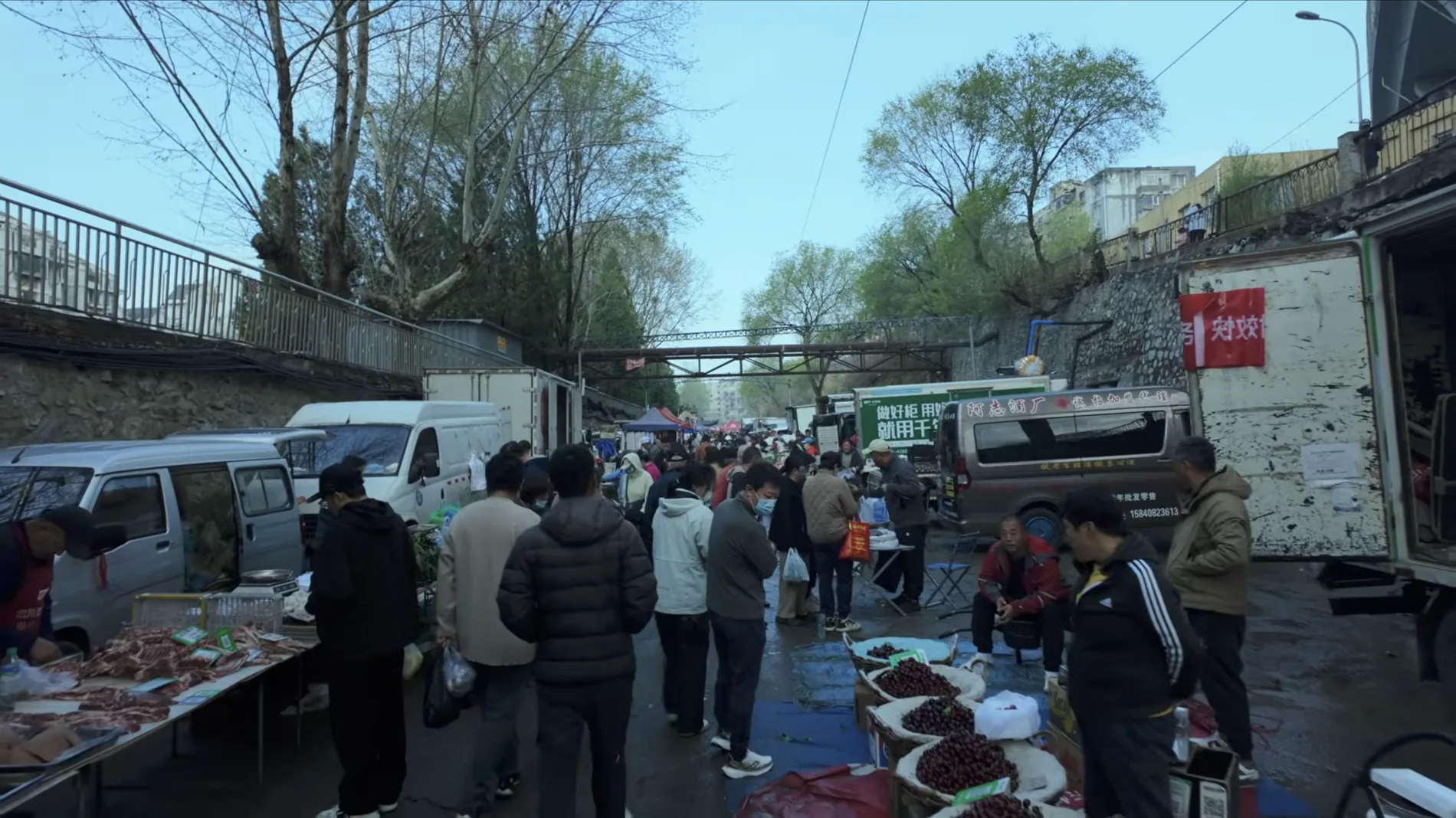
The unit that changes everything: 斤
Before you can read a single price sign, you need one character: 斤 (jīn). It is the everyday Chinese unit of weight, and it is not a kilogram. One 斤 is half a kilo, 500 grams. Almost every fresh-food price in China is quoted per 斤, so a price that looks cheap is being given for half a kilo, not a full one.
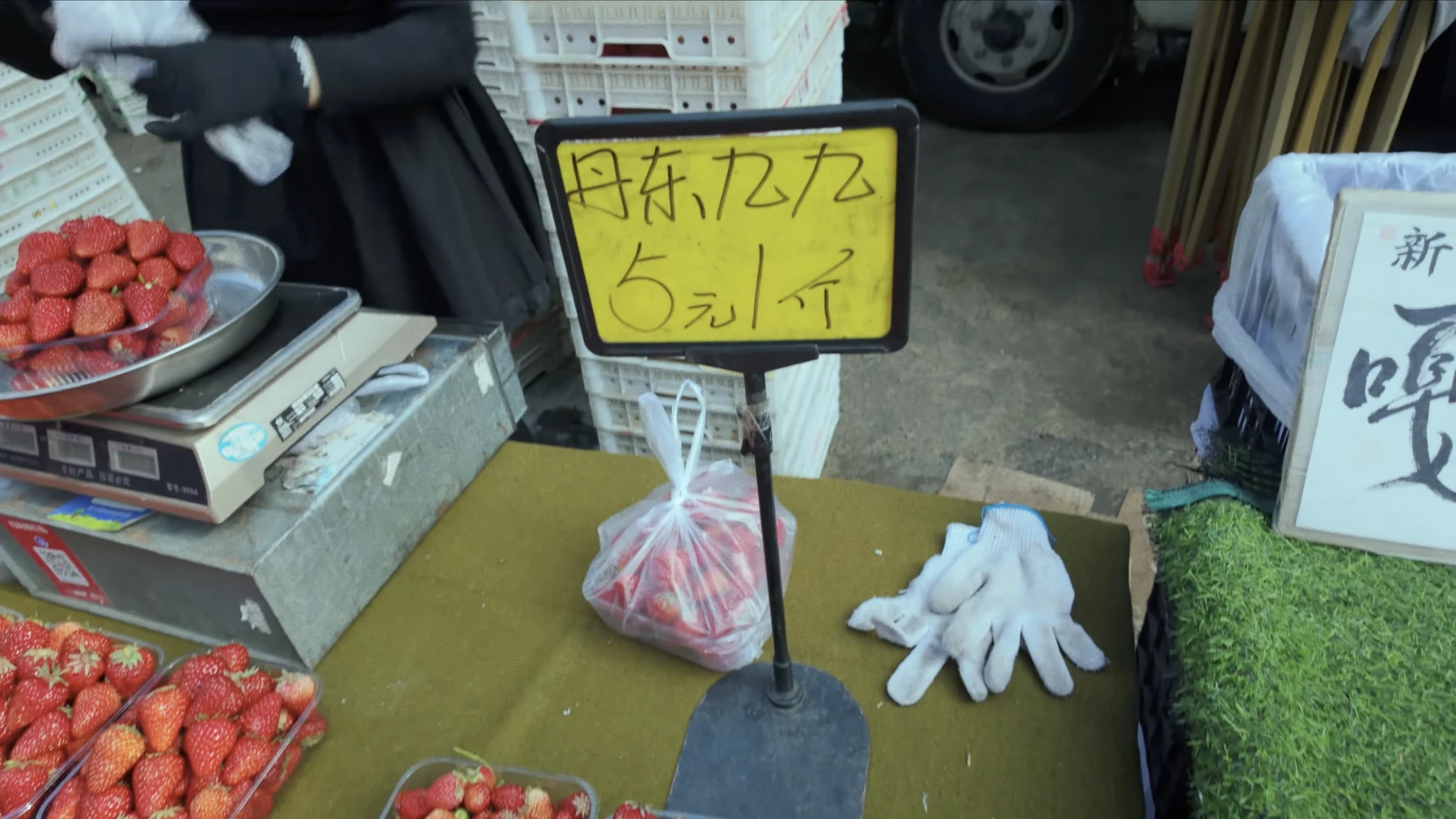
The other character you will see on every sign is 元 (yuán), the unit of currency. In writing you see 元; when people say the price out loud they usually use 块 (kuài) instead, which means the same thing. So a sign reading 5元1斤 is spoken as "wǔ kuài yì jīn," five yuan for one jin.
Reading the price signs
Here are the characters that appear again and again on market signs. This is the entire toolkit you need to decode prices across the country.
| Character | Pinyin | Meaning |
|---|---|---|
| 元 | yuán | yuan (currency, written form) |
| 块 | kuài | yuan (spoken form) |
| 斤 | jīn | half a kilo (500g) |
| 价 | jià | price |
| 特价 | tèjià | special price, on offer |
| 甜 | tián | sweet |
| 市场 | shìchǎng | market |
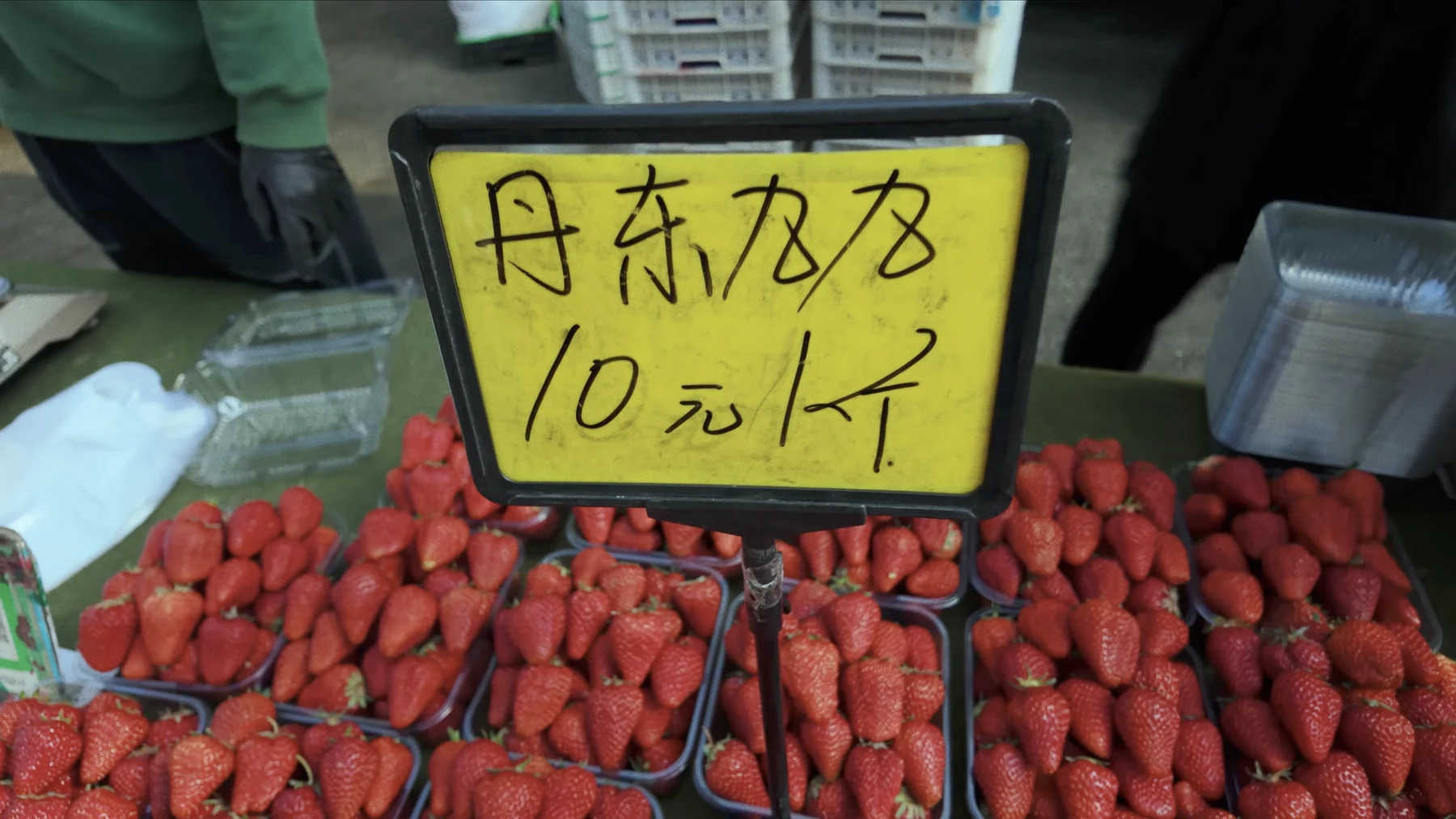
Let us put that to work. These two signs were at different stalls in the same market, both selling the same thing: 丹东九九 (Dāndōng jiǔjiǔ) strawberries. The name is not a brand, it is an origin: "Dandong 99" is a strawberry variety from the city of Dandong, just down the coast. Chinese produce is very often labelled by where it comes from, because origin signals quality.
Mushrooms work the same way, and show how the product name sits above the price. The left sign reads 花菇 (huāgū), the premium "flower mushroom" with a cracked, patterned cap, at 12元1斤. The right sign reads 香菇 (xiānggū), ordinary shiitake, at 8元1斤. Same vegetable family, different grade, different price, both written in the same simple format.
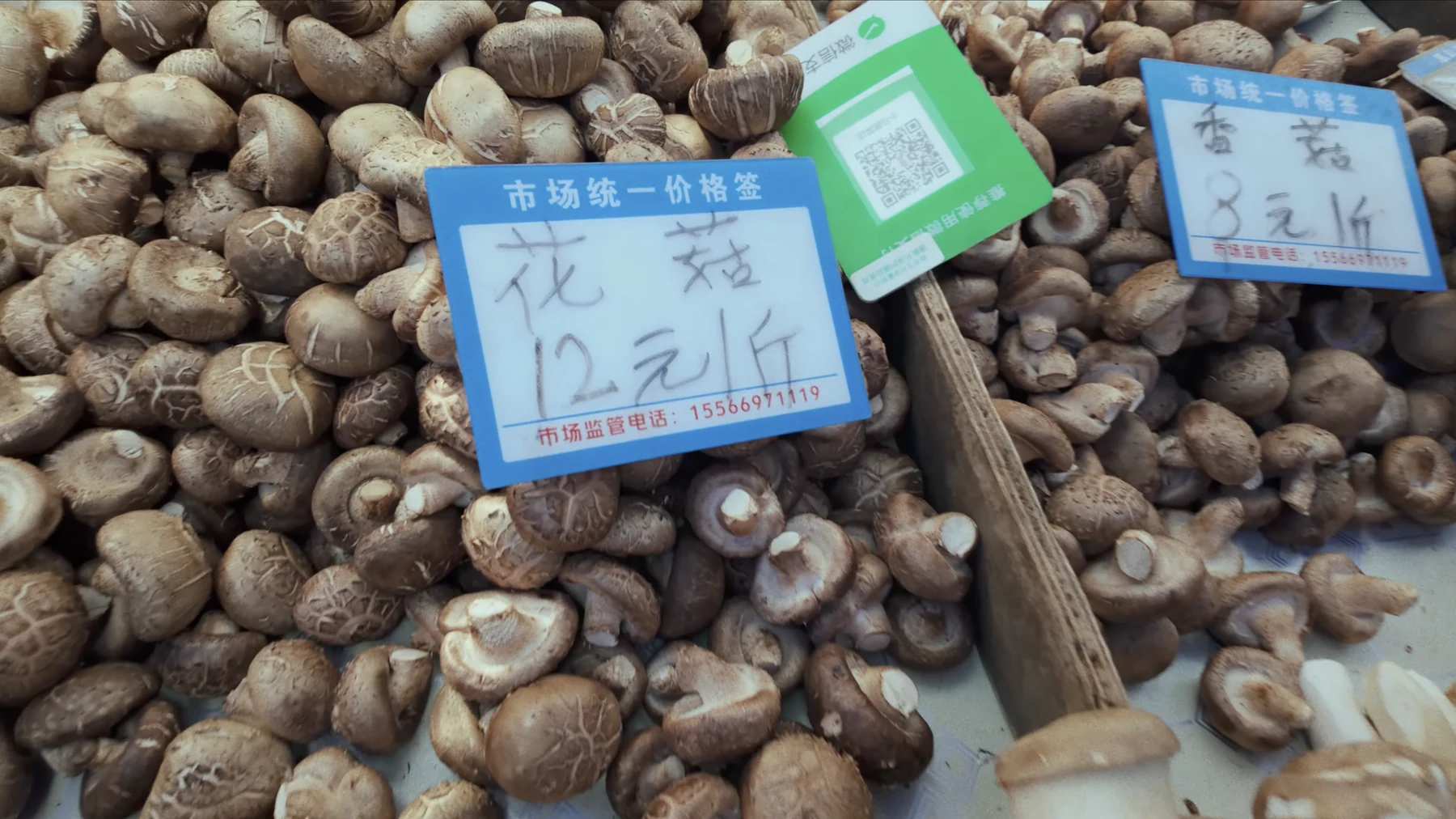
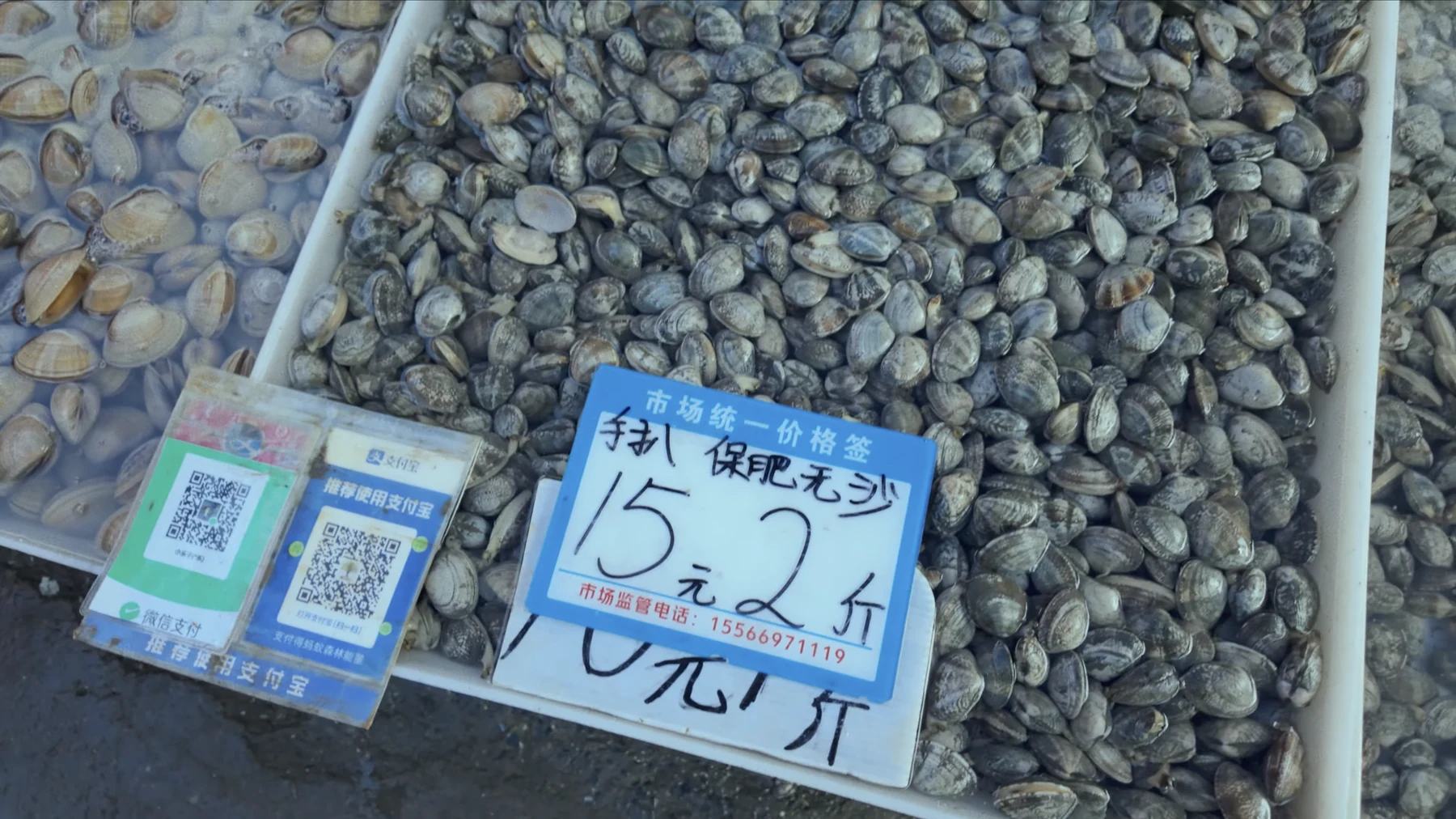
Those blue cards are worth noticing. The printed heading reads 市场统一价格签 (shìchǎng tǒngyī jiàgé qiān), "uniform market price label," and they carry a 市场监管电话, a market regulator's phone number. The vendor fills in the product and price by hand; the card itself is official. On the clam tray below, the handwritten line adds a selling point, 保肥无沙 (bǎo féi wú shā), "plump and grit-free," above the price of 15元2斤, fifteen yuan for two jin.
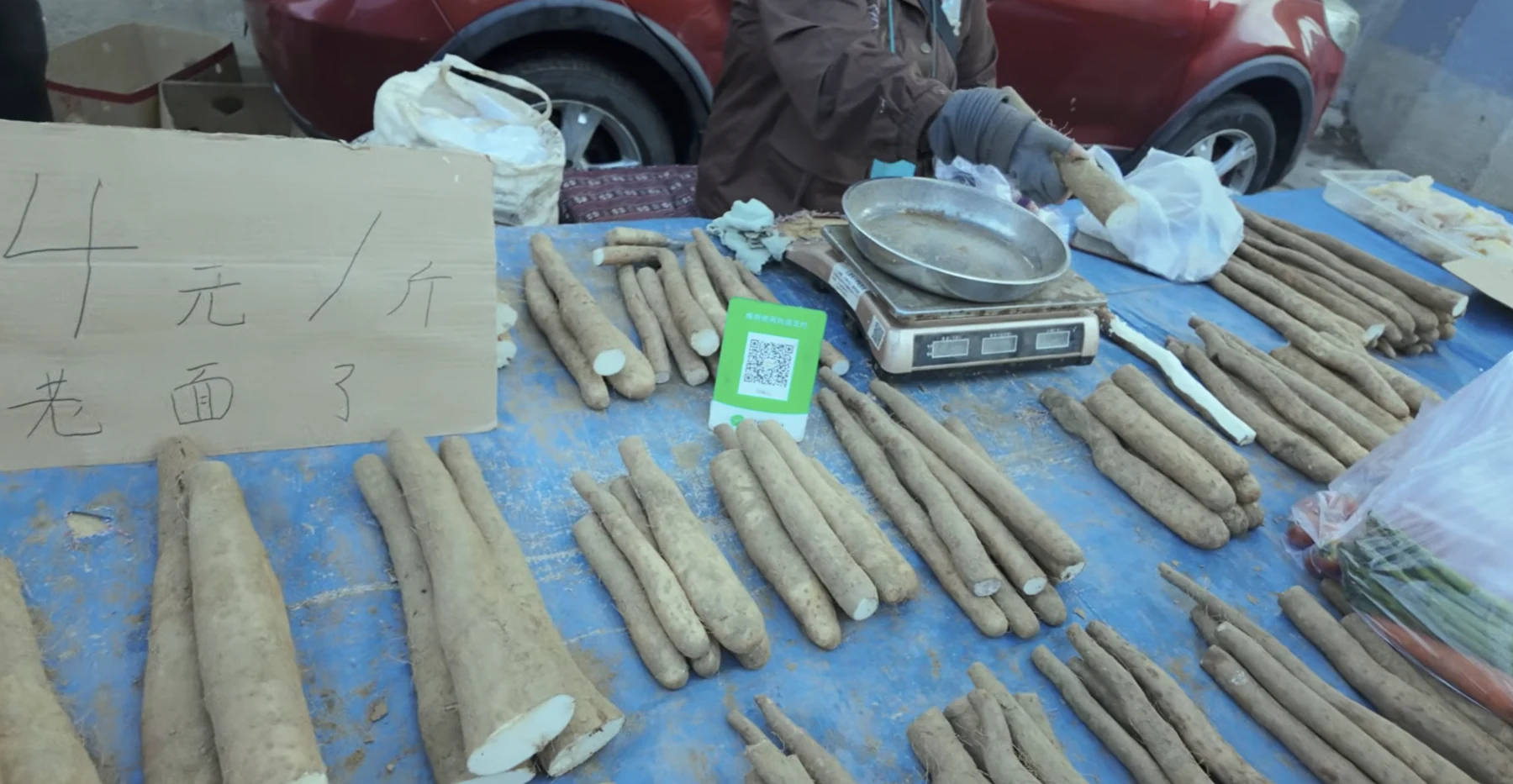
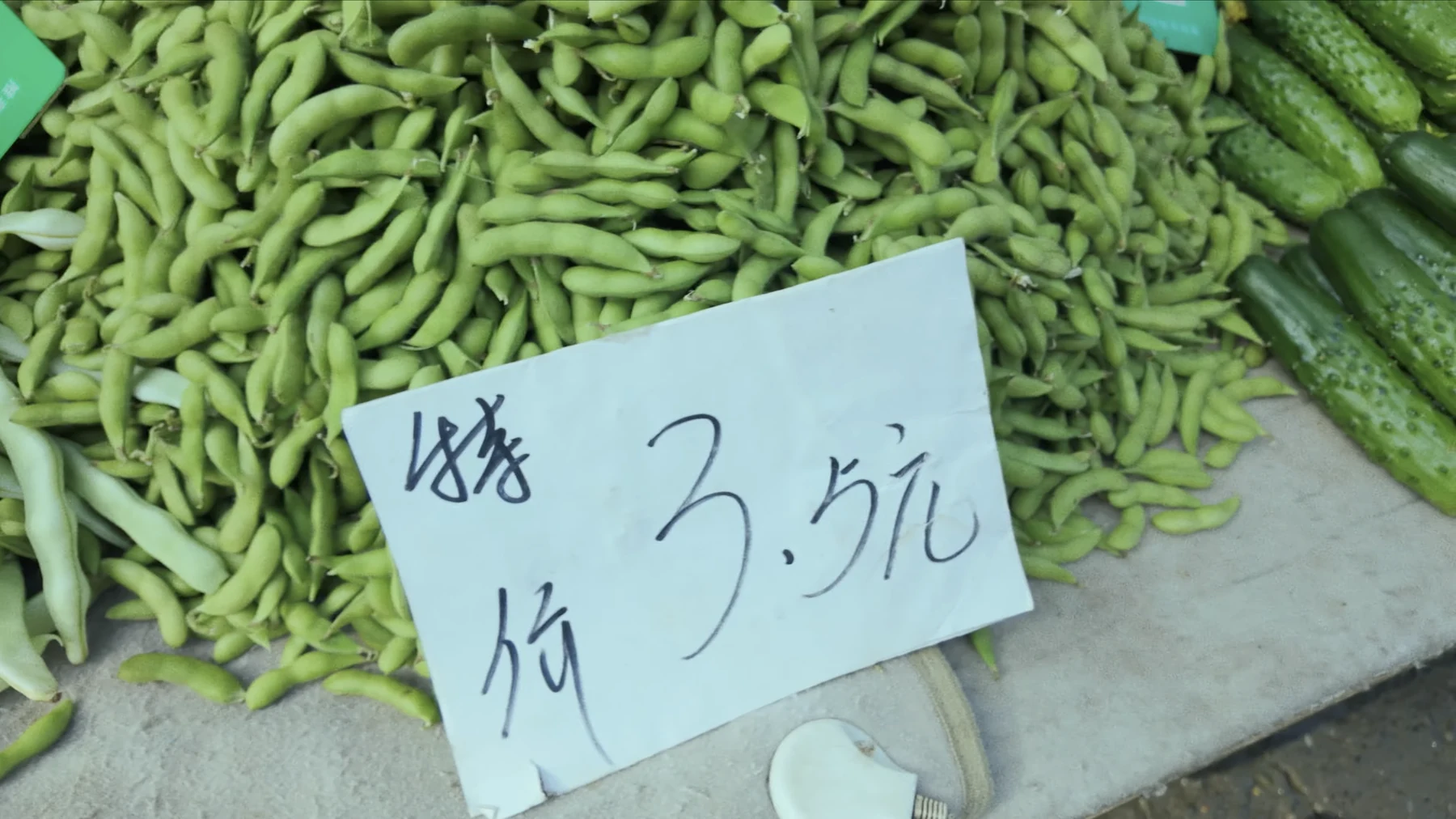
Not every sign is on a printed card. Plenty are just marker on cardboard or paper, which is where handwriting gets adventurous. The yam stall below simply states the price, 4元1斤, on a torn piece of box. The edamame sign nearby is even rougher, but the number that matters, the price, is still clear.
How people pay
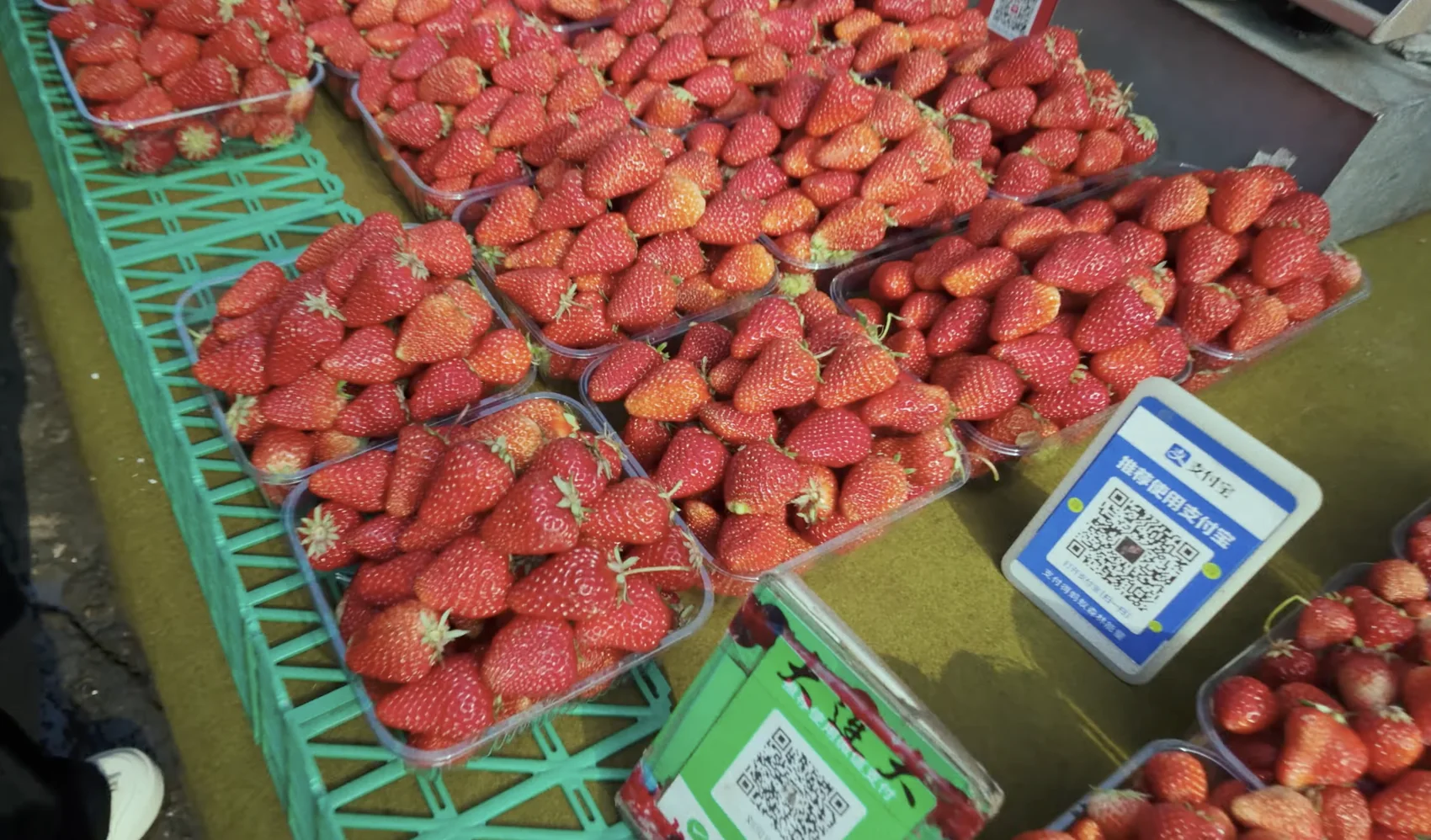
Here is the part that surprises first-time visitors. This rough, local, cash-looking market is almost entirely cashless. Next to the scale on nearly every stall you will see small printed cards with QR codes. There are two systems, and you can recognize them by color:
- 微信支付 (Wēixìn zhīfù), WeChat Pay, on a green card.
- 支付宝 (Zhīfùbǎo), Alipay, on a blue card.
You open your app, scan the vendor's code with 扫一扫 (sǎo yī sǎo), the "scan" function, type in the amount, and pay. The vendor's phone chimes to confirm. Many stalls display both a green and a blue card side by side so you can use whichever app you have.
For more on getting these apps working as a visitor, see our guide to paying in China with WeChat Pay and Alipay.
The Shanghai supermarket
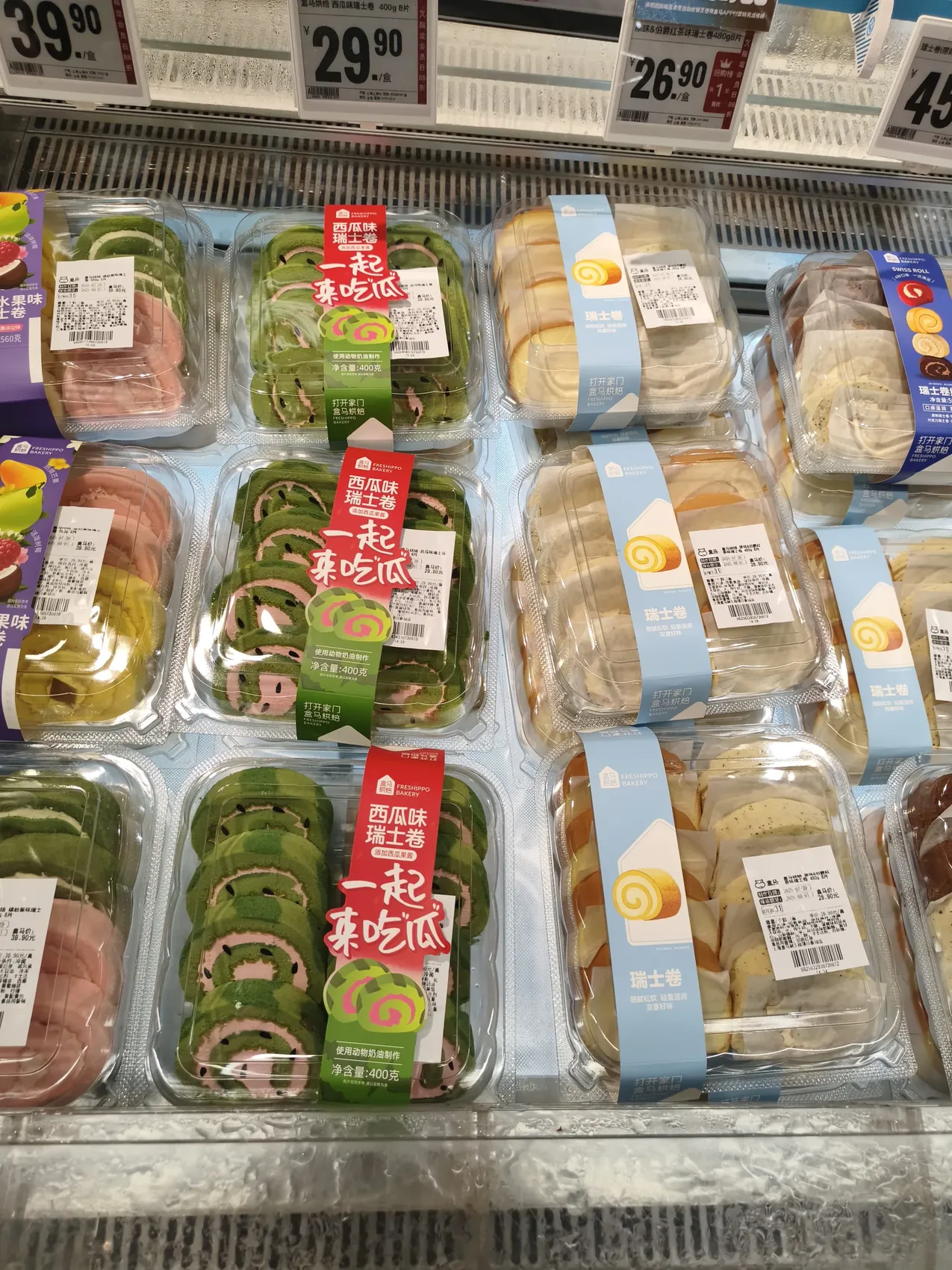
Now switch worlds. This is a 盒马 (Hémǎ) store, known in English as Freshippo, the supermarket chain run by Alibaba. It is bright, climate-controlled, and built around an app. The handwriting is gone, replaced by printed and electronic tags, but the underlying vocabulary, weights and payment logic are the same ones you just learned.
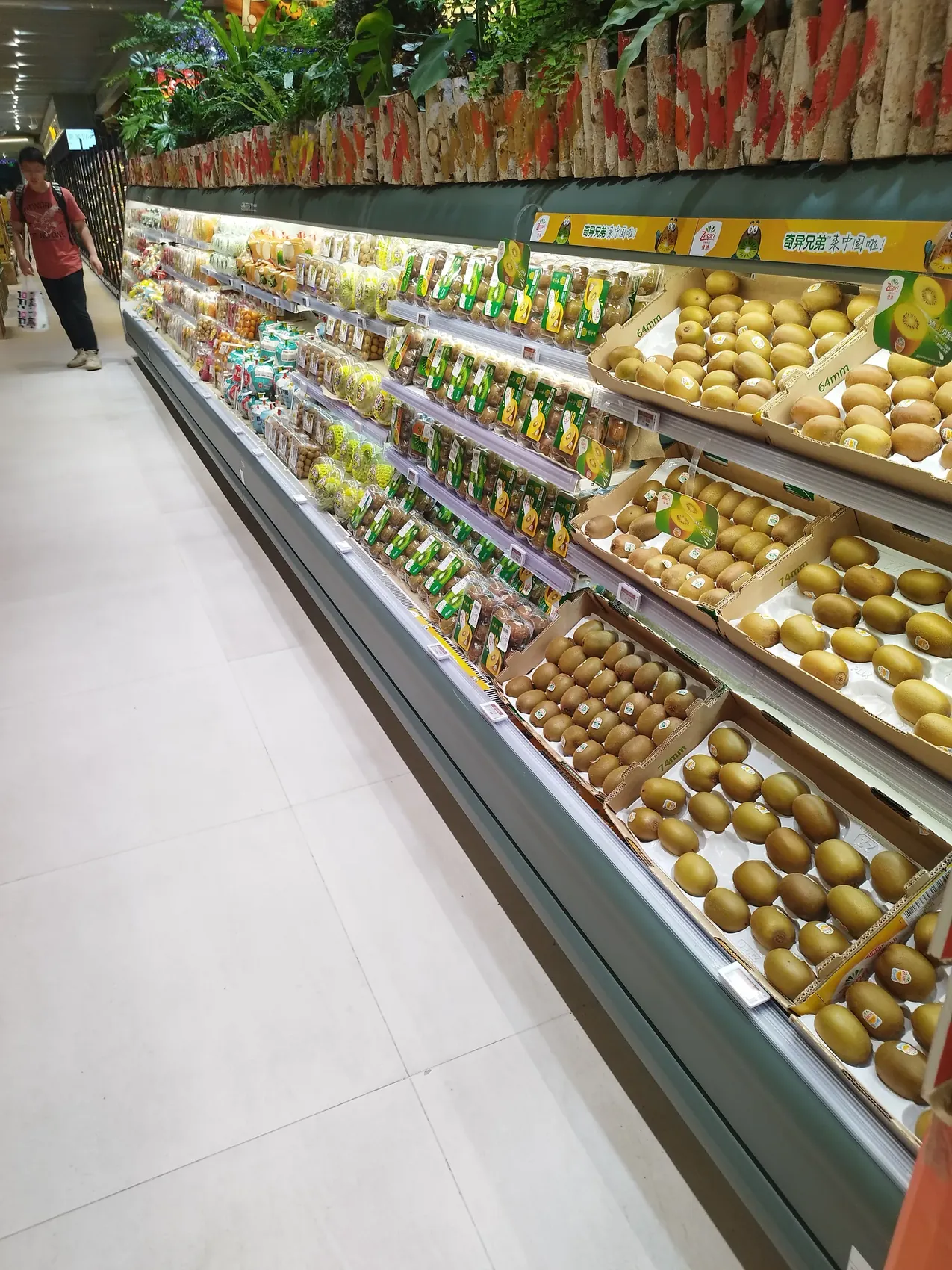
East meets west on the shelves
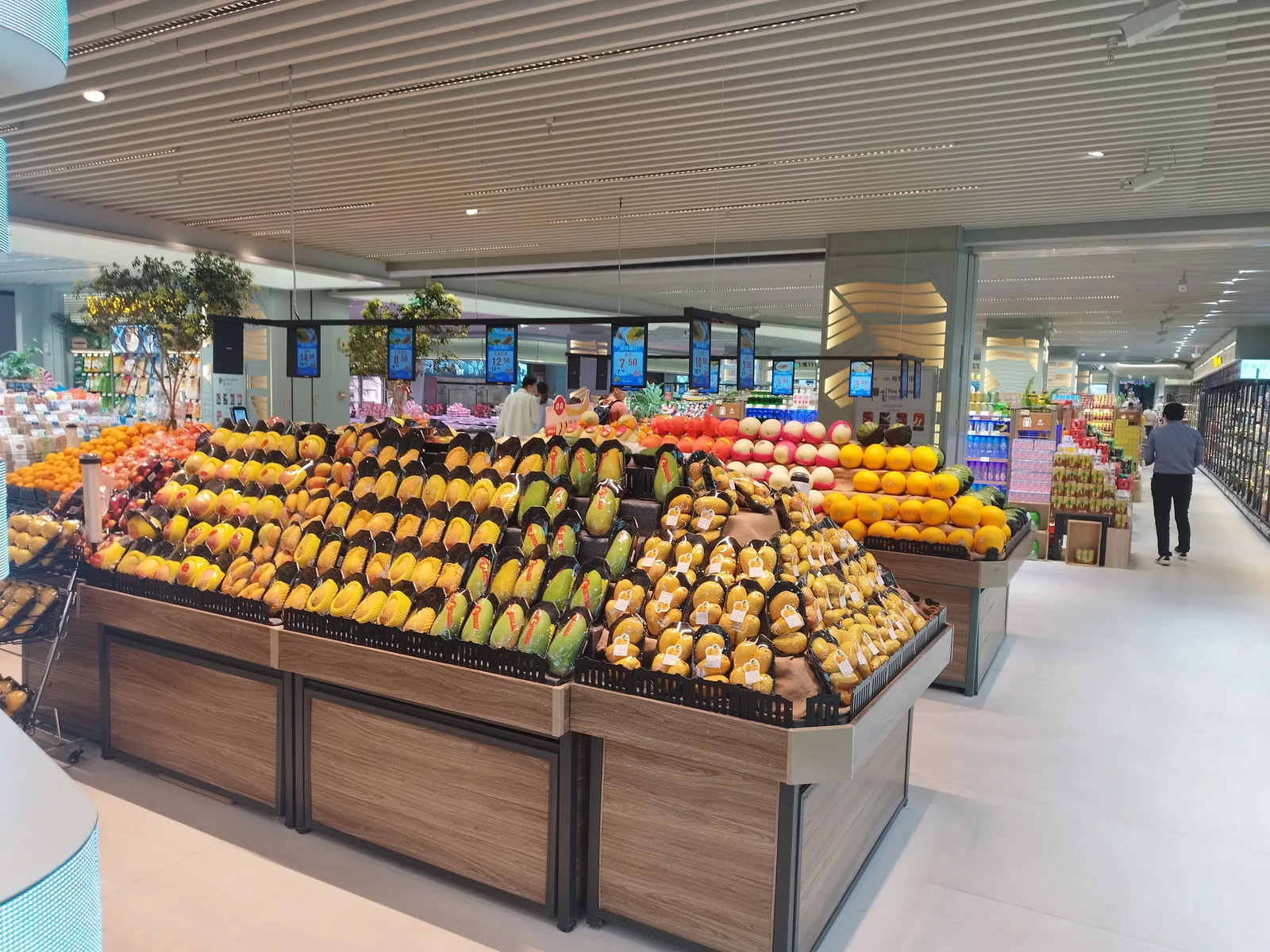
What stands out in a store like this is the blend of imported and domestic goods on the same shelf. The fruit section carries 进口 (jìnkǒu), imported, kiwifruit from Zespri in New Zealand stacked next to local produce. The drinks aisle puts Belgian and Japanese beer beside Chinese brands.
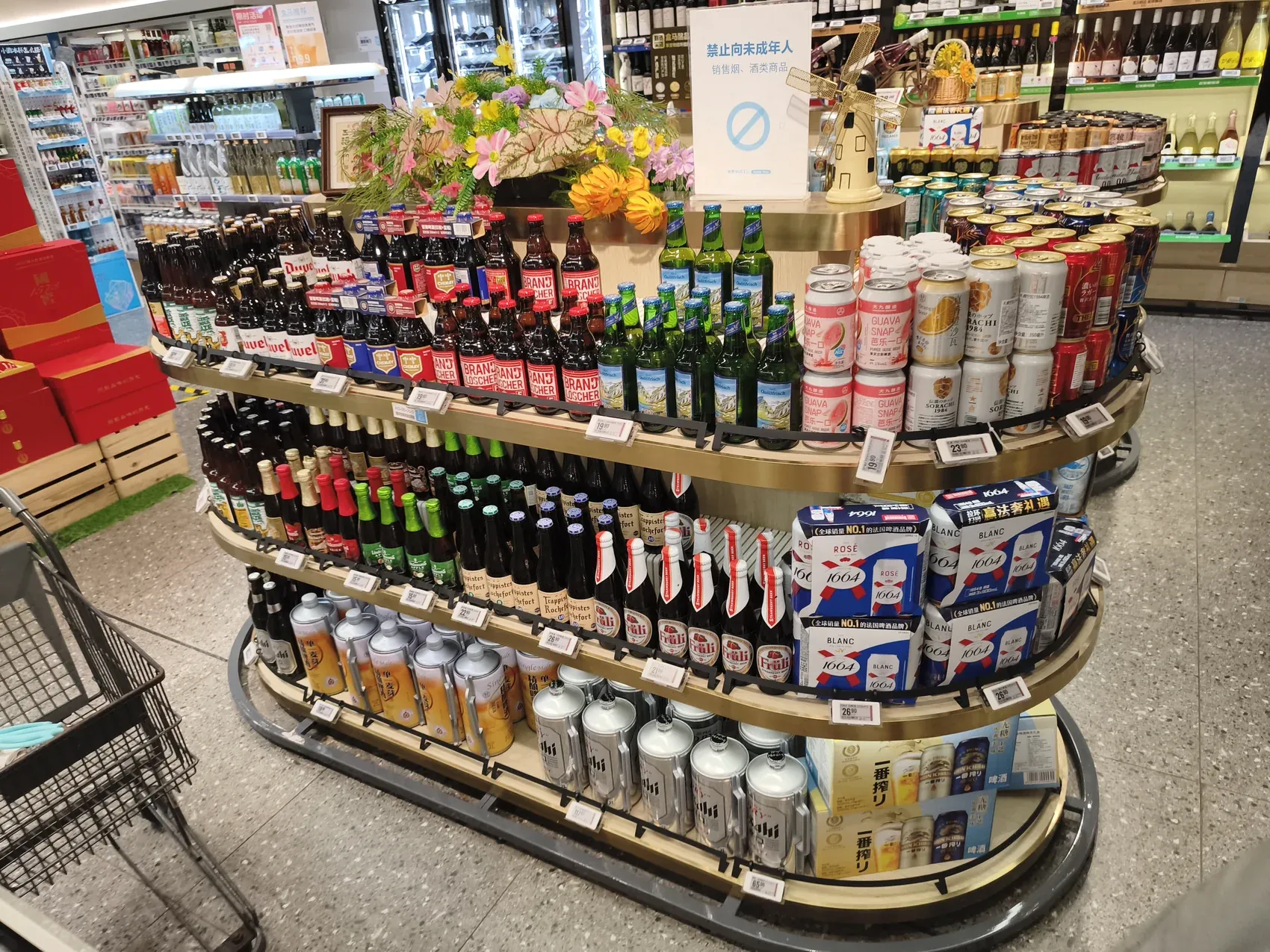
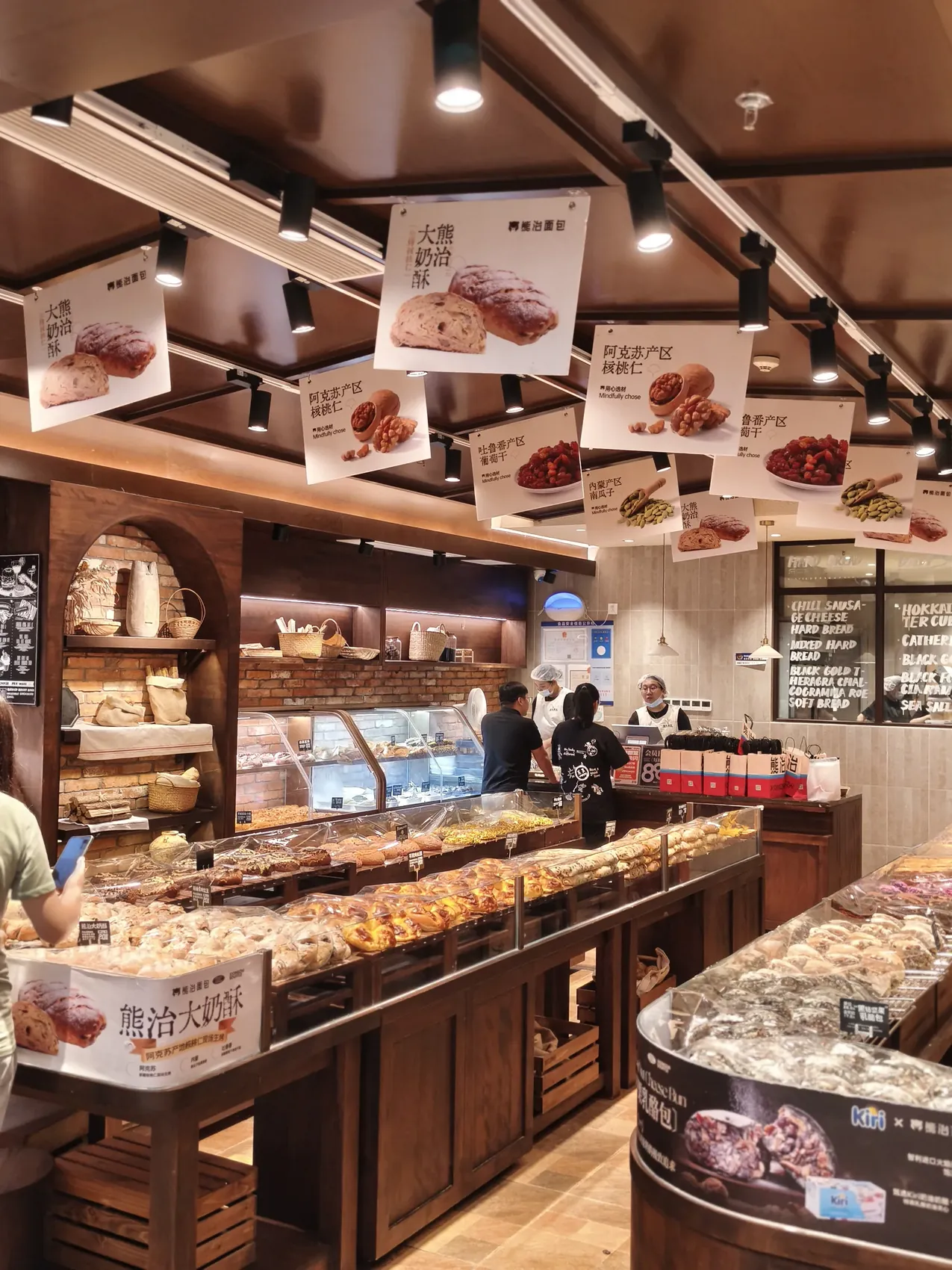
Even the in-store bakery leans Western, with sourdough-style loaves and pastries sold loose. But look up: the ceiling cards explain that the ingredients are sourced from named regions across China. The walnuts come from 阿克苏 (Ākèsū), Aksu in Xinjiang; the raisins from 吐鲁番 (Tǔlǔfān), Turpan; the pumpkin seeds from 内蒙 (Nèiměng), Inner Mongolia. The same origin-as-quality logic from the street market, dressed up for a premium shelf.
Orders that fly overhead
The detail that makes a Freshippo store famous is above your head. Running along the ceiling is a rail, and clipped to it are insulated bags moving steadily toward the back of the store. Each one is an online order. A shopper somewhere nearby placed it on the app; a picker walked the same floor you are walking, filled the bag, hooked it to the rail, and it is now on its way to a delivery rider.
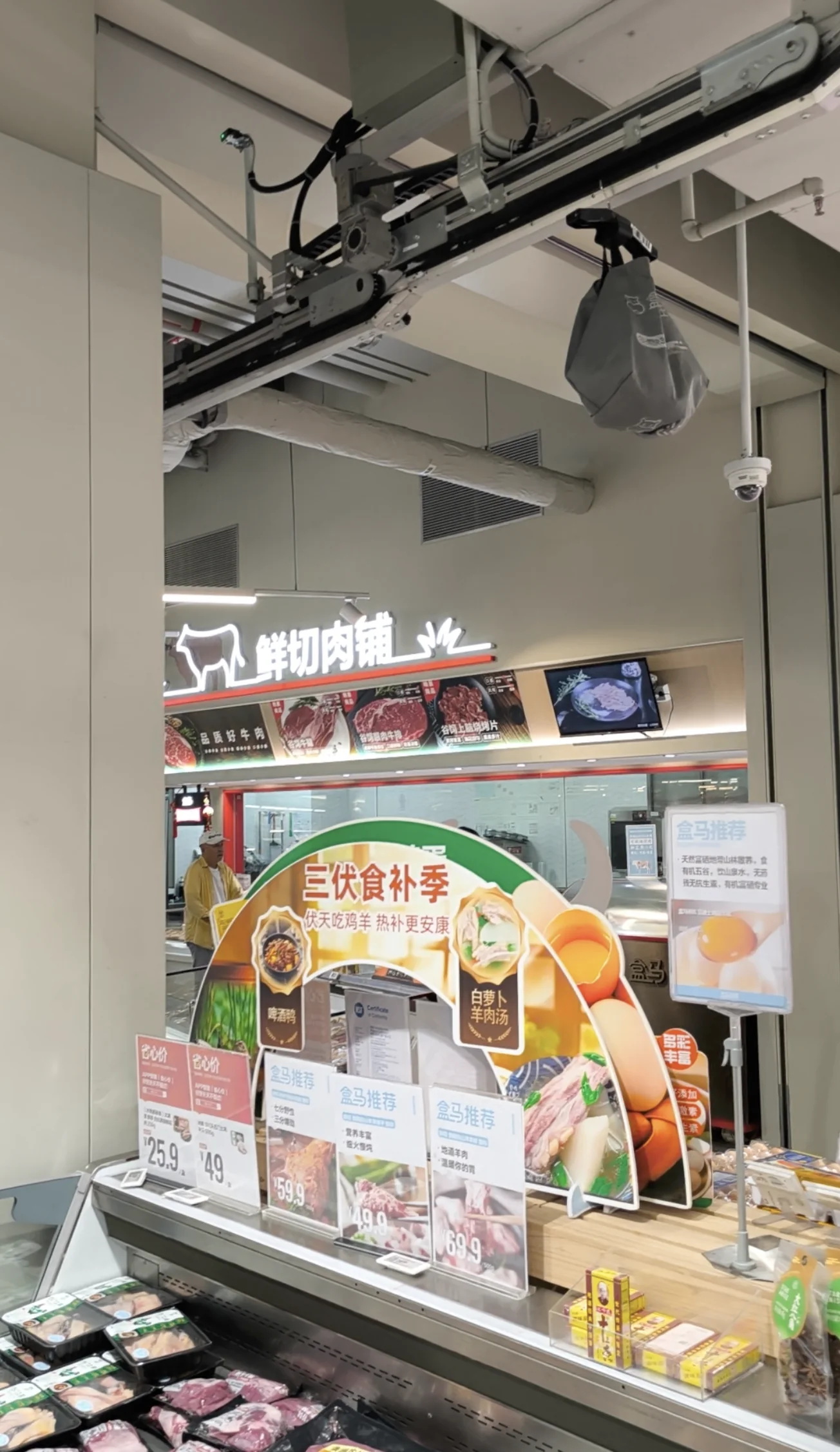
The store doubles as a warehouse. Within roughly three kilometers, an order placed on the app is delivered to your door in about thirty minutes. It is the clearest possible contrast with the Dalian market: same country, same week, two completely different ways of buying a bag of fruit.
| Word | Pinyin | Meaning |
|---|---|---|
| 超市 | chāoshì | supermarket |
| 进口 | jìnkǒu | imported |
| 国产 | guóchǎn | domestically produced |
| 面包 | miànbāo | bread |
| 啤酒 | píjiǔ | beer |
| 葡萄酒 | pútáojiǔ | wine |
| 配送 | pèisòng | delivery |
| 线上下单 | xiànshàng xiàdān | to order online |
Full shopping vocabulary
Everything from this article in one place. These words carry you from the cheapest tarp on the ground to the most automated supermarket in the country.
| Word | Pinyin | Meaning |
|---|---|---|
| 买东西 | mǎi dōngxi | to shop, to buy things |
| 多少钱 | duōshǎo qián | how much (money) |
| 元 / 块 | yuán / kuài | yuan (written / spoken) |
| 斤 | jīn | half a kilo (500g) |
| 价格 | jiàgé | price |
| 特价 | tèjià | special offer |
| 便宜 | piányi | cheap |
| 贵 | guì | expensive |
| 新鲜 | xīnxiān | fresh |
| 甜 | tián | sweet |
| 水果 | shuǐguǒ | fruit |
| 蔬菜 | shūcài | vegetables |
| 扫码 | sǎomǎ | to scan a QR code |
| 微信支付 | Wēixìn zhīfù | WeChat Pay |
| 支付宝 | Zhīfùbǎo | Alipay |
| 现金 | xiànjīn | cash |
None of this is advanced Chinese. It is a handful of characters, the numbers you already know, and two payment apps. But it is the difference between standing helpless at a stall and buying half a kilo of strawberries like you have done it a hundred times. That is the kind of practical Mandarin we focus on in our Travel Chinese lessons.