
Beijing National Library
Study Materials · 声调 Tones

Chinese Tones:
The Complete Guide

Mandarin has four tones plus a neutral. Get them wrong and you say something completely different. Get them right and everything else becomes easier. Also see our beginner's guide to Chinese tones for a practical introduction with examples.

4 tones + neutral Minimal pairs Common mistakes All levels
The fundamentals

The four tones,
one by one

First tone · 第一声

High and flat

Stay high and level throughout. Think of a sustained musical note, or the sound you make when a doctor asks you to say "aah". Do not let it drop or rise.
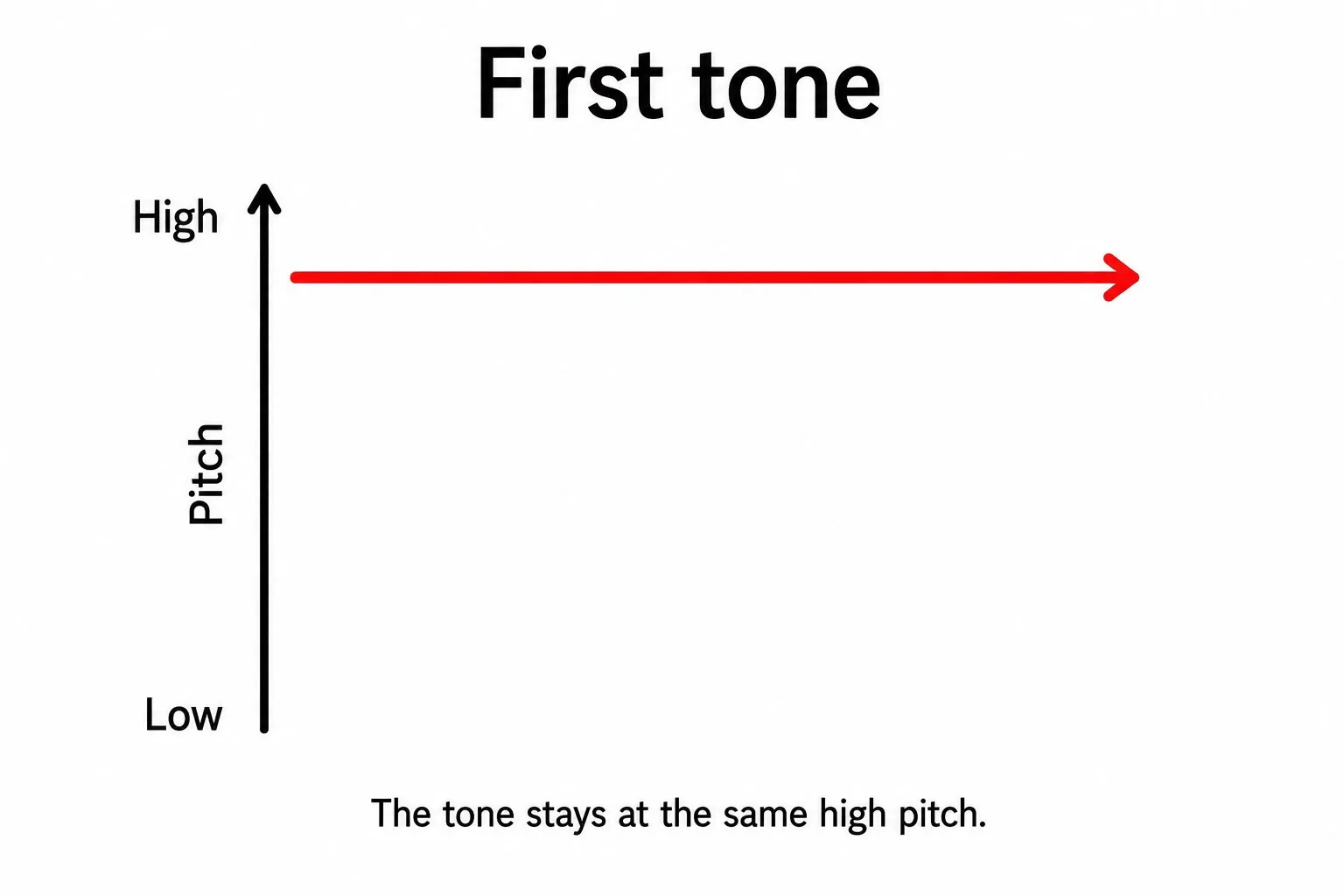
First tone pitch diagram: flat high line
mother
shū
book
fēi
to fly
Second tone · 第二声

Rising

Start mid-pitch and rise sharply to the top, like asking a question in English: "Really?" The rise should be confident and reach a clear high point.
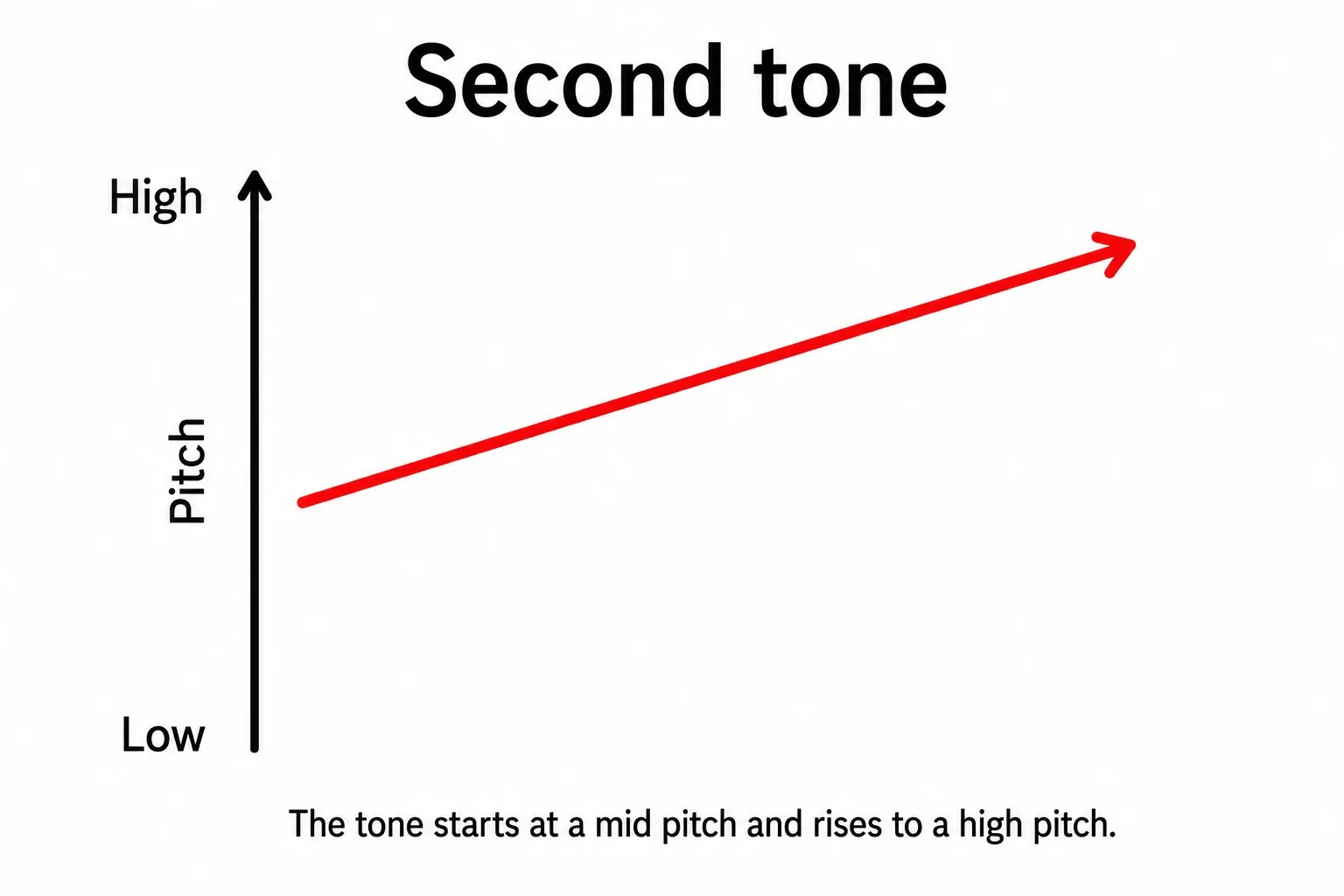
Second tone pitch diagram: rising line
hemp, numb
lái
to come
nián
year
Third tone · 第三声

Dipping

Start mid, dip down low, then rise again. In natural speech before another syllable, it often only dips without rising fully. This "half third tone" is normal and correct.
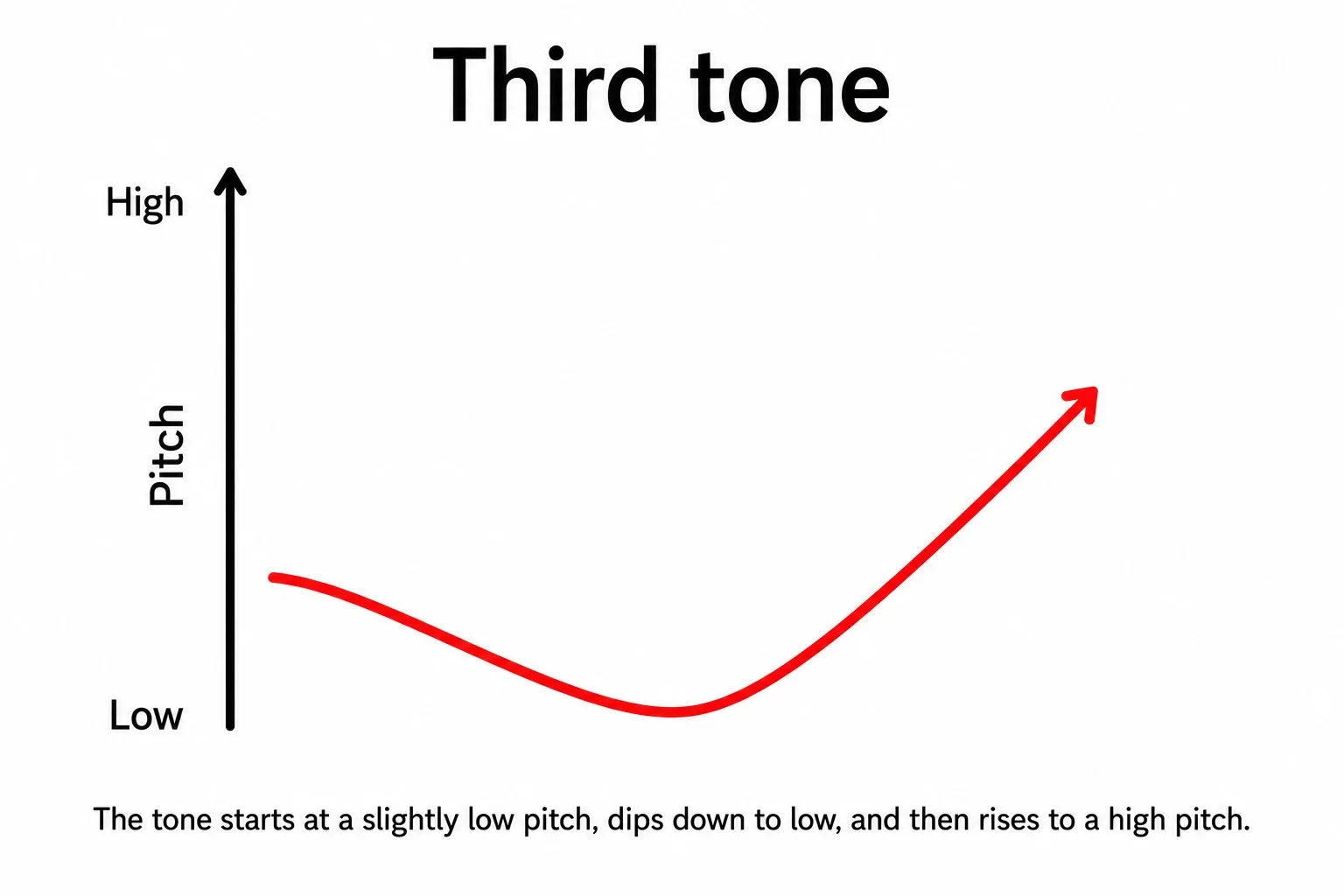
Third tone pitch diagram: dipping curve
horse
you
shuǐ
water
Fourth tone · 第四声

Falling

Start high and fall sharply to the bottom. Like giving a sharp command in English: "Stop!" or "Now!" It should feel decisive and short.
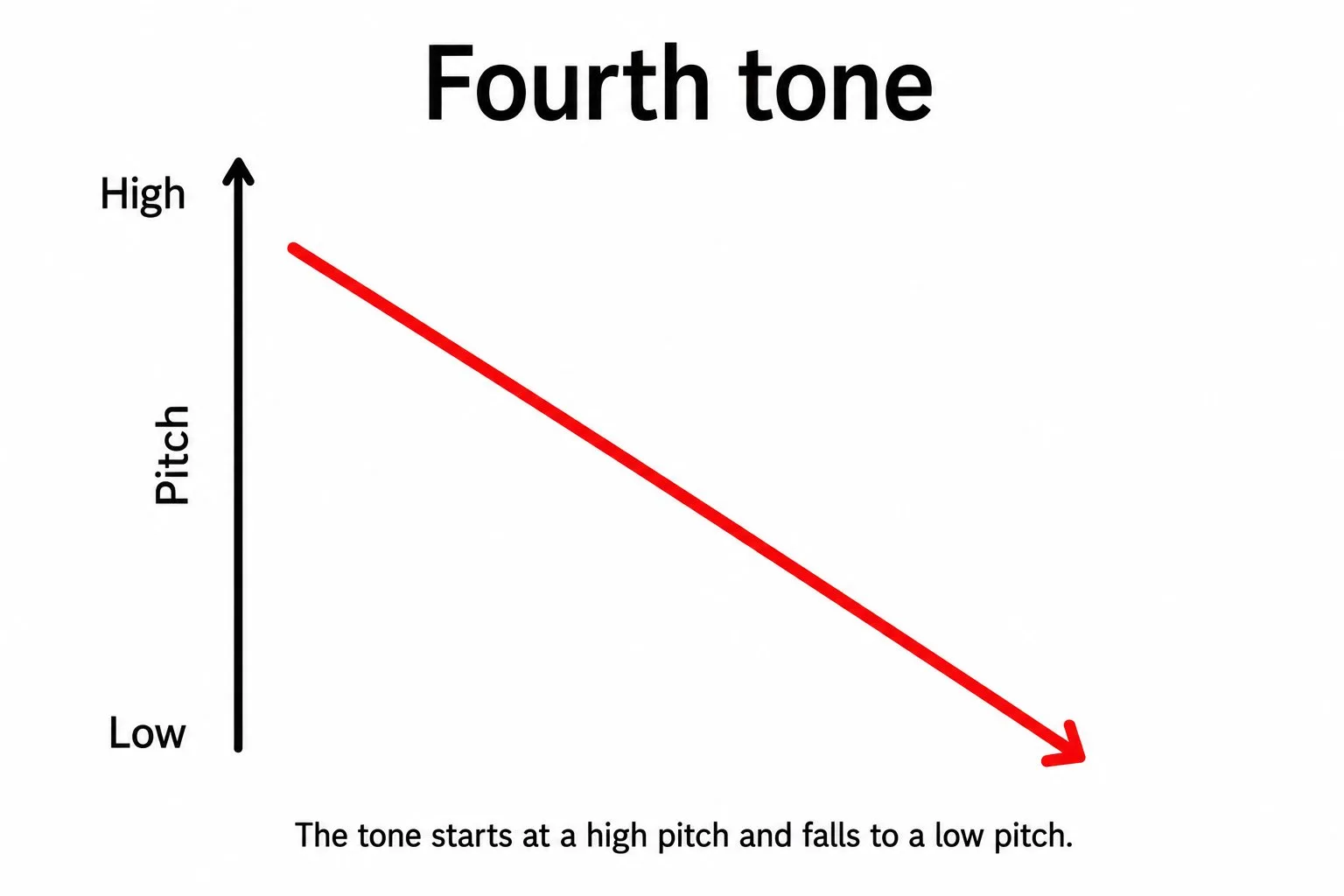
Fourth tone pitch diagram: falling line
to scold
to go
shì
to be
Fifth tone

The neutral tone · 轻声

The neutral tone (also called the fifth tone or 轻声 qīngshēng) is short, light and unstressed. It appears in syllables that have lost their original tone in connected speech, most commonly in particles, suffixes and the second syllable of certain words. Examples: 吗 (ma), 呢 (ne), 吧 (ba), 爸爸 (bàba), 妈妈 (māma). You do not need a special pitch for it, just say it quickly and lightly after the preceding syllable.

Why tones matter

Same sound,
different meaning

These four syllables show how a single sound can mean four completely different things depending only on tone. Getting the tone wrong does not just make you sound foreign, it changes what you actually said.

mā / má / mǎ / mà
mā · tone 1
mother
má · tone 2
hemp, numb
mǎ · tone 3
horse
mà · tone 4
to scold
wén / wěn / wèn
wén · tone 2
language, culture
wěn · tone 3
to kiss
wèn · tone 4
to ask
mǎi / mài
mǎi · tone 3
to buy
mài · tone 4
to sell
jī / jǐ / jì
jī · tone 1
chicken
jǐ · tone 3
how many
jì · tone 4
to remember
What trips learners up

The most common
tone mistakes

↔️
Confusing tone 2 and tone 3
Both involve movement, which makes them easy to blur. Tone 2 only rises. Tone 3 dips before it rises (or just dips in fast speech). Exaggerate the dip when practising tone 3 until the difference becomes automatic.
📉
Not going high enough on tone 1
Native speakers produce tone 1 at the very top of their pitch range. Most learners place it in the middle and end up with something that sounds like a vague tone 2. Push it up higher than feels natural at first.
🔗
Tone sandhi: two third tones in a row
When two third-tone syllables appear together, the first one changes to a rising second tone. So 你好 (nǐ hǎo) is pronounced as if it were nì hǎo. This is called tone sandhi and it is a rule, not optional.
Making the neutral tone too heavy
The neutral tone should be short and light. Learners often give it a full tone 4 shape without realising. Particles like 吗 and 呢 should land quickly at the end of a sentence, not drag it down.
🎯
Focusing on tones in isolation instead of words
Learning tones as abstract exercises (first tone, second tone…) is less effective than learning each word with its tone from the start. When you learn 买 (mǎi), do not separate the character from the tone. They are one thing.