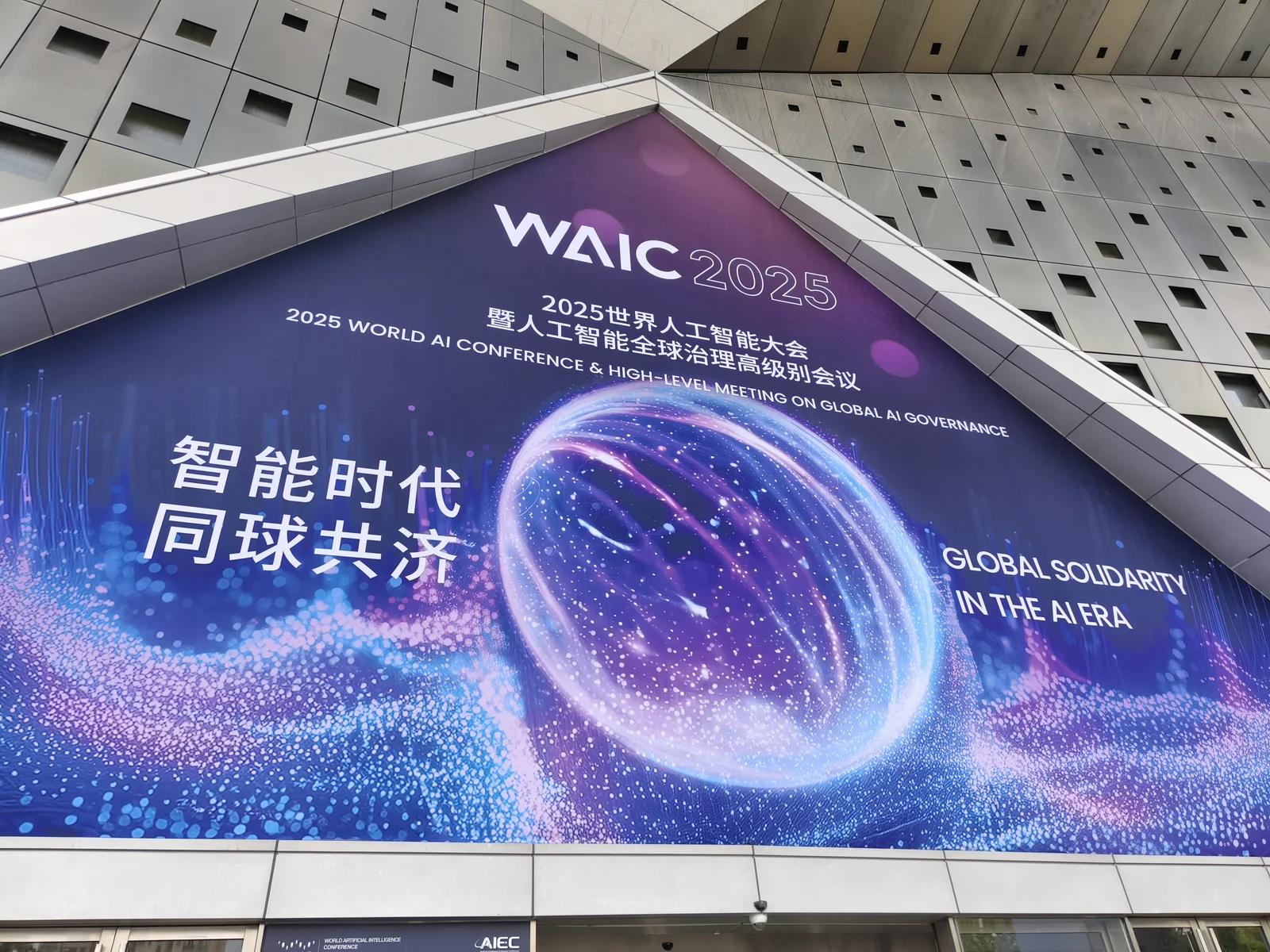
AI in the city that invented the future
At the end of July, we traded online lessons for a train to Shanghai. The destination: WAIC 2025, the World Artificial Intelligence Conference, China's flagship AI event, held every year at the Shanghai World Expo Center. This year's theme was 智能时代,同球共济: Global Solidarity in the AI Era. We didn't fully expect what was waiting for us inside.
The entrance: no ticket needed, your face is enough
We had our QR code ready before we even got to the gate. We didn't need it. The face recognition system had already identified us and opened the barrier before we could raise our phones. No scanning, no waiting, no friction: just a beep and a green light. It was a small moment that perfectly set the tone for everything that followed.
For anyone learning Chinese, 人脸识别 (rén liǎn shí bié, face recognition), note the four different tones across those four syllables, is a phrase you'll encounter constantly in modern China. At airports, train stations, hotels, and now apparently at tech conferences too. It has become completely unremarkable to most Chinese people, while still catching visitors from elsewhere off guard.
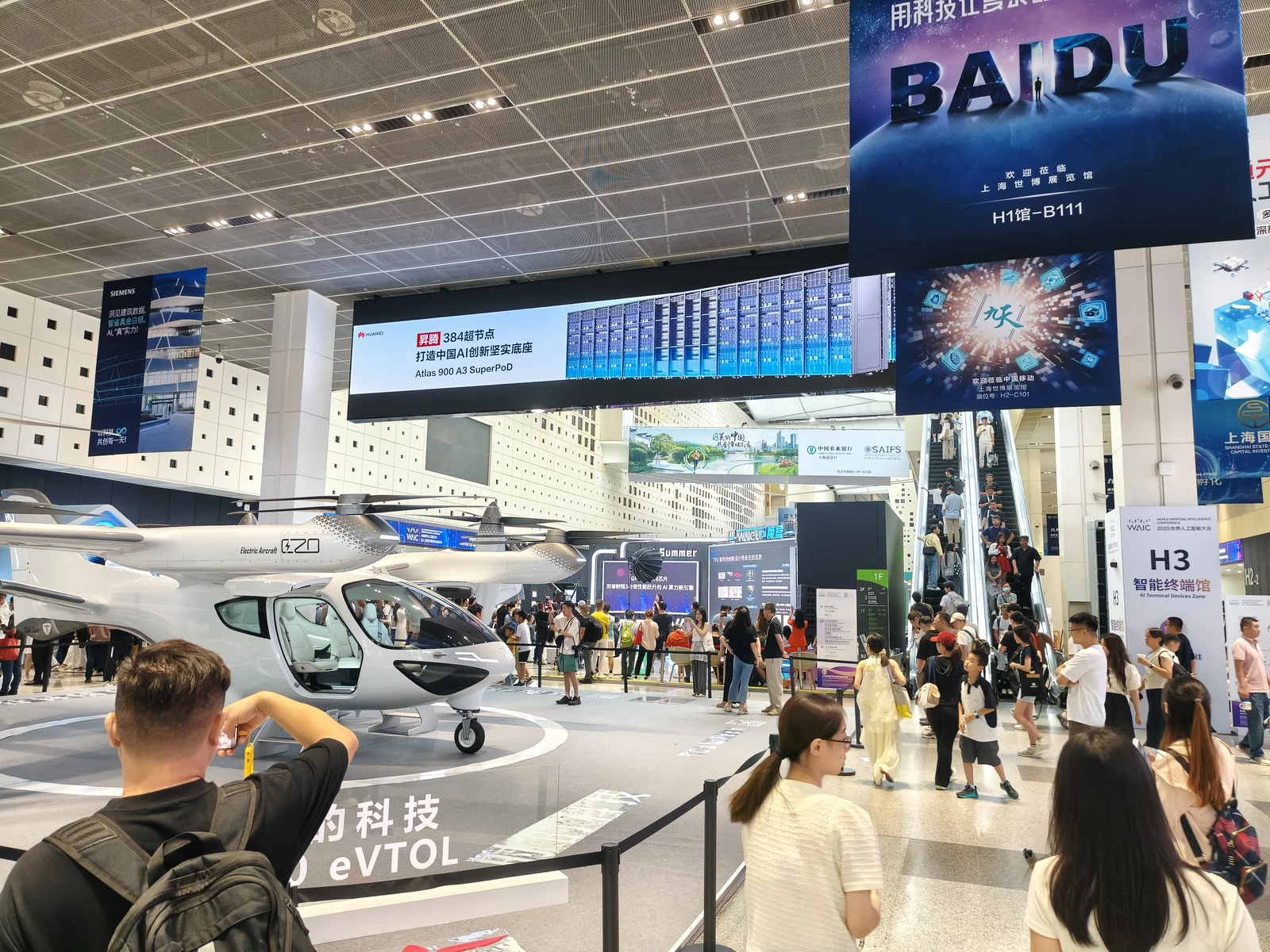
70,000 square meters of the future
The numbers for WAIC 2025 were staggering. Over 800 companies from more than 40 countries filled more than 70,000 square meters of exhibition space, a 34% increase from the previous year. There were 3,000 exhibits in total, including 40 large language models, 50 AI-powered devices, and more than 100 products making their global or China debut.
The conference drew more than 300,000 visitors over four days, alongside 1,200 delegates including 12 Turing Award and Nobel Prize laureates. Chinese Premier Li Qiang opened the event and used the platform to propose a new global AI cooperation organization: a direct response to the fragmented, protectionist approach to AI governance that has been emerging elsewhere in the world.
Former Google CEO Eric Schmidt was also present, making an explicit call for the US and China to collaborate: "As the largest and most significant economic entities in the world, the United States and China should collaborate on these issues," he said. In a world of increasing tech nationalism, WAIC was a very visible counter-argument.
70,000 m² exhibition space · 800+ companies · 3,000+ exhibits · 300,000+ visitors · 40+ countries · 60 humanoid robots on the floor
Technology you could actually touch
What made WAIC different from watching a keynote stream was the sheer physicality of it. The innovations weren't behind glass or on slides. They were running, moving, and occasionally making coffee.
Huawei's Atlas 900 A3 SuperPod
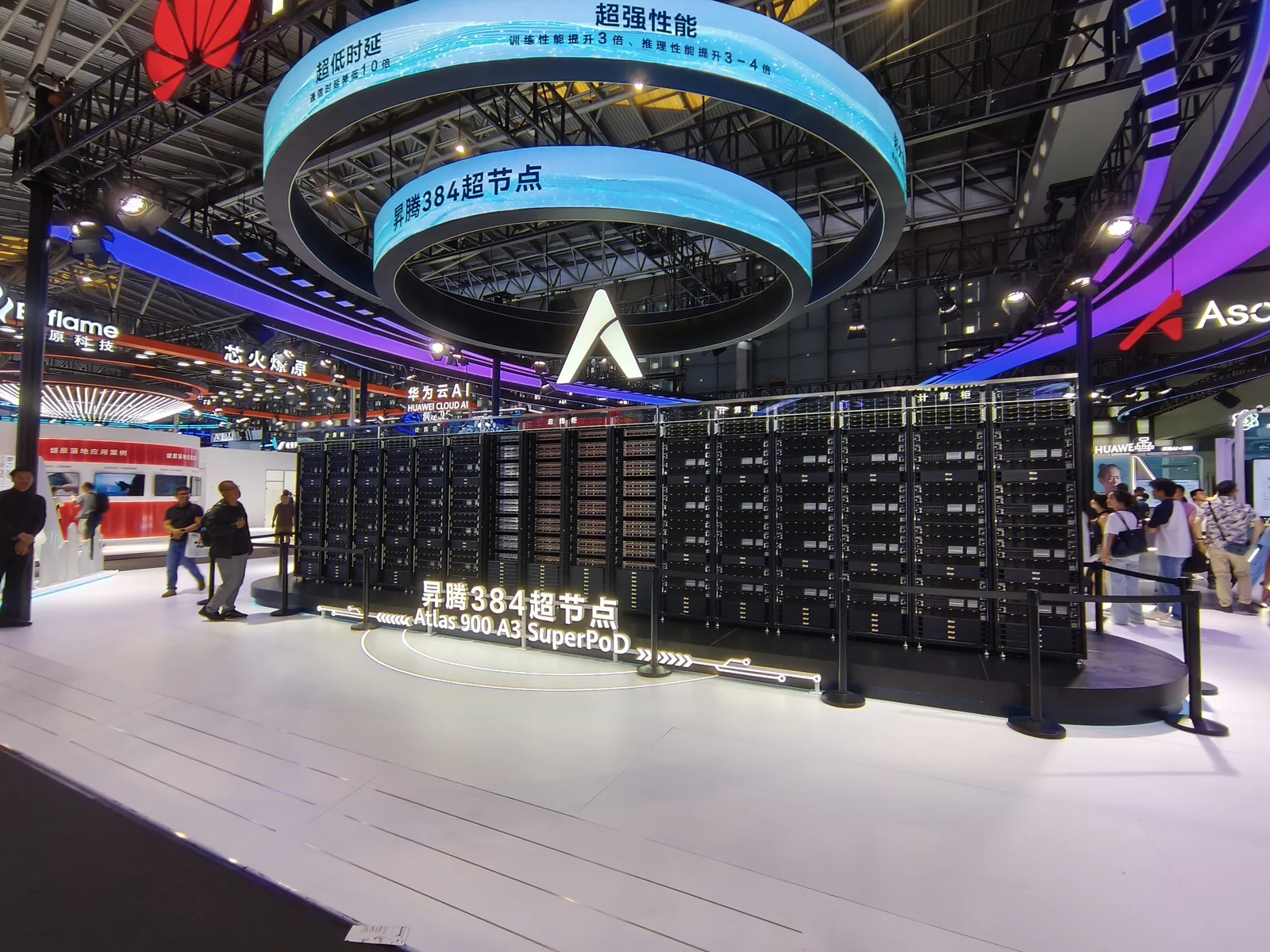
One of the most visually impressive exhibits was Huawei's 昇腾384超节点 (Shēngténg 384 chāo jiédiǎn), the Atlas 900 A3 SuperPod. A massive wall of server racks, it represents China's most direct challenge to Nvidia's monopoly on AI training hardware. The signage claimed training performance three times higher and inference speed three to four times faster than previous generations. In the context of US chip export restrictions, seeing this kind of domestic infrastructure up close felt significant.
KlingAI and the creative tools
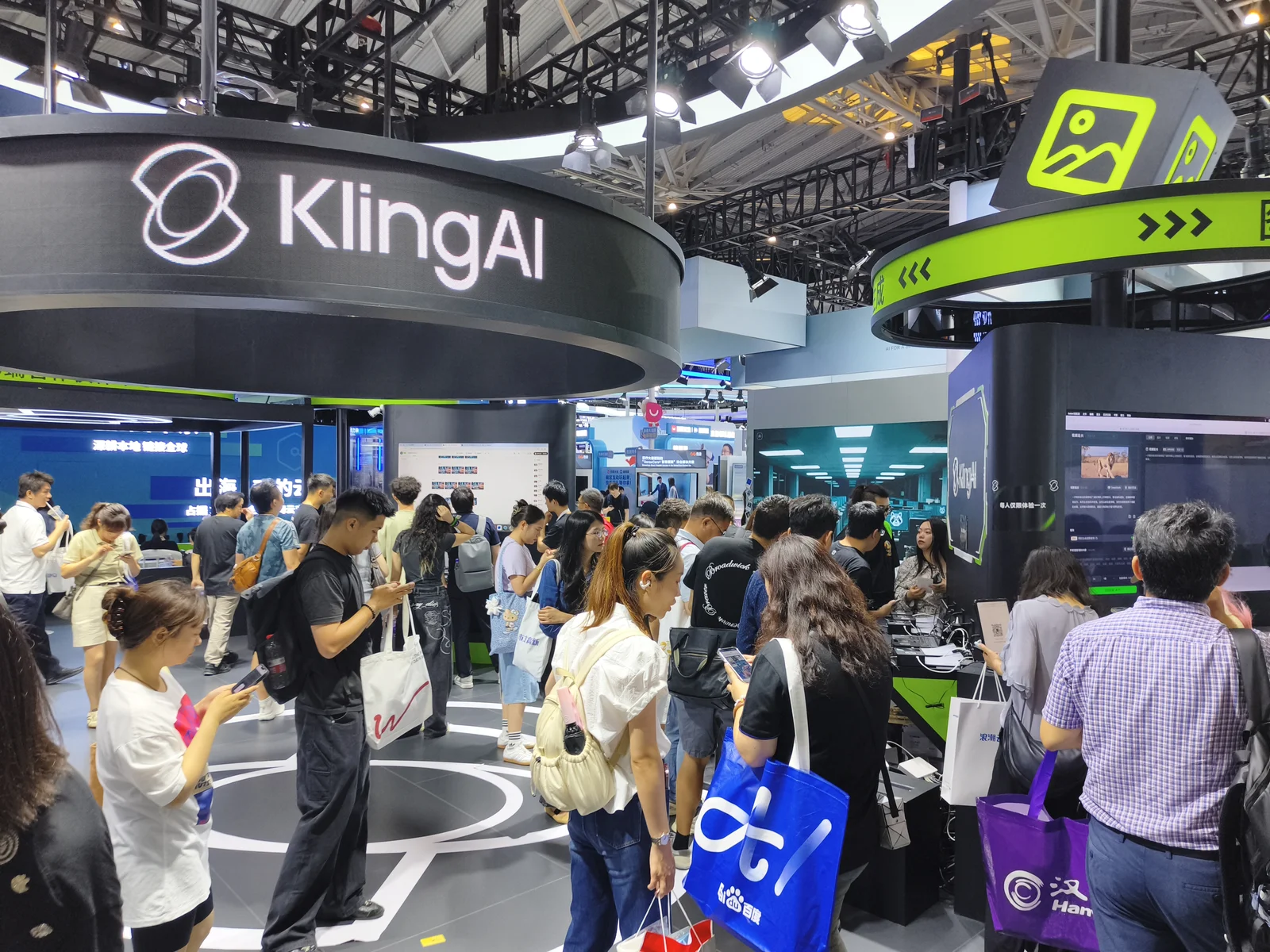
The KlingAI booth (from Kuaishou Technology) was consistently one of the most crowded areas of the entire conference. KlingAI is China's leading AI video generation model, and the live demos were drawing a constant stream of visitors wanting to see text-to-video generation running in real time. Chinese creative AI tools have been developing rapidly, and seeing the public reaction (people genuinely amazed rather than sceptical) was telling.
The robots: always good for the cameras
If there was one thing that drew the biggest crowds and generated the most content for phones held aloft, it was the robots. WAIC 2025 featured more than 60 intelligent robots across the exhibition floor, more than three times the number from the previous year. Over 80 robotics companies participated, compared to just 18 in 2024.
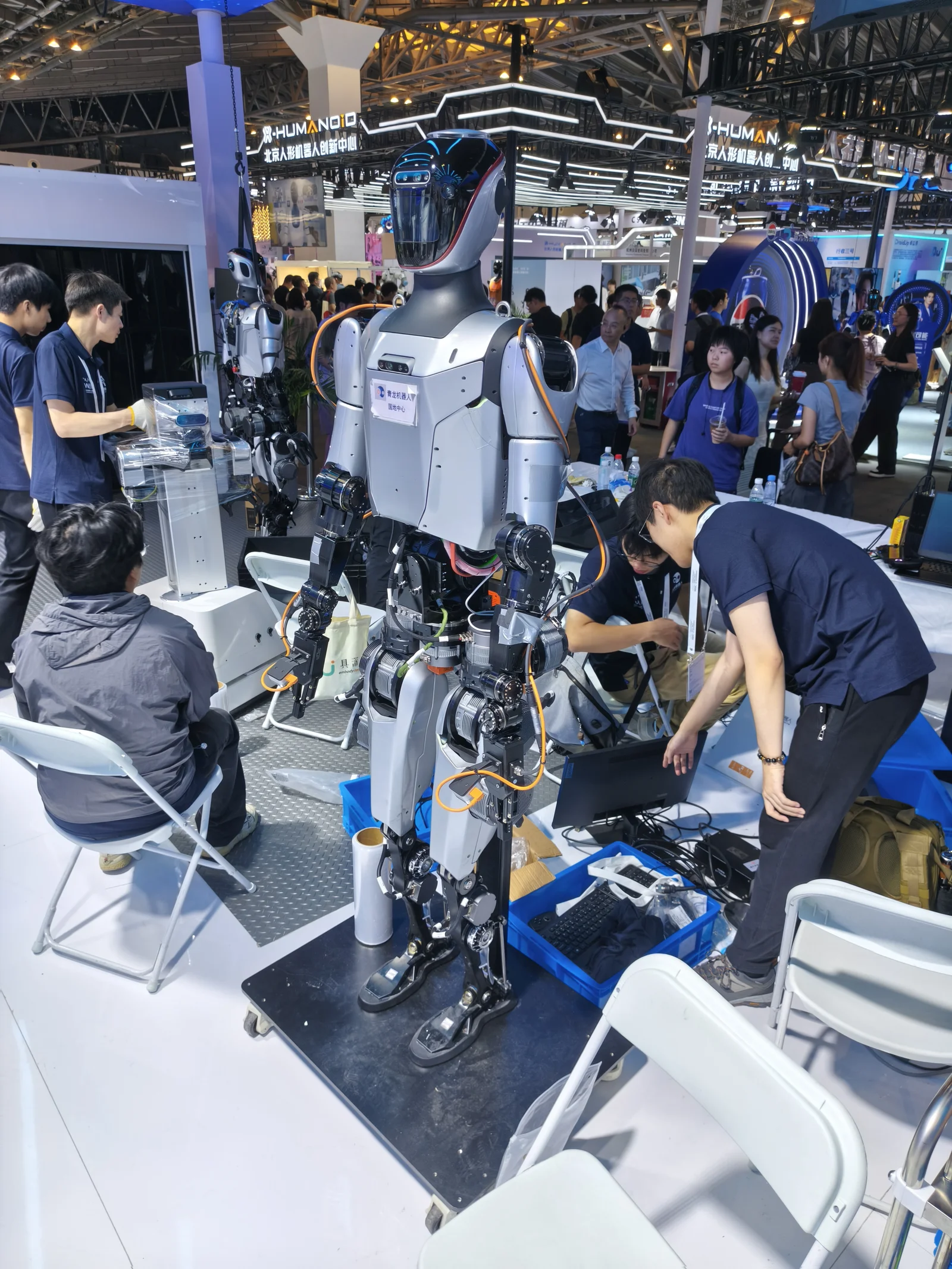
We watched engineers at the Beijing Humanoid Robotics Innovation Center (北京人形机器人创新中心, Běijīng rénxíng jīqìrén chuàngxīn zhōngxīn) crouched around a full-size humanoid robot, laptops open, making fine adjustments. Wires visible, joints exposed: it looked more like a Formula 1 pit stop than a polished product demo. That honesty was refreshing.
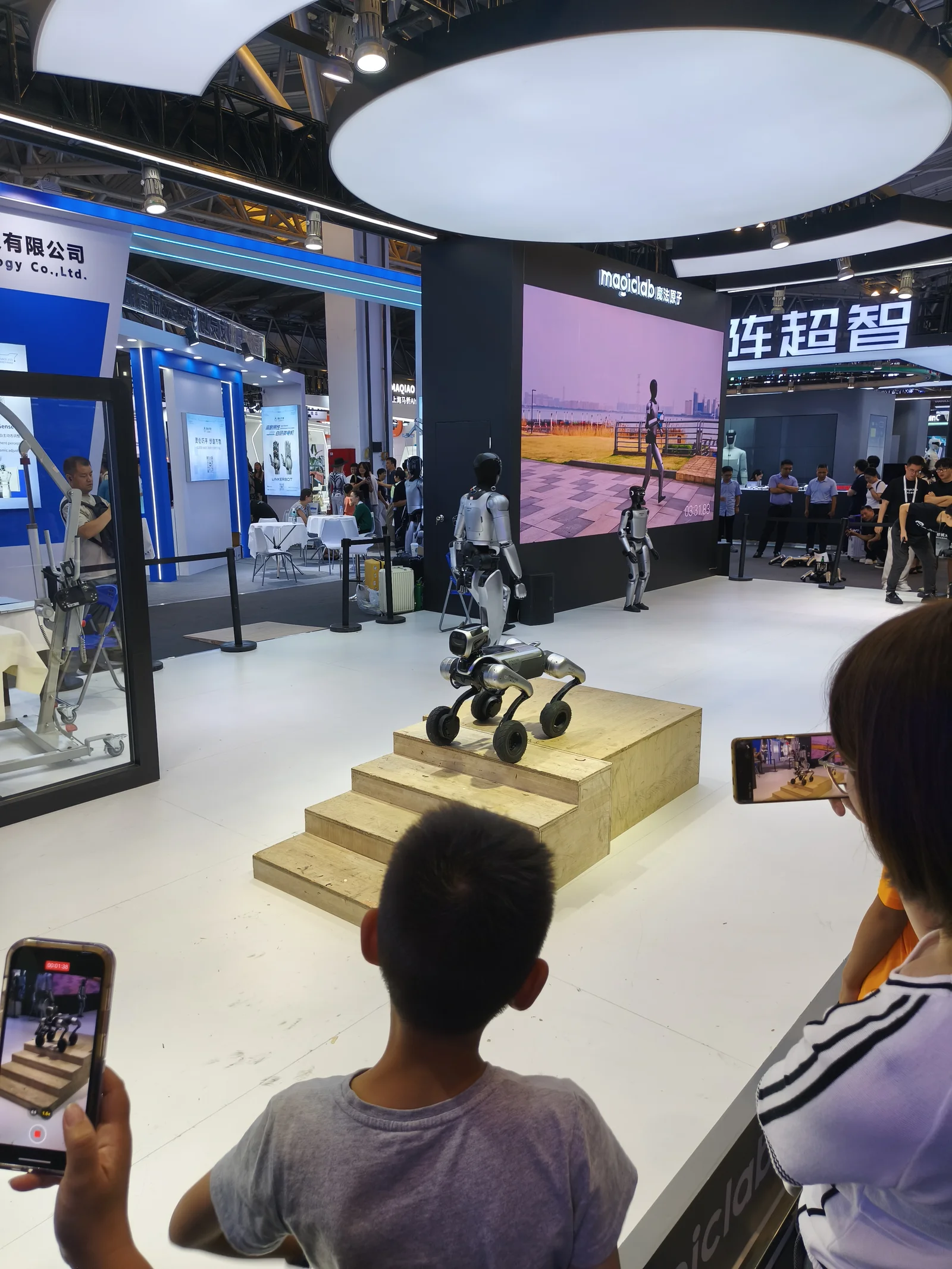
At the MagicLab (魔法原子) stand, a robot dog was navigating a set of wooden steps while a child in front of it filmed with a phone, and someone beside him filmed the child filming. This is very China 2025: technology so normalised that the reaction to it has itself become content.
The coffee robot
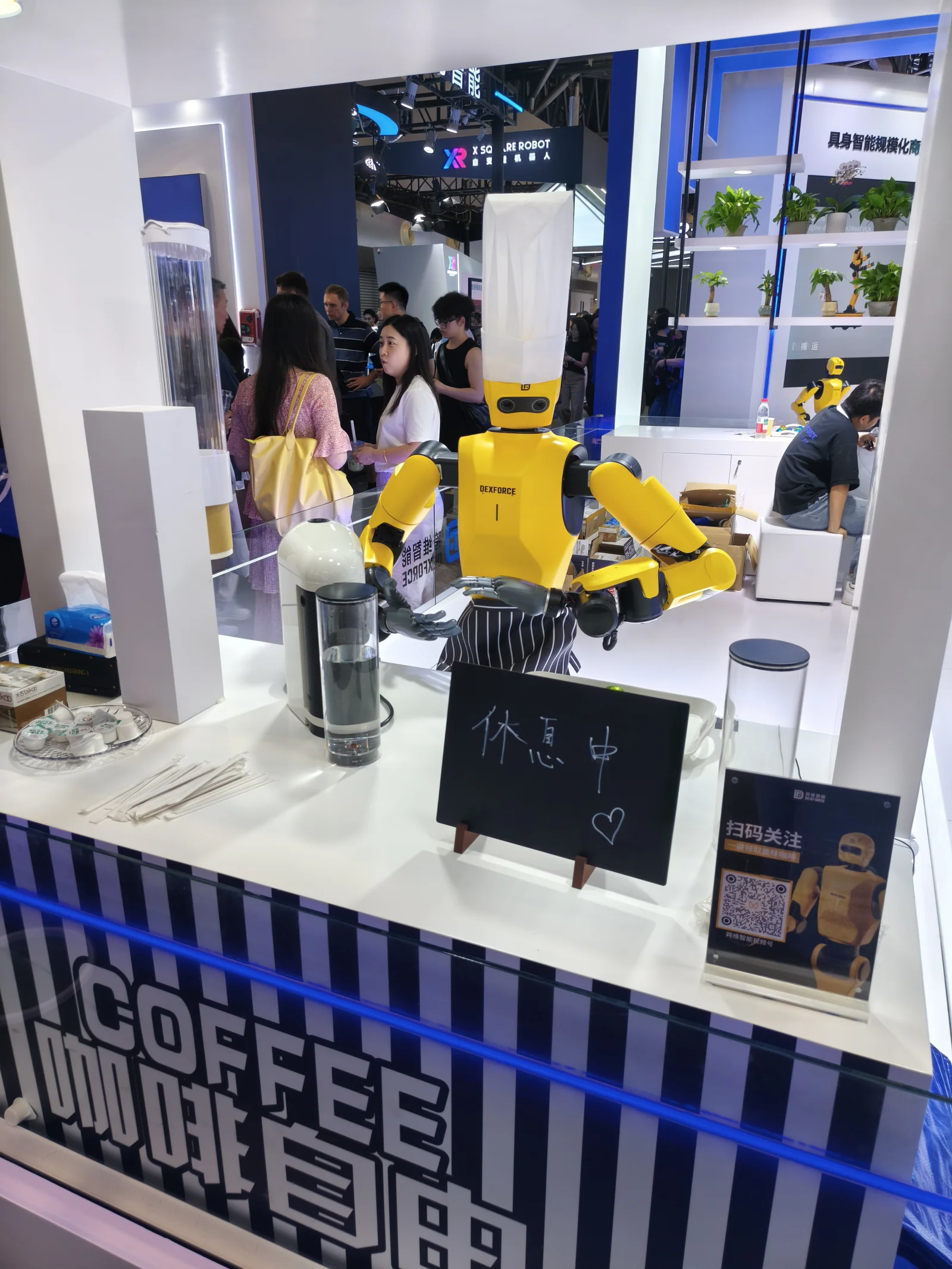
Our personal highlight: a bright yellow robot barista from DexForce at the X Square Robot (星方智能机器人) stand, designed to make coffee. When we passed it, a small chalkboard sign had been placed in front of it reading 休息中 ♡ (xiūxi zhōng, meaning "on break"). Even robots, it turns out, need downtime at a four-day conference.
The Chinese you'll encounter in this world
Walking through WAIC was a useful language immersion in its own right. The vocabulary of modern Chinese technology is everywhere, and recognizing even a few characters changes how you read the environment around you. Our HSK vocabulary tool covers much of this modern Chinese, search for terms like 人工智能 or 技术 and see how they connect to what you already know.
| Chinese | Pinyin | Meaning |
|---|---|---|
| 人工智能 | rén gōng zhì néng | Artificial intelligence (AI) |
| 人脸识别 | rén liǎn shí bié | Face recognition |
| 人形机器人 | rénxíng jīqìrén | Humanoid robot |
| 智能时代 | zhìnéng shídài | The era of intelligence |
| 同球共济 | tóng qiú gòng jì | Global solidarity / shared future |
| 超节点 | chāo jiédiǎn | Supernode (computing) |
| 休息中 | xiūxi zhōng | On break / closed for rest |
| 展览馆 | zhǎnlǎn guǎn | Exhibition hall |
What it all means
WAIC 2025 didn't feel like a trade show. It felt like a national statement. China is investing in AI infrastructure, AI governance, and the vocabulary of global AI leadership, all at the same time and at enormous scale. Whether you find that inspiring, unsettling, or simply fascinating probably says something about where you're standing.
For us, the most striking thing wasn't any single technology. It was the combination of seamlessness and ambition: face recognition at the gate so natural nobody mentioned it, robots being calibrated in public without pretending to be finished, and a robot barista on its break with a hand-drawn heart on its sign. That mix of the futuristic and the mundane is very Chinese, and it is exactly the kind of thing that no amount of classroom study fully prepares you for.
If you're planning to visit China, whether for a conference, work, or just curiosity: understanding the language means understanding the world being built around you. The characters on those signs, banners, and product labels are a direct window into what's happening, and what's coming next.