The showroom is in the mall now
Walk into almost any large shopping mall in Shanghai and you will find something unexpected between the fashion brands and the food court: a car showroom. Not a tiny brochure stand, but a full-scale, immaculately lit space with two or three gleaming electric vehicles on display, a configuration screen on the wall, and staff ready to walk you through every option. This is how China sells cars now.
It struck us immediately on a recent trip. In the Netherlands, buying a car means a dedicated visit to a dealer on a business park. In Shanghai, you can test-sit a ¥300,000 sedan while your partner is picking up a coffee two shops down. The contrast captures something real about how quickly China has rethought personal mobility.
Why so many EVs? The license plate tells the story
To understand why electric vehicles dominate Shanghai's roads, you need to understand one simple fact: the license plate. In Shanghai, driving a petrol or diesel car requires a blue license plate, and obtaining one means entering a monthly auction. Demand far outstrips supply. In early 2025, the minimum winning bid was around ¥94,100 (roughly €12,000), and the average was similar. That is before you have even bought the car. Some people try for two or three years before they win a bid.
Buy a fully electric vehicle instead, and the green license plate is free. No auction, no waiting, no extra cost. The Shanghai government has extended this policy year after year. It is confirmed through at least December 2026. The financial incentive is enormous, and it has worked: by late 2024, nearly two thirds of all new vehicles registered in Shanghai were electric.
🔵 Blue plate (petrol/diesel): Monthly auction · minimum bid ≈ ¥94,100 (~€12,000) · waiting time can be years
🟢 Green plate (pure electric BEV): Free · application takes roughly two weeks · confirmed free through December 2026
The policy is deliberate. Shanghai is serious about air quality and about being seen as a global model for the energy transition. Discouraging fuel vehicles through price, rather than an outright ban, has proven remarkably effective. The number of people participating in the blue-plate auctions has been hitting multi-year lows as more and more buyers simply choose electric.
In Chinese, a license plate is called a 车牌 (chē pái, literally "vehicle tablet"). The green plate for electric cars is the 绿牌 (lǜ pái), and the standard fuel-car plate is the 蓝牌 (lán pái). These are words you will hear if you spend any time talking about cars in China.
Cars in the mall: a new kind of dealership
The mall showroom model is not just a novelty. It is a conscious strategy by Chinese EV brands to place themselves where their target customers already spend time and money. The experience is closer to an Apple Store than a traditional garage. No pressure,, open access, everything touchable. You are invited to sit inside, configure your options on a large screen, and ask questions in a relaxed environment.
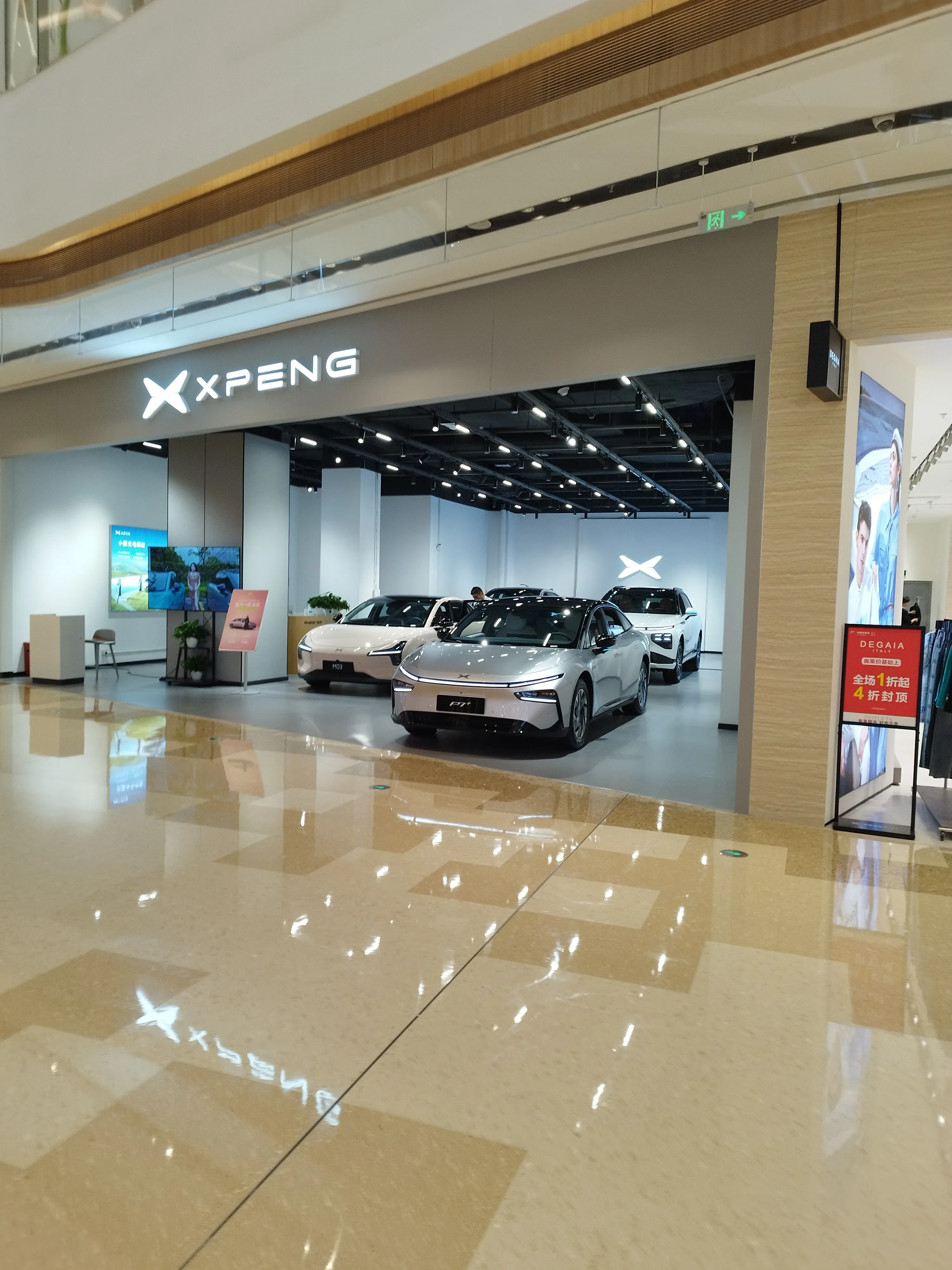
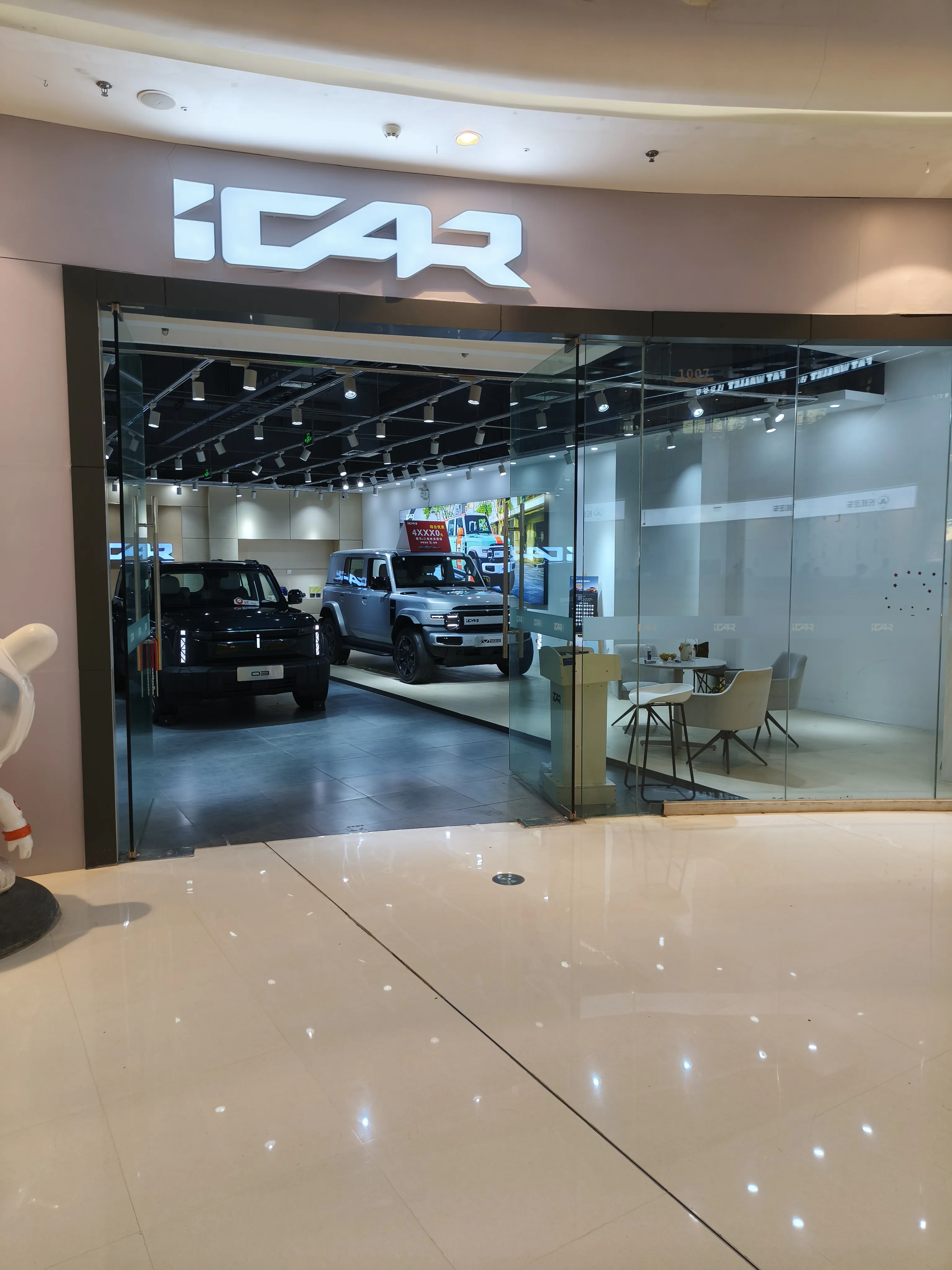
During our visit to a large mall in Shanghai we walked past showrooms for Xpeng, Nio, Huawei, iCAR, Lixiang, Xiaomi, and Firefly, all within a single building. Some we recognized immediately. Others we had never heard of. For anyone visiting China for the first time, the variety is genuinely surprising.
Cars everywhere: brands you may never have heard of
During our visit we walked past showrooms for Xpeng, Nio, Huawei, iCAR, Lixiang, Xiaomi, and Firefly, all within a single building. Some we recognized immediately. Others were completely new to us. iCAR, for instance, is a Chery sub-brand with rugged off-road styled vehicles that simply does not exist outside China.
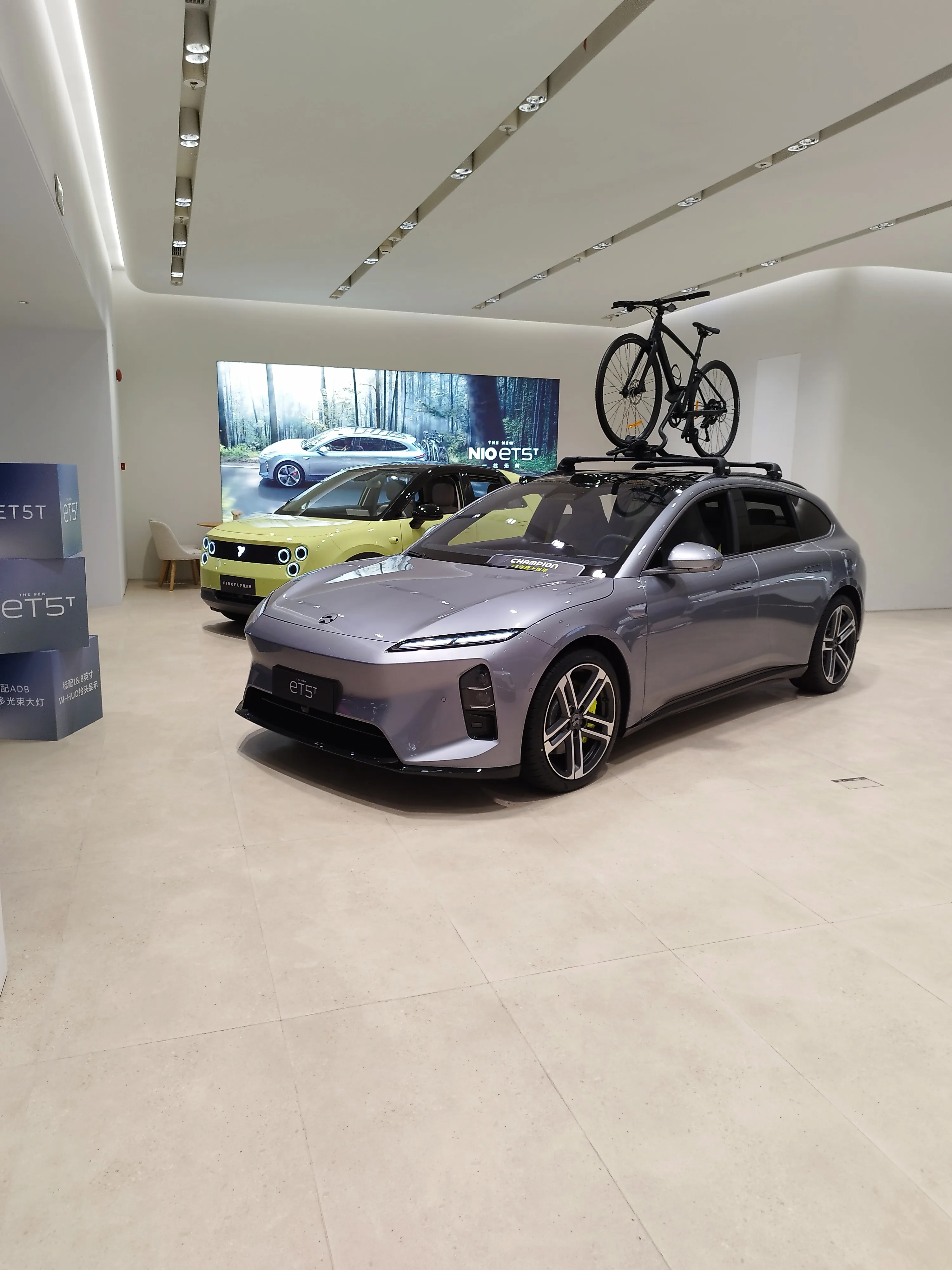
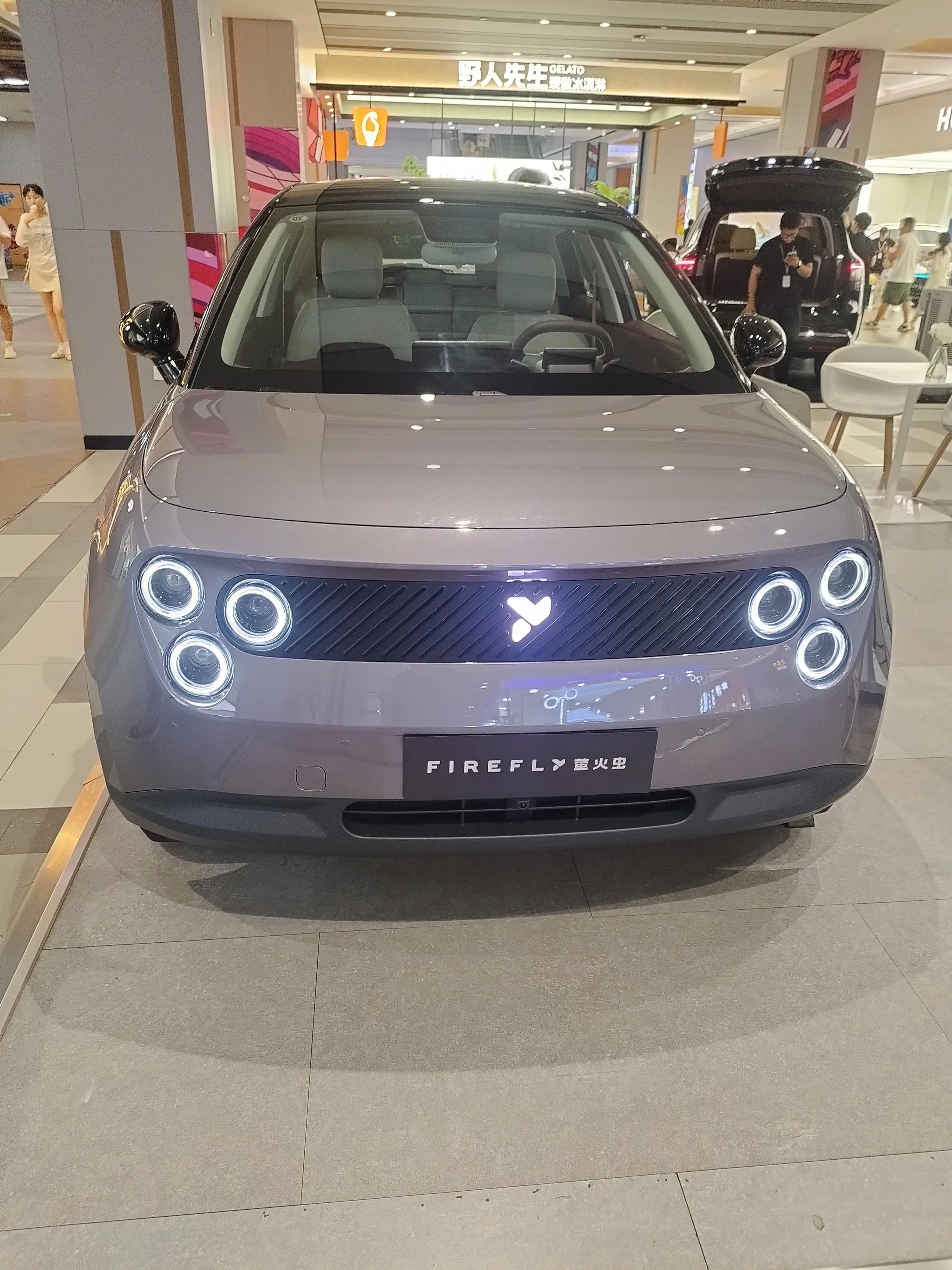
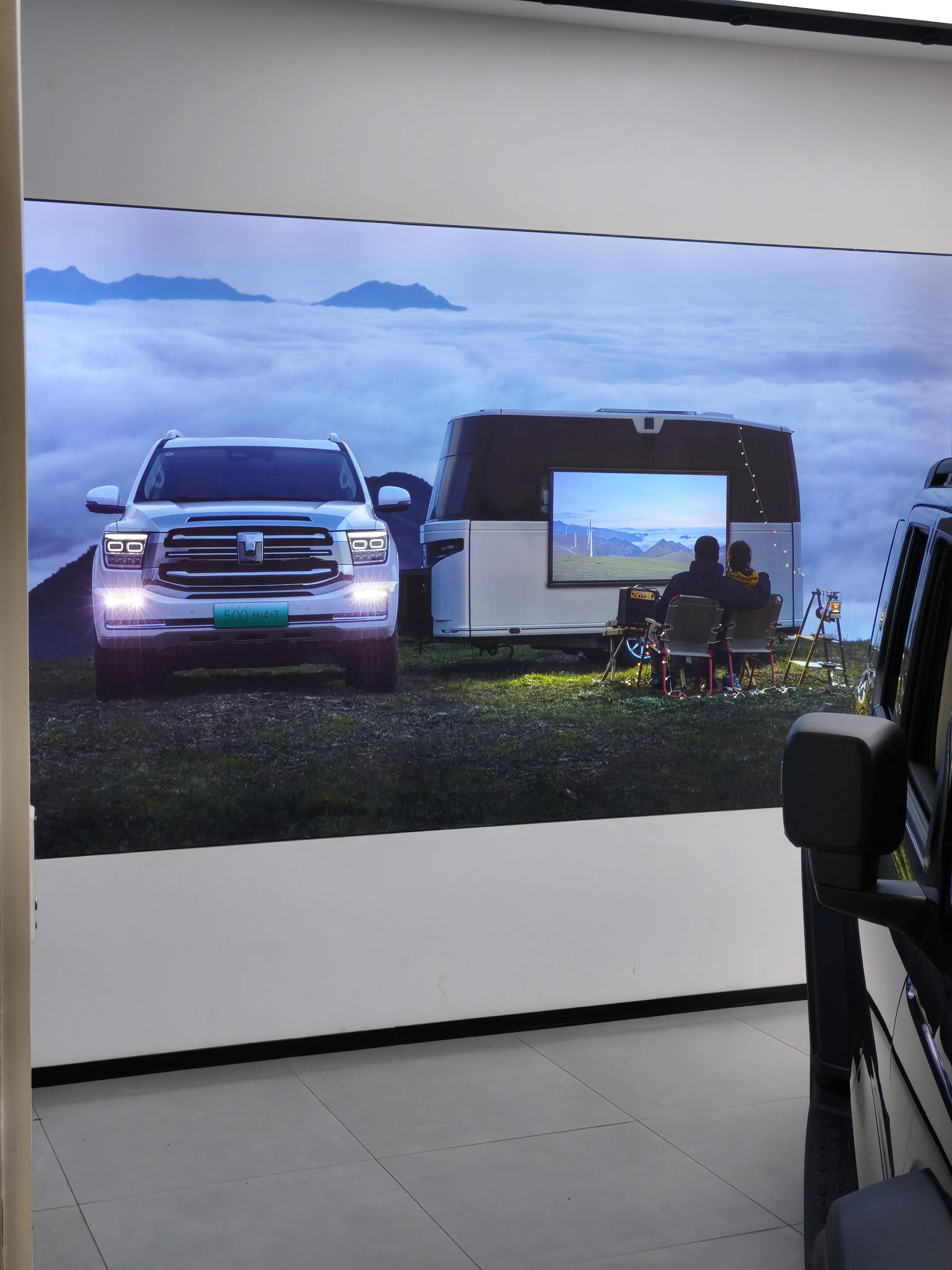
Lixiang markets itself as the perfect family SUV. Firefly is Nio's compact sub-brand with cartoon-like ring headlights aimed at younger city drivers. Behind the Nio ET5T, a touring estate with a bicycle rack on the roof, you could spot the Firefly in yellow-green, parked in the same showroom.
Huawei: a phone company that sells cars
Most people know Huawei as a smartphone and telecoms giant. What is less well known outside China is that Huawei has moved into cars, not by manufacturing them, but by supplying the technology platform: intelligent driving systems, in-car operating systems, and connectivity. Partner brands build the vehicles; Huawei powers the brains inside.
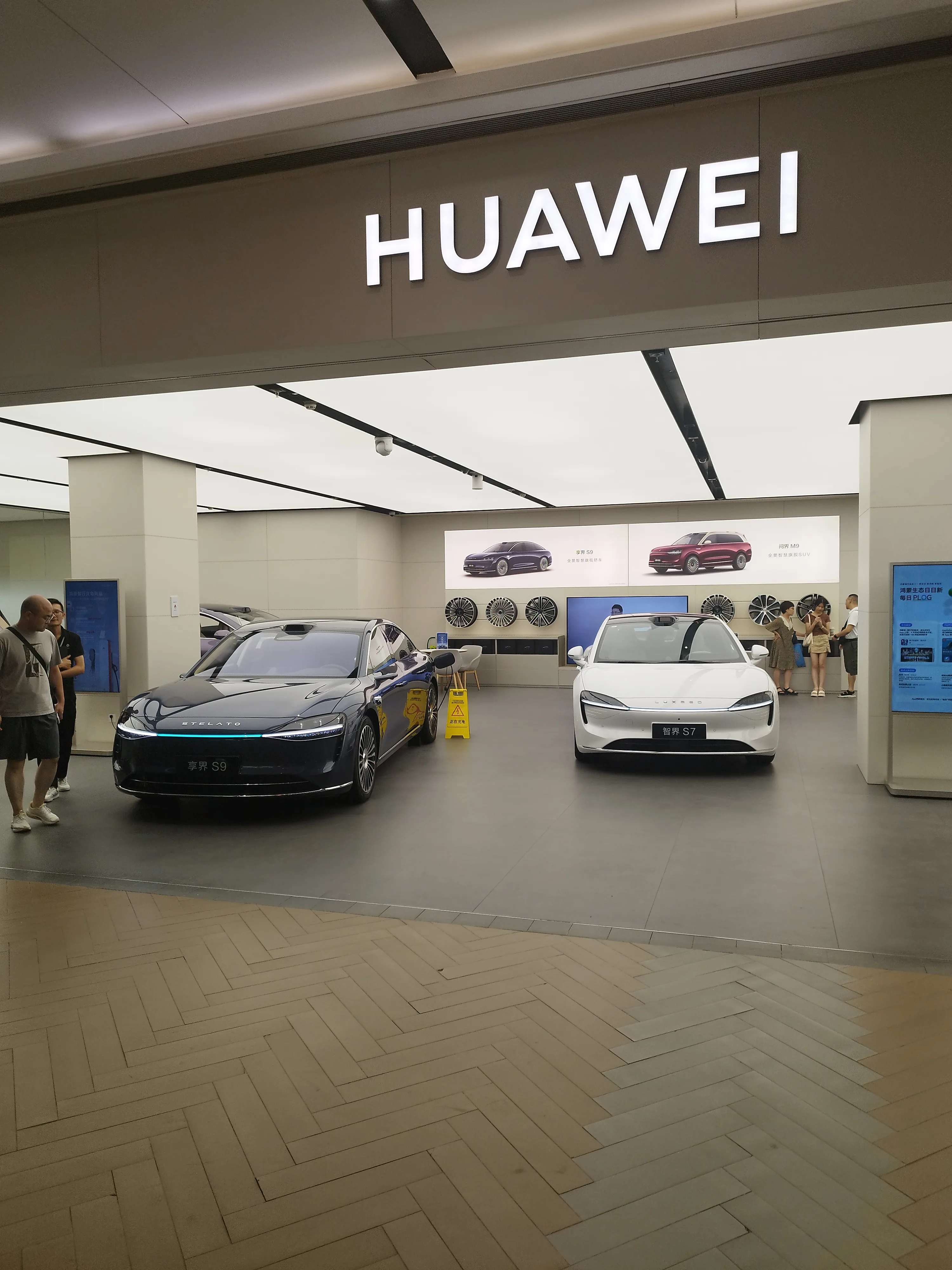
The experience of seeing a car in a Huawei shop captures something very specific about where China's technology industry is heading. The boundary between consumer electronics and automotive is simply disappearing.
Xiaomi: what Apple couldn't do
Xiaomi is the Chinese electronics brand known globally for smartphones and household devices. For years, Apple was widely rumoured to be building a car. Apple cancelled the project in 2024. Xiaomi launched theirs, the SU7, that same year, to enormous demand, and sold out immediately.
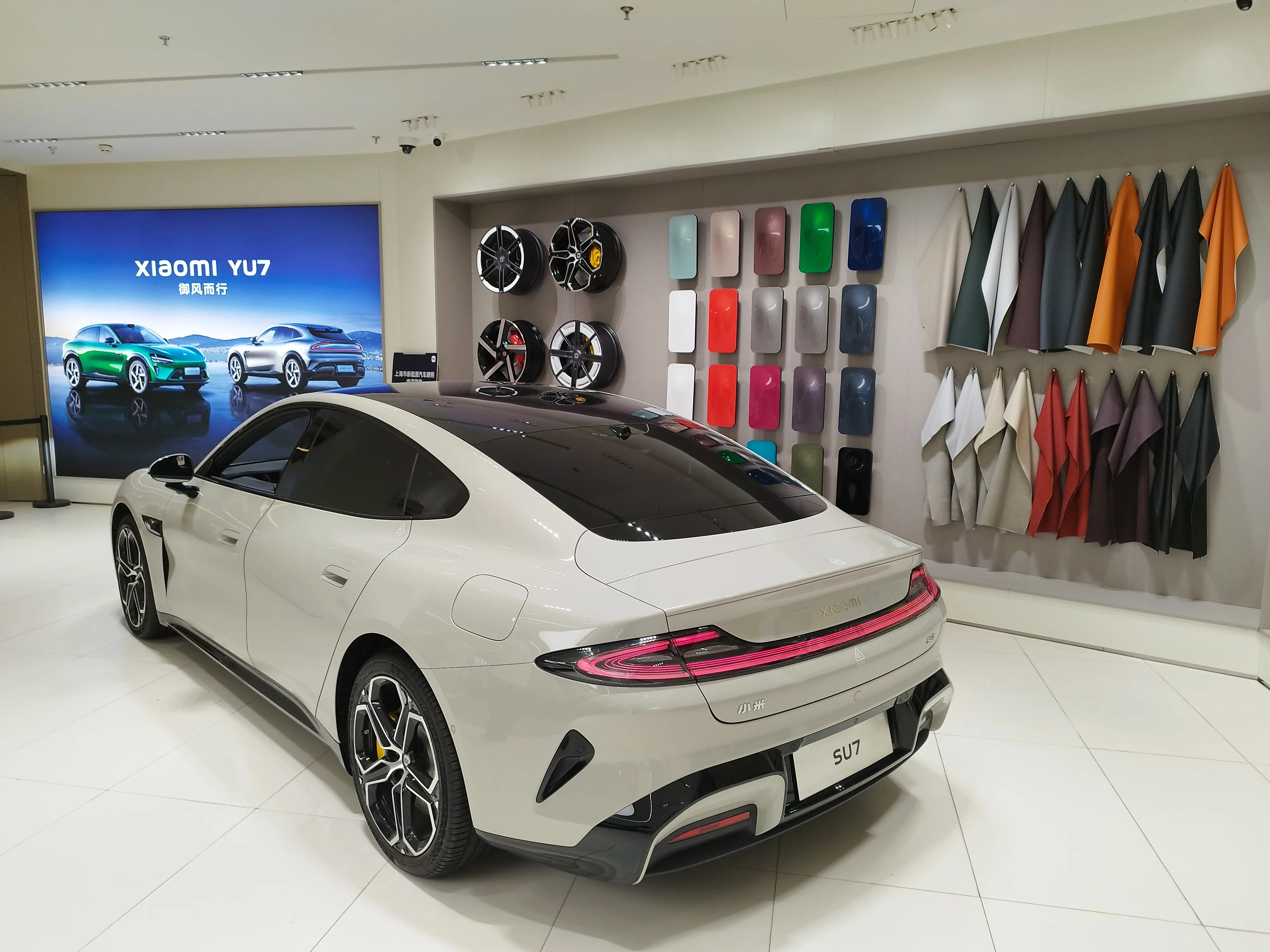
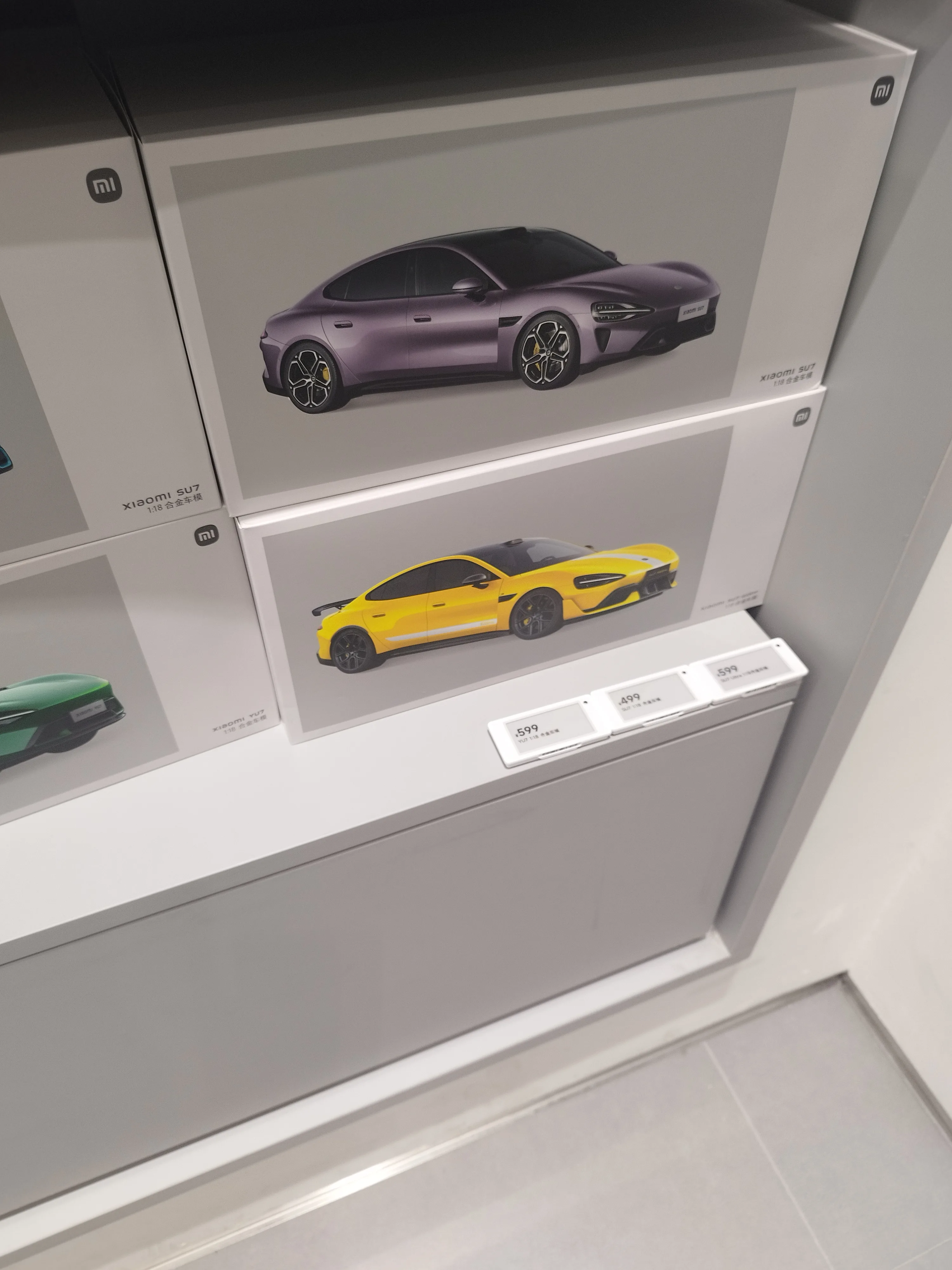
The showroom was exceptional. Along the back wall: wheel designs, paint swatches, and leather samples. Everything needed to build exactly the car you want, right there in the mall between lunch and a bubble tea. And for those for whom even an EV is a step too far, Xiaomi sells 1:18 scale die-cast models of the SU7 from ¥499.
Everything is a screen
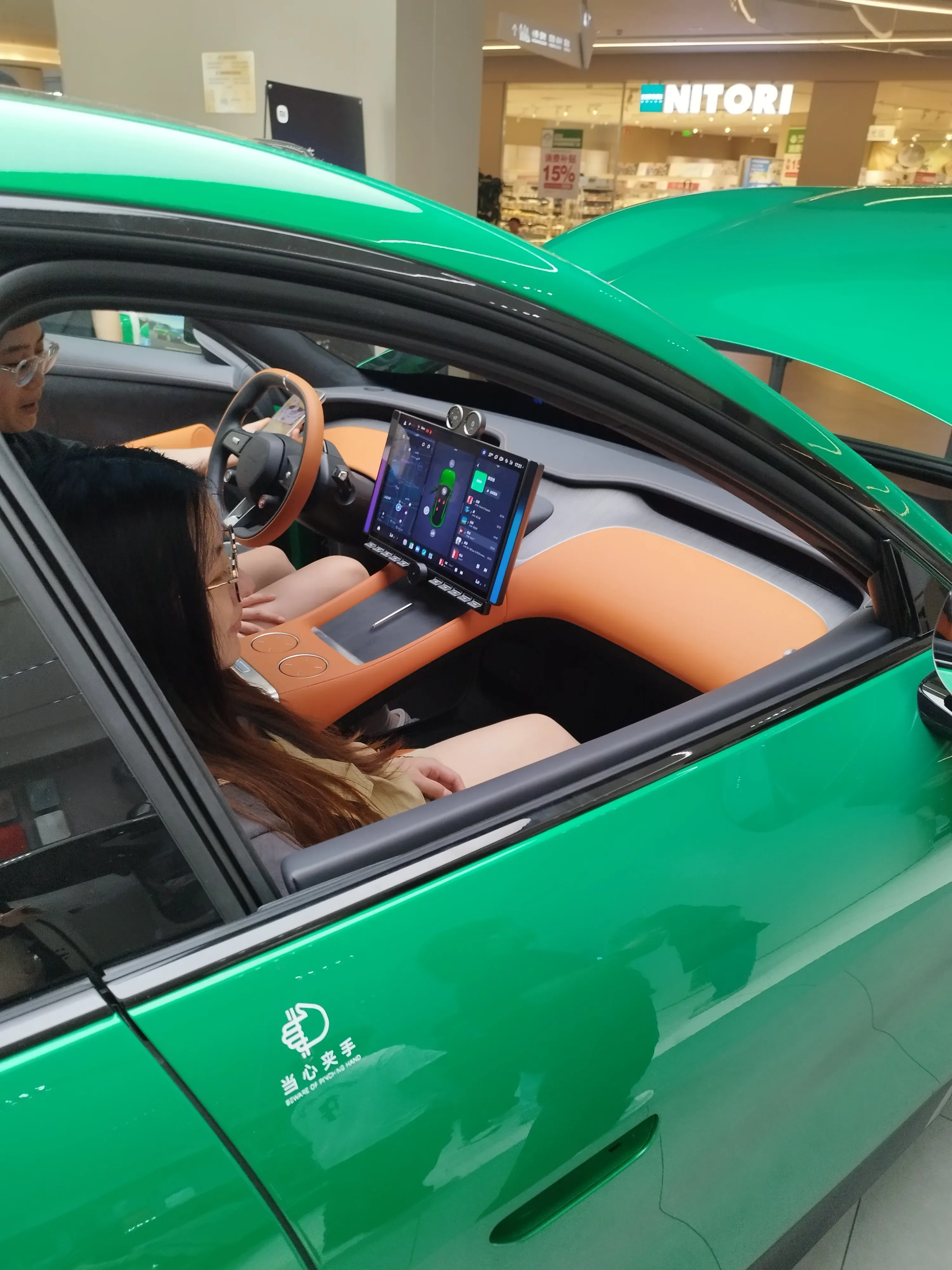
One of the most consistent features across almost every Chinese EV we saw was the emphasis on screens. Not just a single central display, but multiple: a driver's display, a central touchscreen, a separate passenger screen, and in some models rear-seat entertainment in the headrests. The vehicle is increasingly understood as a connected living space, an extension of the smartphone ecosystem, rather than purely a transportation device.
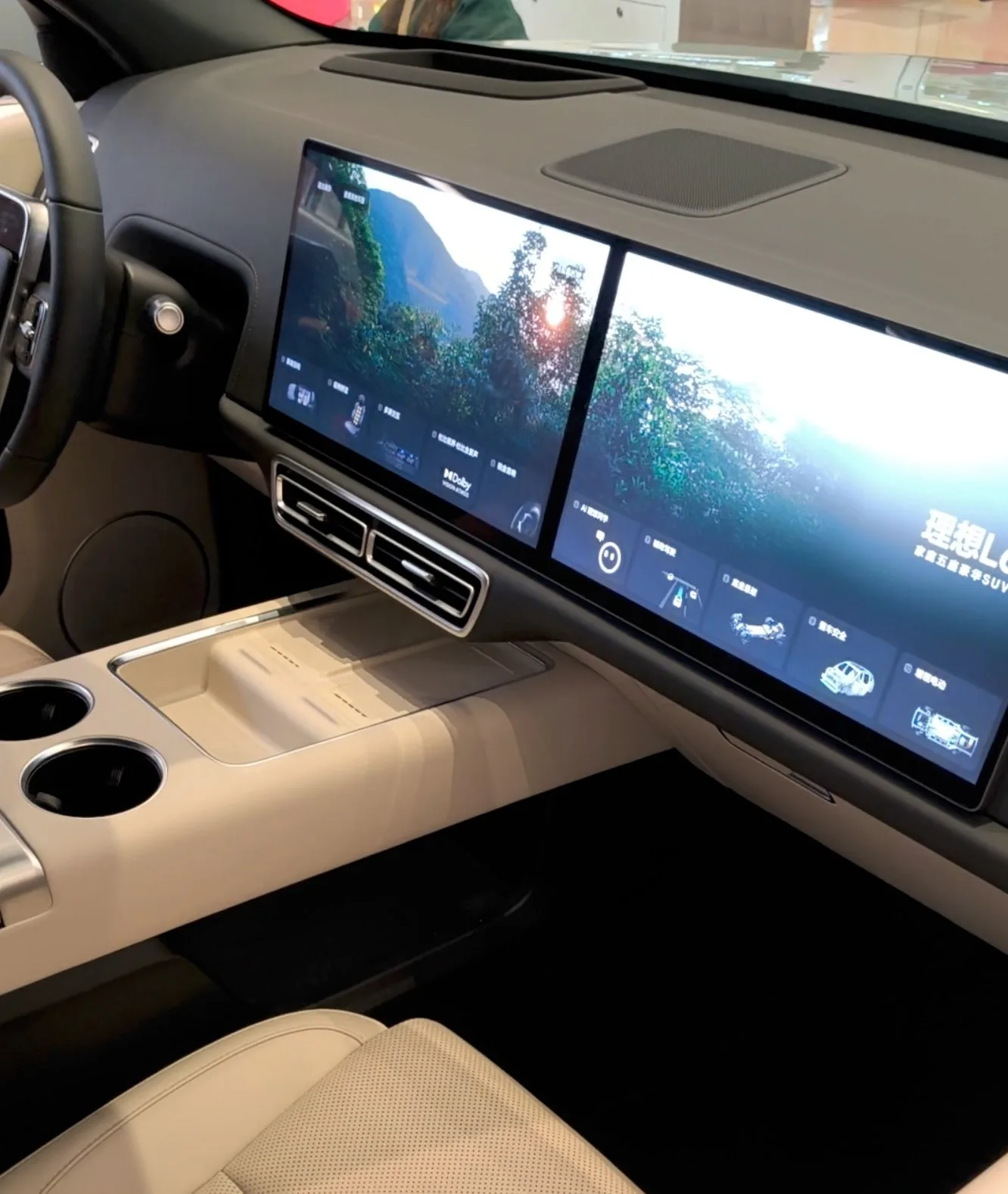
Brands compete on how immersive the digital experience is, not just on range or power. The car has become a rolling smartphone, and the showroom sells it exactly the same way.
The Chinese you need for this world
The characters on showroom signs, model names, and promotional displays are not decoration. They are direct windows into the brands' identities and values. Chinese brand names are almost always meaningful words, not invented sounds. Understanding even a few characters makes the whole experience richer.
The character 电 (diàn) means "electricity" and appears in many EV-related words. A car is 车 (chē). An electric car is therefore 电车 (diàn chē), though in practice, Chinese people also use 新能源车 (xīn néng yuán chē, "new energy vehicle"), which is the official government term. A charging station is 充电站 (chōng diàn zhàn). 充 means "to fill / to charge," and 站 means "station."
| Chinese | Pinyin | Meaning |
|---|---|---|
| 电动车 | diàndòng chē | Electric vehicle (general term) |
| 新能源车 | xīn néng yuán chē | New energy vehicle (official term, NEV) |
| 充电 | chōngdiàn | To charge (a battery) |
| 充电站 | chōngdiàn zhàn | Charging station |
| 车牌 | chē pái | License plate |
| 绿牌 | lǜ pái | Green plate (electric vehicles, free in Shanghai) |
| 蓝牌 | lán pái | Blue plate (petrol/diesel, requires auction) |
| 续航 | xù háng | Range (battery range) |
| 自动驾驶 | zìdòng jiàshǐ | Autonomous driving |
| 智能座舱 | zhìnéng zuòcāng | Intelligent cockpit (smart car interior) |
| 试驾 | shì jià | Test drive |
| 配置 | pèizhì | Configuration / spec level |
These words come up constantly if you work with Chinese colleagues in the automotive or tech industry, travel to China for business, or simply want to follow what is happening in one of the world's most dynamic markets. Knowing them is not just useful in a showroom. They appear in news articles, product launches, earnings calls, and everyday conversation. A good tutor will put them in context so they actually stick.
What it all means
Walking through a Shanghai shopping mall in 2025, you are surrounded by evidence of one of the fastest industrial transformations in modern history. A decade ago, Chinese cars were largely seen as budget alternatives to established Western and Japanese brands. Today, brands like Nio, Xpeng, and Xiaomi are setting design and technology benchmarks that European manufacturers are scrambling to match. Huawei, a company that makes phones and network equipment, now sells cars from its retail stores.
None of this happened by accident. The free green license plate policy in Shanghai is one piece of a much larger picture: government investment in charging infrastructure, purchase subsidies, manufacturing incentives, and a consumer culture that embraced electric mobility quickly and enthusiastically. The result is a city where EVs are not a niche choice but simply the default.
For anyone learning Chinese, this world is full of language worth knowing. The characters on car showroom signs, model names, and promotional banners are built from components that tell you something about what the brand wants to be. That is true of almost every domain in China, and it is one of the reasons that understanding even a little Chinese changes how you experience the country entirely.